
The House of Representatives has declared that implementation, not promises, will determine the fate of the proposed ₦98 billion allocation to the Federal Ministry of Water Resources and Sanitation for 2026.
At a budget defence session convened by the House Committee on Water Resources, lawmakers stressed that physical inspections of dams, irrigation facilities, and sanitation projects nationwide would form a central part of their oversight strategy. The move signals a tougher legislative posture amid concerns that capital releases in recent years have not always translated into visible outcomes.
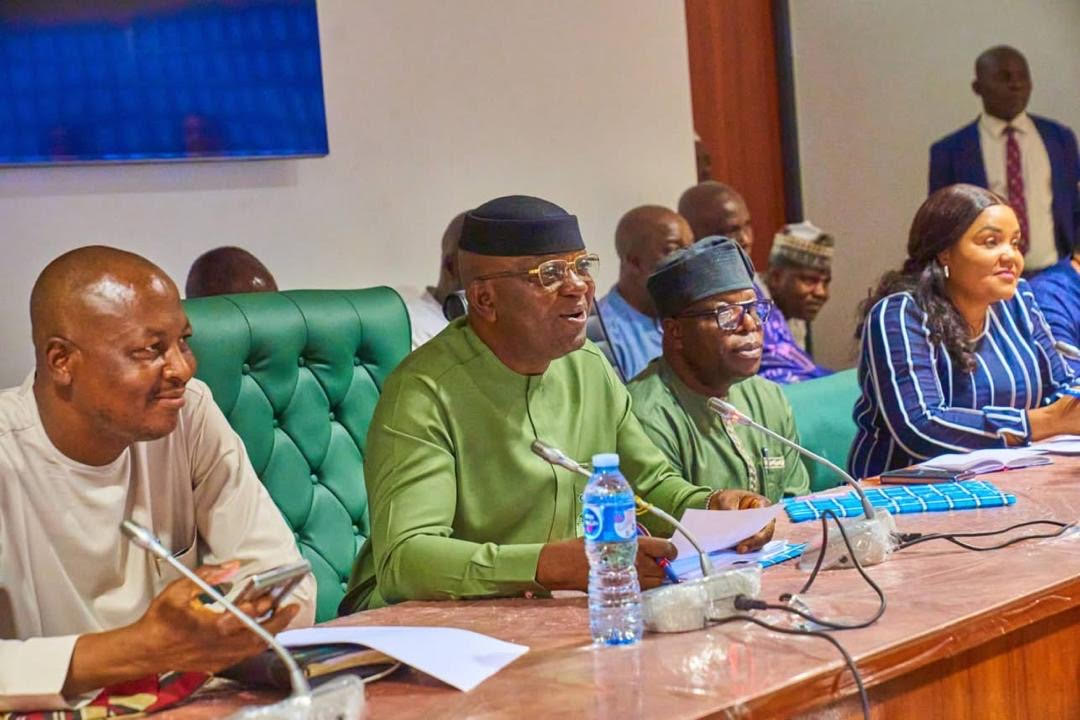
Deputy Chairman of the Committee, Mukhtar Chawai, who presided over the session, made it clear that the National Assembly would interrogate every major line item in the proposal to ensure that public funds deliver measurable value. He emphasized that oversight would go beyond paperwork to include site verifications across the country. Committee Chairman Sada Soli also participated in the session.
Minister of Water Resources and Sanitation, Joseph Utsev, presented the ministry’s 2026 estimates, explaining that a significant portion of the ₦98bn proposal is earmarked for the completion of ongoing dam and irrigation projects. He said the focus aligns with the Federal Government’s broader strategy to expand irrigated agriculture, strengthen food security, and reduce vulnerability to erratic rainfall patterns.
Utsev highlighted intensified reservoir management efforts, flood control measures, and drought mitigation projects, alongside progress under the Water, Sanitation and Hygiene (WASH) programme aimed at ending open defecation nationwide. He disclosed that 17 states are currently benefitting from expanded interventions under the Sustainable Urban and Rural WASH programme and the Partnership for Expanded Water Supply, Sanitation and Hygiene initiative. He also reported the completion of two national water quality reference laboratories in Asaba and Umuahia, and the construction of more than 5,000 public sanitation facilities across the country.
Despite these updates, lawmakers expressed reservations about the pace of execution under the 2025 capital budget, warning that delayed project awards and slow implementation undermine development objectives. They insisted that the 2026 proposal must demonstrate clearer timelines, stronger monitoring mechanisms, and tangible community-level impact.
In response, Utsev assured lawmakers that pending project awards would be concluded within the coming week and pledged improved coordination with the National Assembly. He reaffirmed the ministry’s commitment to transparency and accountability.
Nigeria’s long-term agricultural transformation plan relies heavily on irrigation expansion, yet less than one million hectares of the country’s irrigation potential has been fully developed. For lawmakers, the debate is no longer about ambition but execution. With recurrent flooding, climate shocks, and rising food prices placing pressure on households, members of the committee argued that effective water resource management has become inseparable from national economic stability and public health.
As the 2026 budget advances through legislative review, both the ministry and the House appear aligned on one principle: allocation alone will not guarantee impact. The true test will be whether dams hold water, irrigation canals deliver to farms, and sanitation facilities serve the communities they were built for.
By Juliet Ezeh, Abuja

