
On a Saturday evening in March 2019, Mr. Ayuba Ibrahim was involved in a near-fatal auto crash within the Apo Roundabout axis of Abuja. Mr. Ibrahim, 38, cannot vividly recall what transpired before his car rammed into a truck parked at one corner of the road. He had indisputably lost control as he admits to having been driving under the influence of alcohol on that fateful evening, he narrowly escaped death. “I was hospitalised for nearly six months. I had my left leg amputated and lost my car that was damaged beyond repair. But I thank God I survived”, Mr. Ibrahim said.
Not all victims of frequent road accidents across Nigerian cities live to tell their stories as Mr. Ibrahim often does. Many succumb to death instantly or subsequently, leaving behind grieving families and loved ones. It is a tragedy Nigerians have lived with for many decades.
Official reports from the Federal Road Safety Corps (FRSC) suggest that around 5,000 and 6,000 road accident-related deaths occur annually. But statistics obtained from other institutions show higher figures. For instance, the World Health Organisation (WHO) has put the actual number of deaths at approximately 35,000 to 40,000 in a year. “The discrepancy stems from many unreported accidents”, Mr. Manuchim Tasie, a safety professional, clarifies.
Road accidents are a global calamity giving governments serious concern about their huge tolls on the socio-economic lives of populations across the globe. While deaths account for the highest losses, families and governments continue to grapple with the huge costs of injuries and disabilities attendant on road accidents. The World Bank projects that the global economy would have lost $1.8 trillion to medical expenses, emergency response and declining productivity between 2015 and 2030.
Nevertheless, Nigeria carries a disproportionately higher burden of the global road accidents crisis. According to the 2025 Africa Status Report on Road Safety, Nigeria has the highest road accidents record in Africa and the second-highest in the world.
In the month of February 2026, dozens of road accidents have been reported nationwide, with the Kano crash that left seven persons dead and 70 injured on February 8 being the most fatal. The FRSC has since confirmed the actual number of casualties in the Kano tragedy, with an unpalatable revelation that the country has witnessed a 9.2% increase in road crashes reported between 2024 and 2025.
Corps Marshal Mohammed Shehu has declared 2026 a year of “Renewed Commitment and Professionalism” to stem the rising tide of road accidents. At a recent media parley in Abuja, Shehu emphasised that the reinvigorated drive for road safety marks a shift from routine patrol to risk-based, intelligence-led enforcement of traffic rules. The FRSC boss says going forward, there will be zero tolerance for five major road traffic offences contributing to increased accident rates, namely speeding, dangerous driving, drug and impaired driving, wrong-way driving and overloading of vehicles.
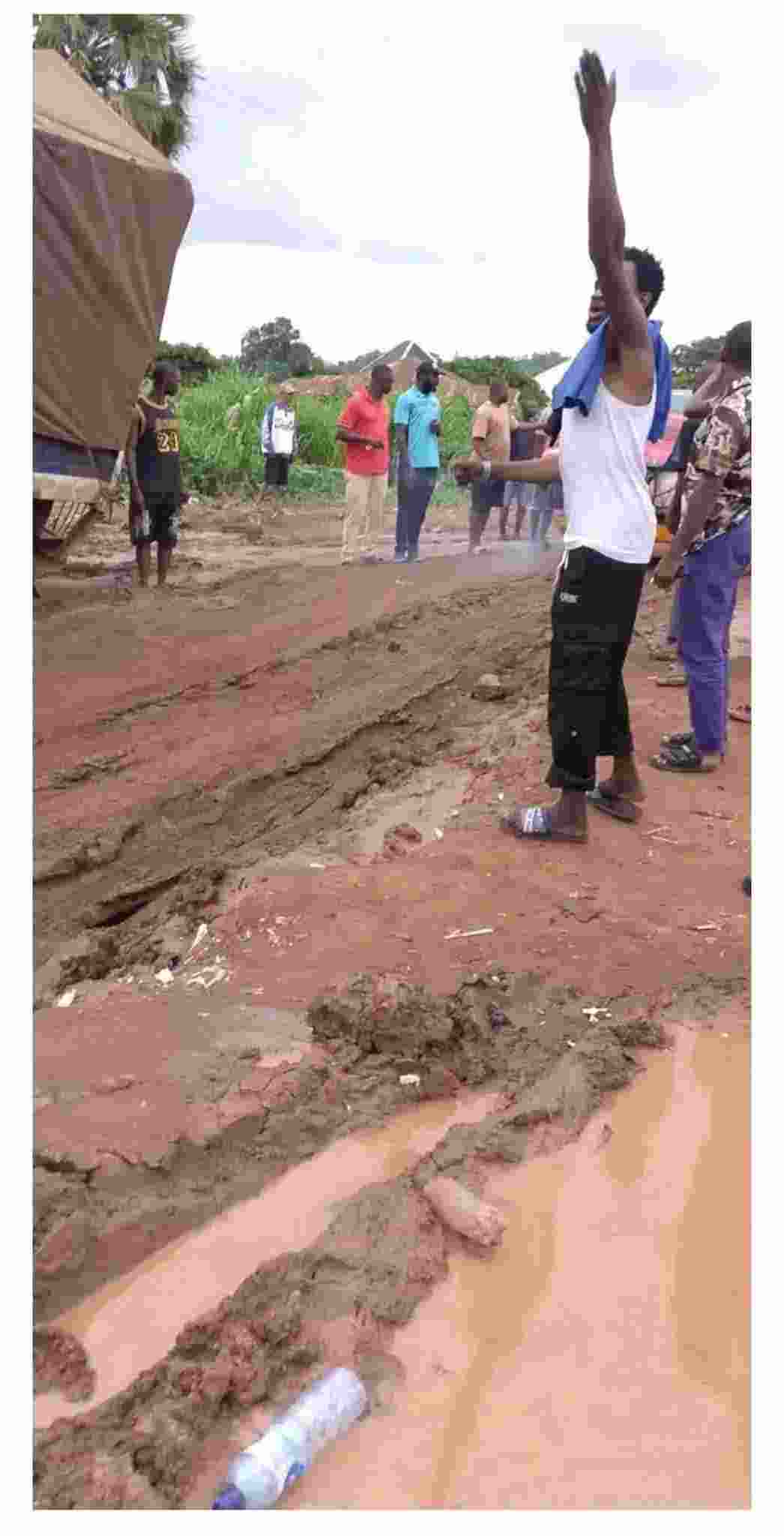
Investigation by the Nigerian Pilot reveals that the surge in road accidents is a result of reckless driving, the proliferation of unroadworthy vehicles, and systemic failures. Many Nigerian roads, littered with potholes and ditches, are in a terrible state of disrepair- and have remained so for years. The federal roads, classified as “Trunk A” roads, are in ruins, as their maintenance is stifled by funding gaps. In 2025, the Federal Government allocated N64.88 billion to the Federal Roads Maintenance Agency (FERMA) to fix damaged roads. But this figure is only a negligible fraction of what it takes to fix the roads, as Mohammed Goronyo, Minister of State for Works, maintained while briefing lawmakers on the state of federal roads in June 2025.
Further investigation reveals that lack of oversight is largely responsible for the decrepit state of Nigerian roads. The Nassarawa-Oweto-Otukpo road, built at the cost of N38 billion, has collapsed three years after it was completed. While a well-constructed asphalt road is usually designed to last at least 15 years in Nigeria, the Nasarawa-Oweto-Otukpo road did not survive three years due to its poor construction. A visit to the site shows the road has failed in several sections with many deep gullies along its long stretch, forcing motorists to seek alternative routes at the Benue end of the Oweto bridge Obviously, the N64.88 billion allocated to FERMA in 2025 was not appropriated to save the road from premature collapse. Attempts to get an official response to the sudden collapse of the road were to no avail as Mohammed Ahmed, Director of Information and Public Relations at the Federal Ministry of Works, was yet to respond to calls and texts messages at the time of filing this report.
Official silence on critical governance issues is commonplace in Nigeria, especially when state officials are trying to evade accountability. But the government and its agencies cannot afford to continue playing the hide- and-seek game, considering the worsening road safety crisis in the country. In 2025, thousands of lives were reportedly lost to auto crashes along the Lagos-Ibadan Expressway, Zuba-Kaduna-Zaria Road, Abuja-Lokoja Highway, Benin-Asaba-Awka Road etc. Statistics obtained from the official website of the FRSC shows that Kaduna recorded 140 deaths, Ogun (199), Kano (83), Kogi (78) and Niger (69) in the second quarter of 2025.
The rising death toll on Nigerian roads is also blamed on lack of emergency response when accidents occur. Oftentimes road safety teams are deployed to strategic locations for law enforcement, unaccompanied by paramedic ambulances. “Response time is crucial because prompt medical attention reduces fatality,” Dr. Stanley Amadi advises.
As safety professionals have emphasised, more drastic measures must be taken to save lives on the deadly roads. The likes of Mr. Ibrahim will have to kick their reckless driving habits, while FRSC must embrace stricter enforcement to ensure compliance with road safety. According to Mr. Tasie, “The problem we have at hand is not the absence of road traffic laws, but poor enforcement by the Road Safety Corps-it needs to justify its existence as a government agency.”
As the FRSC moves to restore sanity on Nigerian roads, it can take a cue from Rwanda which has significantly improved its road safety record with the use of automated cameras to monitor motorists and stipulating higher penalties for violation of traffic laws. With these measures, Rwanda has been able to reduce road accident-related deaths by 30%.
Road accidents and their related deaths are a silent epidemic in need of greater attention and response in Nigeria. The Nigerian authorities must act fast to prevent needless deaths on perilous roads that are a violation of the people’s right to life and safety. Nigerian lives matter.
Tekena Amieyeofori, Abuja

