
Julie Ezeh
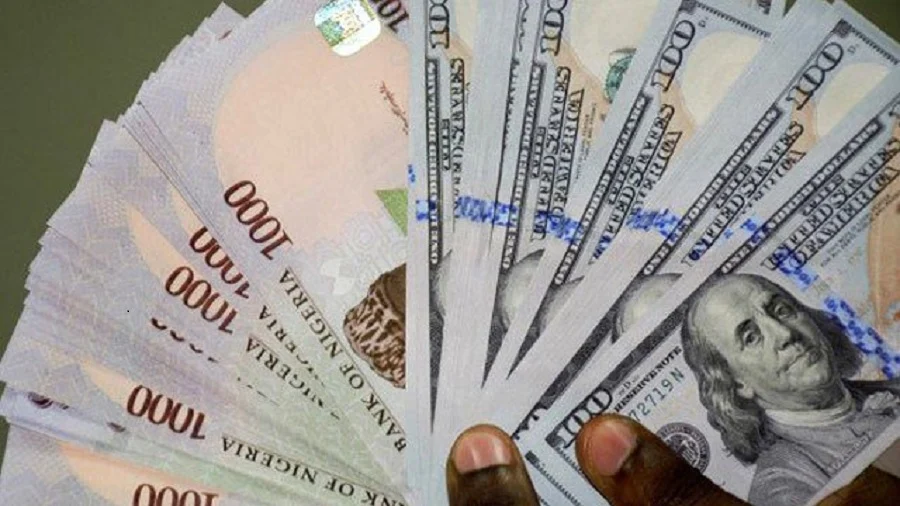
Nigeria’s currency extended its recovery on Monday, appreciating to N1,355 per dollar at the official foreign exchange market, its strongest level in weeks, as improving external reserves and monetary reforms helped stabilise the market.
Latest figures released by the Central Bank of Nigeria showed the naira gaining from N1,363.5/$ recorded on Friday, continuing a steady upward trend seen in recent trading sessions.
The latest rate represents the naira’s best performance since February 23, 2026, when it closed around N1,353.5/$, suggesting renewed stability in Nigeria’s official FX market after months of volatility.
Naira’s steady recovery
Market data shows the currency has gradually strengthened over the past week.
The naira traded around N1,390.5/$ on Tuesday before improving to N1,373.5/$ on Wednesday. It maintained the positive momentum on Thursday at N1,370/$, strengthened further to N1,363.5/$ on Friday, and extended the rally to N1,355/$ on Monday.
During Monday’s trading session, the currency fluctuated between N1,365.35/$ and N1,354/$, indicating relatively stable intraday activity compared with previous periods of sharp swings.
Rising reserves boost investor confidence
The naira’s recovery comes as Nigeria’s foreign exchange reserves continue to improve.
According to the apex bank, net foreign exchange reserves rose to $34.80 billion at the end of 2025, while gross external reserves increased to $50.45 billion as of February 2026.
The increase was largely driven by higher crude oil earnings and stronger foreign inflows, factors analysts say are crucial for stabilising the currency.
Governor Olayemi Cardoso said ongoing monetary and foreign exchange reforms are aimed at improving liquidity in the market and restoring investor confidence.
The central bank also projects that Nigeria’s reserves could rise further to about $51.04 billion in 2026, supported mainly by improved oil revenues.
Global market pressures remain
Despite the recent gains, global economic developments continue to influence currency markets.
Investors are monitoring movements in the U.S. dollar and geopolitical tensions involving Iran, which could affect global energy markets and investor sentiment.
In early international trading, the euro slipped to $1.1492, while the British pound weakened to around $1.33, reflecting cautious global market sentiment.
For Nigeria, analysts say sustained foreign inflows, stronger oil revenue, and consistent policy reforms will be critical in maintaining the naira’s current recovery trend.

