
By Ngozi Nwankwo
The Federal Government of Nigeria has called on investors, financial institutions, and development partners in the United Kingdom (UK) to collaborate in unlocking Nigeria’s vast agricultural potential and strengthening climate-smart food systems.
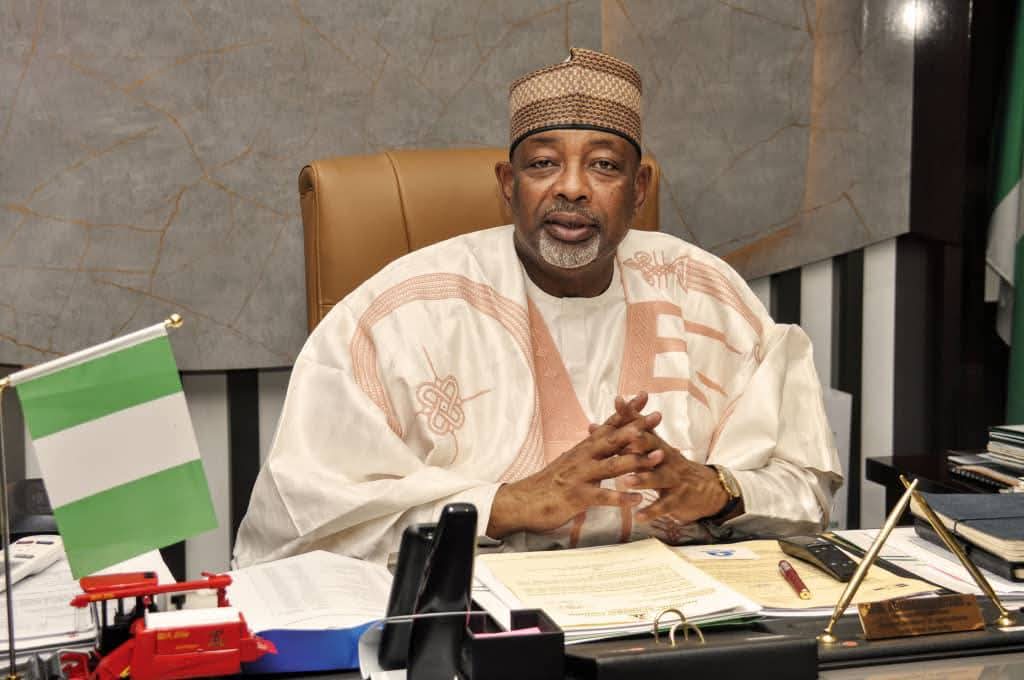
The Minister of Agriculture and Food Security, Abubakar Kyari, made the call during the Nigeria–United Kingdom Investment Forum held in London, where he highlighted opportunities across Nigeria’s agricultural value chains.
Kyari noted that agriculture remains a cornerstone of Nigeria’s economy, employing nearly 70 per cent of the labour force and contributing over 24 per cent to the Gross Domestic Product (GDP).
He described the sector as a key driver of inclusive growth, rural livelihoods, and employment for women and youth.
According to the minister, Nigeria’s diverse agro-ecological zones support the production of a wide range of commodities, including rice, maize, cassava, cocoa, sesame, sorghum, and horticultural crops, many of which are in high demand across global markets.
He, however, warned that climate change continues to pose significant risks to agricultural productivity, citing prolonged droughts, erratic rainfall, flooding, and desertification as major threats to food security in the country.
Kyari stressed the urgent need to transition to climate-resilient agriculture but noted that a major financing gap remains. He explained that current investment levels are insufficient to build resilient food systems, deploy climate-smart technologies, and scale innovation across agricultural value chains.
“While public financing remains essential, unlocking the scale of investment required will depend on stronger participation from private capital and development finance partners,” he said.
The minister also identified limited access to finance as a major constraint for farmers, revealing that total agricultural credit stood at about N3.4 trillion as of April 2025—less than four per cent of the sector’s contribution to GDP.
Kyari disclosed that Bola Ahmed Tinubu declared a national state of emergency on food security in July 2023, shortly after assuming office, as part of efforts to address the challenges in the sector.
He added that Kashim Shettima later inaugurated the Presidential Food Systems Coordinating Unit (PFSCU) to align interventions across federal, state, and local governments.
He further outlined key government initiatives aimed at transforming the agricultural sector, including the distribution of solar-powered irrigation pumps to support all-season farming, development of climate-resilient seed systems, and the National Agricultural Mechanization Programme (NAMP), led by the Bank of Agriculture, which has procured 2,000 tractors and over 9,000 farm implements.
Other interventions include the Nigeria Postharvest Systems Transformation Programme (NiPHaST), designed to modernise post-harvest handling, expand storage infrastructure, and improve market linkages, as well as the Special Agro-Industrial Processing Zones (SAPZ) initiative, which aims to connect production hubs with processing, logistics, and market access.
The Federal Government said strengthening partnerships with international investors remains critical to unlocking Nigeria’s agricultural potential and ensuring long-term food security.

