
By Michael Oche
The Trade Union Congress of Nigeria (TUC) has urged the Federal Government to deploy excess crude oil revenue as a buffer against rising fuel prices, warning that failure to act could worsen the economic hardship facing Nigerians.
The union gave the charge on Thursday in Abuja, noting that the steady rise in global crude oil prices and the continued depreciation of the naira are pushing the pump price of Premium Motor Spirit (PMS) to unsustainable levels, with fears it could climb as high as N2,000 per litre if urgent steps are not taken.
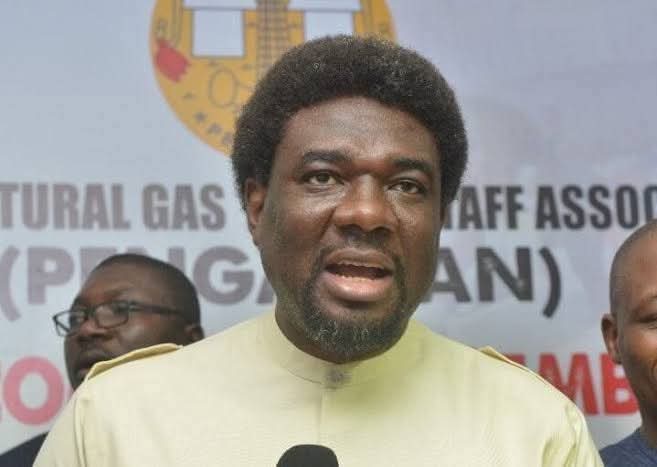
TUC President, Festus Osifo, who spoke at press briefing in Abuja said Nigerians were already grappling with severe hardship as the cost of petrol continued to surge across the country.
According to him, the rising price of fuel, which he linked partly to global tensions involving Iran, Israel and the United States, has pushed transportation and production costs upward, worsening the economic burden on workers.
He said: “Today, comrades, we are seeing that the cost of petrol is edging towards N2,000 per litre depending on the part of the country that you are. Nigerian workers are already passing through excruciating pain as we speak.”
Osifo added that the increase in petrol price was already triggering a ripple effect across the economy.
“The same way it is affecting transportation, it is also affecting manufacturing. The cost of diesel has also gone northward, meaning that the cost of production has increased. When production costs rise, the final price of goods on the shelves will also skyrocket,” he said.
Osifo warned that if the trend continues, the country’s declining inflation rate could reverse.
“If this continues unchecked, the inflation that we are currently celebrating as going downwards will reverse and start moving up again,” he stated.
To address the situation, the TUC urged the Federal Government to channel part of the excess revenue generated from crude oil sales above the budget benchmark into subsidising crude supply to local refineries.
Osifo explained that with the 2024 budget benchmark set at $64.85 per barrel, any price above that threshold generates additional revenue that could be strategically utilised.
He said a portion of such excess funds should be channelled towards reducing feedstock costs for local refineries.
“If crude is selling for about $100 per barrel and the budget benchmark is $64.85, the difference should be partly used to subsidise crude supplied to local refineries. If government takes about 60 per cent of that difference to support production, we will see an immediate reduction in fuel prices,” he said.
According to him, such an approach would be more transparent than the former fuel subsidy regime.
“When you subsidise crude supply directly to refineries, it cannot be abused because you are subsidising production. It will immediately bring down the price of PMS, diesel and jet fuel, possibly within one or two weeks,” Osifo added.
The labour leader also blamed the high cost of petroleum products on the continued depreciation of the naira.
He argued that the exchange rate was a major determinant of domestic fuel prices. “If our naira today was below N1,000 to a dollar, Nigerians would be buying petrol for less than N1,000 per litre. The more the naira devalues, the more our purchasing power erodes,” he said.
Osifo insisted that the naira should ideally trade between N800 and N900 per dollar to ease inflationary pressure.
“Our naira does not have any business being more than N1,000 to the dollar. If it falls to around N900, we will see the impact immediately on petrol prices and the cost of goods and services,” he added.
The TUC president further criticised the slow pace of Compressed Natural Gas infrastructure development, warning that the current plan to deploy CNG buses may not deliver immediate relief.
“Today the biggest challenge with CNG is infrastructure. If you are travelling from one city to another and your vehicle runs out of CNG, where will you refill? It is like driving an electric car without charging stations,” he said.
He urged the government to accelerate investment in CNG refuelling stations nationwide.
Refineries functional before shutdown
Osifo also expressed concern over the country’s worsening security situation, describing the continued killings of Nigerians as unacceptable. He said the government must prioritise security before pursuing other development goals.
“It is really appalling to see Nigerians being killed like chickens. This is one death too many. A country must first be secure before it can begin to talk about development, roads, hospitals and schools,” he said.
While commending the efforts of the armed forces and other security agencies, he urged the government to provide them with modern equipment and technology to combat insurgency.

