
Juliet Ezeh
The Nigeria Customs Service (NCS) has stepped up efforts to combat money laundering and terrorism financing, with a renewed focus on tackling emerging digital financial crimes threatening Nigeria’s economy.
At a high-level sensitisation programme held at its headquarters in Abuja, the Service declared that illicit financial activities are rapidly shifting into virtual and digital spaces posing new risks to national and global financial systems.
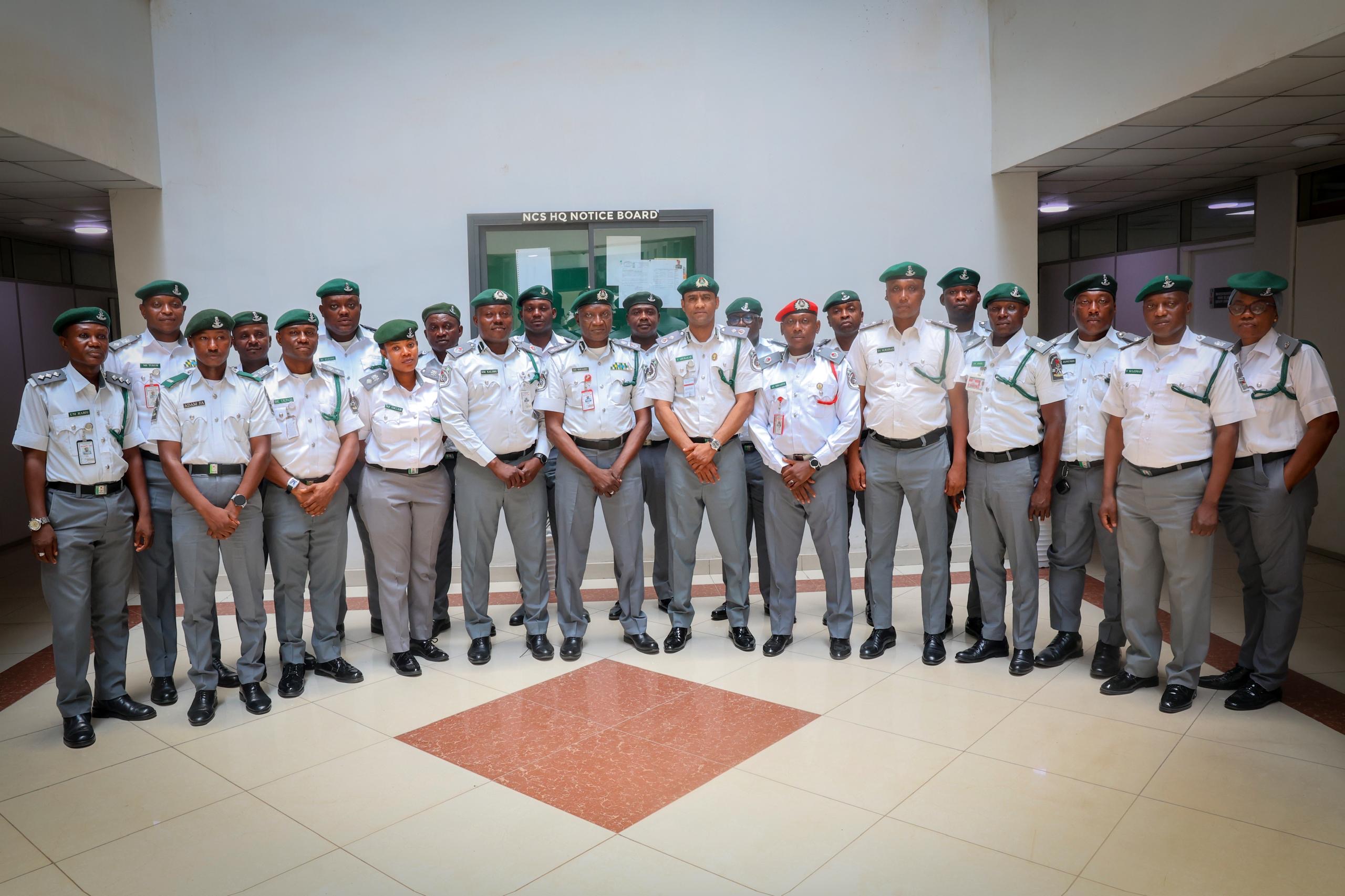
The training, which formed part of the Service’s first-quarter operational review, brought together officers of its Anti-Money Laundering and Combating the Financing of Terrorism (AML/CFT) Unit to strengthen enforcement strategies, improve intelligence sharing, and boost ethical standards.
Speaking at the event, Assistant Comptroller-General Muhammad Shuaibu described the AML/CFT Unit as a “critical pillar” in safeguarding Nigeria’s financial ecosystem, stressing that its role now goes far beyond traditional border operations.
According to him, the increasing sophistication of financial crimes especially those driven by digital platforms requires a more proactive, intelligence-led approach.
“The nature of financial crime is evolving. Our response must evolve even faster,” he said.
Shuaibu noted that the Unit’s operations have significantly contributed to protecting Nigeria’s financial integrity, adding that recent advancements such as the global functionality of Nigerian-issued bank cards underscore the need for stronger financial monitoring systems.
He explained that as Nigerians engage more in international transactions, the risk of cross-border financial crimes also increases, making compliance and enforcement more critical than ever.
The Customs leadership also used the platform to reposition postings to the AML/CFT Unit as strategic career opportunities, encouraging officers to see the assignment as a pathway to specialised expertise rather than a routine deployment.
In his remarks, Deputy Comptroller Saulawa Sunusi emphasised that integrity and discipline remain the backbone of effective enforcement.
He warned that unethical conduct or compromise within the system could weaken national efforts against financial crimes, urging officers to uphold the highest standards of professionalism.
The session also highlighted the importance of inter-agency collaboration, with the Service reaffirming its partnership with the World Customs Organization (WCO) to align Nigeria’s enforcement framework with global best practices.
Meanwhile, National Coordinator of AML/CFT, Assistant Comptroller Mas’ud Salihu, raised concerns over the growing use of digital channels for illicit transactions, including virtual assets and online financial systems.
He revealed that the Service is intensifying efforts to close operational gaps, strengthen surveillance, and improve communication between field officers and command structures.
“Financial crimes are no longer confined to physical cash movement. The battlefield has shifted online, and we must be ready,” Salihu stated.
Participants at the programme were urged to remain vigilant, avoid unauthorized information sharing, and strictly follow official communication protocols, as part of broader efforts to prevent internal security breaches.
Experts say the renewed focus by Customs signals a strategic shift in Nigeria’s fight against financial crimes one that prioritises technology, intelligence, and global cooperation in addressing modern threats.
With digital transactions becoming more widespread, authorities believe sustained sensitisation and capacity building will be key to staying ahead of increasingly complex financial crime networks.

