By Kehinde Ibrahim, Lagos
HBM Nigeria Plc has outlined an ambitious growth strategy anchored on capacity expansion, operational efficiency and sustainability initiatives, assuring shareholders that the company is well-positioned to deliver stronger returns and reinforce its position in Nigeria’s highly competitive cement industry.
The company said the transformation following its acquisition by Huaxin Building Materials Group marks the beginning of a new phase of growth that will not only enhance production capacity but also strengthen its ability to support Nigeria’s infrastructure and housing development while creating long-term value for investors, employees and host communities.
Speaking during a media parley in Lagos, the Group Managing Director and Chief Executive Officer, Lolu Alade-Akinyemi, said the company’s ongoing expansion projects would significantly improve its earnings potential and ultimately translate into greater value for shareholders.
According to him, the centerpiece of the expansion programme is the construction of an additional production line at the Ashaka Cement plant in Gombe State, which is expected to add 4.5 million tonnes of annual cement production capacity when it becomes operational in January 2027.
He explained that the increased capacity would improve product availability across the country, deepen market penetration and strengthen the company’s competitive position while boosting profitability.
Alade-Akinyemi noted that expansion naturally creates greater opportunities for business growth, adding that improved efficiency, sustainable manufacturing practices and increased production would result in stronger financial performance.
He said the company’s long-term strategy is focused on creating sustainable value for shareholders by increasing output, optimising operations and maintaining responsible business practices.
According to him, the expansion project will also stimulate economic activities through direct and indirect job creation, support local contractors and suppliers and deepen local content development in the communities where the company operates.
He stressed that the project would provide employment opportunities during both the construction and operational phases while opening additional business opportunities for small and medium-sized enterprises within HBM Nigeria’s value chain.
The chief executive also expressed confidence in the long-term prospects of Nigeria’s cement market, citing the country’s huge housing deficit and growing urbanisation as major demand drivers.
He observed that Nigeria still faces an estimated housing shortage of about 18 million units, adding that continued urban expansion and infrastructure development would sustain demand for cement products for many years.
Alade-Akinyemi further explained that HBM Nigeria’s emergence followed the acquisition of Lafarge Africa Plc’s majority stake by Huaxin Building Materials Group, describing the transition as more than a change of corporate identity.
According to him, Huaxin’s global expertise in engineering and cement manufacturing provides HBM Nigeria with access to advanced technologies, technical knowledge and in-house equipment manufacturing capabilities that will accelerate expansion projects and improve operational efficiency.
He said one of the earliest benefits of the acquisition is the ongoing Ashaka plant expansion, noting that Huaxin’s ability to manufacture cement production equipment internally has helped accelerate project execution while reducing costs and improving efficiency.
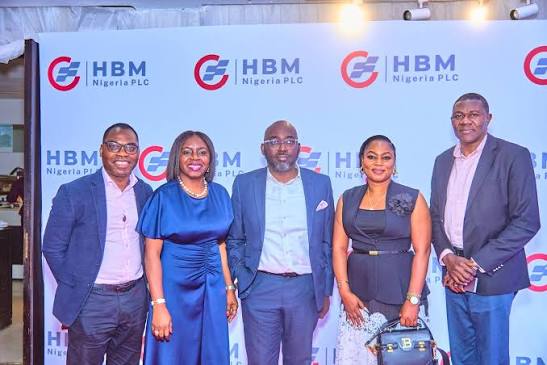
The company’s Director of Communications and Corporate Affairs, Viola Graham, said the media engagement was organised to provide greater clarity on the company’s transition to HBM Nigeria Plc and the strategic direction of the business under its new ownership.
She explained that the rebranding aligns with the company’s long-term vision of strengthening operational excellence, expanding its market presence and contributing more significantly to Nigeria’s construction and infrastructure sectors.
Graham assured stakeholders that despite the corporate name change, the company’s commitment to quality, innovation and value creation remains unchanged.
She also addressed concerns surrounding the rebranding, clarifying that customers would continue to enjoy the same trusted products as only the corporate identity has changed.
According to her, established cement brands including Elephant Cement, Unicem and Ashaka Cement will retain their names, product specifications and quality standards, ensuring continuity for customers across the country.
She added that HBM Nigeria would continue investing in research and development, innovation and low-carbon cement technologies as part of efforts to improve environmental performance while maintaining competitiveness in the building materials industry.
On the company’s sustainability agenda, the Head of Sustainability, Temitope Dosumu, said HBM Nigeria remains committed to promoting a circular economy through the collection and co-processing of non-recyclable waste that would otherwise constitute environmental hazards.
She explained that many plastic materials and other waste products cannot be recycled through conventional methods, leaving them in dumpsites where they pollute the environment despite possessing significant energy value.
To address the challenge, Dosumu said the company signed a Memorandum of Understanding with the Lagos State Government to recover such waste materials from dumpsites and convert them into alternative fuel and raw materials for cement production.
According to her, the initiative has created an economic value chain that supports waste collectors and scavengers while contributing to cleaner communities and improved waste management.
She explained that HBM Nigeria collects non-recyclable materials such as plastic bottles, sachet water bags, nylon packaging and other plastic waste from organisations and dumpsites before transporting them to dedicated collection centres.
The materials are subsequently baled, shredded and co-processed at the company’s cement manufacturing facilities, where they serve as alternative fuel and raw materials, reducing dependence on conventional energy sources and supporting cleaner production.
Dosumu noted that the company has consistently partnered with the Lagos State Government on environmental sanitation initiatives and remains committed to advancing a zero-waste future through sustainable manufacturing practices.
She said HBM Nigeria’s environmental commitment extends beyond cement production, stressing that the company is determined to build a cleaner value chain that protects the environment while supporting economic growth, resource efficiency and healthier communities.

