
By Michael Oche
The African Regional Organisation of the International Trade Union Confederation (ITUC-Africa) has called for increased investment in occupational safety and health (OSH), warning that unsafe and unhealthy workplaces continue to exact a heavy human and economic toll across the world, especially Africa.
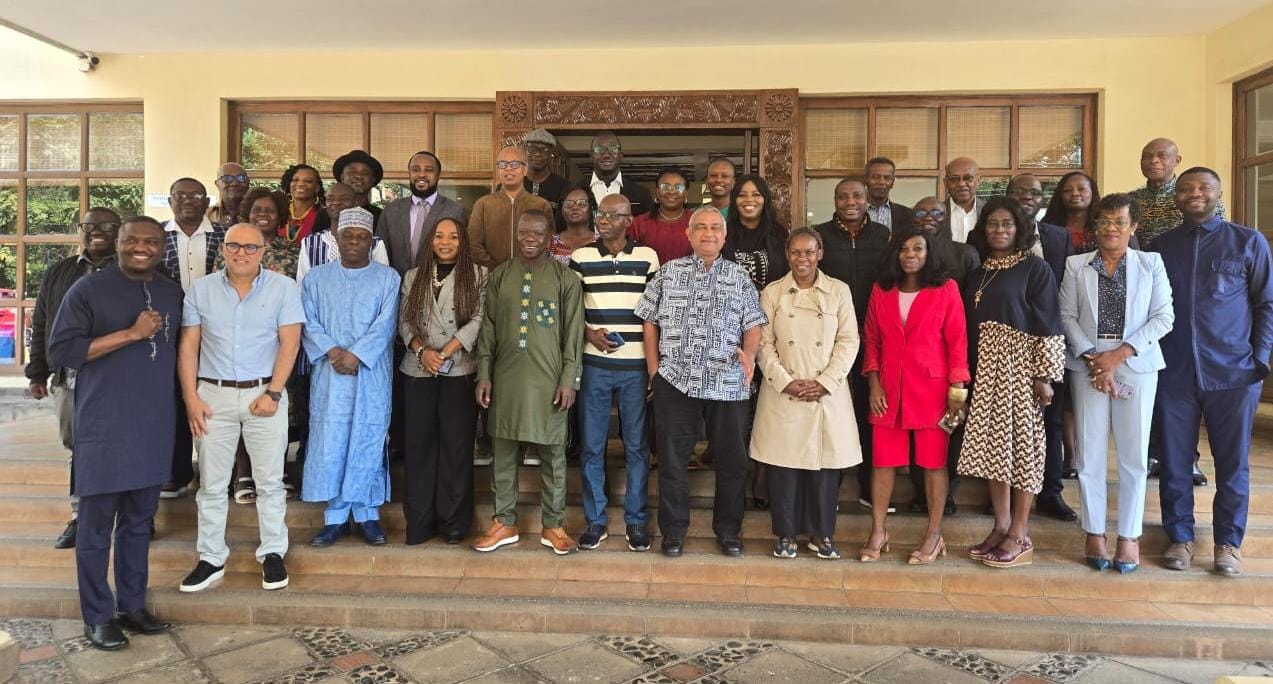
The call came on Wednesday during the opening of the Occupational Safety and Health workshop in Nairobi, Kenya, where trade union leaders, labour experts and workers’ representatives from across Africa gathered to discuss strategies for strengthening workplace safety systems and promoting a culture of prevention.
The three-day workshop forms part of ongoing efforts by ITUC-Africa and its partners to build the capacity of trade unions to champion occupational safety and health as a fundamental workplace right and a key pillar of sustainable economic development.
The ITUC-Africa said improving occupational safety and health is not only a workers’ rights issue but also an economic necessity, noting that poor workplace safety is estimated to cost the global economy about 4 per cent of global Gross Domestic Product (GDP) annually through lost productivity, compensation, medical expenses and work-related injuries and diseases.
Nigerian Pilot reports that the International Labour Organization (ILO) estimates showing that nearly 2.93 million workers die every year from work-related accidents and occupational diseases, while hundreds of millions more suffer non-fatal workplace injuries and illnesses.
On the continent, the ILO estimates that Africa loses an estimated 1.72% of its GDP annually to work-related psychosocial risks, higher than the global average of 1.37%. The ILO links psychosocial risks to long working hours, job insecurity, workplace harassment/bullying.
The ILO further estimates that Africa bears the heaviest burden of work-related deaths globally, with 7.39% of all deaths in the region linked to occupational risks. This is higher than Asia and the Pacific at 7.13% and Oceania at 6.52%. The organization further notes that Africa has the second-highest rate of disability-adjusted life years lost to workplace hazards, at 1,867.1 per 100,000 working-age people.
In his opening remarks, ITUC-Africa General Secretary Akhator Joel Odigie stressed that these figures underscore the urgent need for governments, employers and workers’ organisations to prioritise investment in safer and healthier workplaces.
He argued that investing in occupational safety and health should not be viewed as an additional cost but as a strategic investment that improves productivity, protects workers, reduces healthcare costs and strengthens national economies.
According to him, preventing workplace injuries and occupational diseases requires stronger enforcement of labour standards, improved labour inspection systems, better workplace risk assessments, regular safety training and adequate provision of personal protective equipment.
“Health and safety should be top of workplace concerns,” he said
Reflecting on the lessons of recent public health crises, Odigie said the COVID-19 pandemic fundamentally changed the labour movement’s understanding of workplace safety and exposed the need for stronger occupational health systems across Africa.
“When we started this year, we told ourselves that our number one priority is that we want to elevate our work on occupational safety and health,” he said.
“COVID-19 taught us a lesson. Ebola came upon us and we didn’t learn the lesson. But when COVID hit, we learned because it affected the whole world,” he added.
According to him, the pandemic prompted ITUC-Africa to document how trade unions and governments in 54 African countries responded to the crisis, leading to the creation of an occupational safety and health network, African Trade Union Network on Occupational Health and Safety (ATUNOSH), to strengthen collaboration and advocacy across the continent.
The General Secretary, however, acknowledged that the network had not achieved its intended impact and called for its revitalisation, stressing that the workshop should mark a new beginning for coordinated action on workplace safety.
“Our job is not to lament. Our job is to fix the situation,” he told participants, urging trade unions to move beyond discussions and take concrete steps to improve workers’ safety and health.
Odigie also welcomed the International Labour Organization’s decision to elevate occupational safety and health by incorporating key OSH conventions among the ILO’s Fundamental Principles and Rights at Work.
He said the move underscored the growing global recognition that every worker has the right to a safe and healthy working environment.
He urged trade unions across Africa to seize the opportunity to strengthen advocacy for the ratification, domestication and effective implementation of international labour standards, saying stronger national action was essential to protecting workers and promoting decent work across the continent.
In her welcome remarks Naome Chakanya, Senior Programme Officer at the International Training Centre of the International Labour Organization (ITCILO) in Turin, said the workshop reflects the long-standing strategic partnership between the ITCILO and ITUC-Africa in advancing occupational safety and health across the continent.
She noted that the collaboration is anchored on mutual trust, shared values and a common vision of building stronger trade unions that can champion safer and healthier workplaces.
She expressed optimism that the partnership would continue to deliver tangible results, stressing that the goal is to ensure that workers’ education on occupational safety and health translates into concrete and sustained action at the workplace.
According to her, strengthening the capacity of trade unions remains critical to promoting a culture of prevention and improving the safety, health and well-being of workers across Africa.
Naomi also stressed that trade unions can no longer afford to address occupational safety and health issues in isolation, urging labour organisations across Africa to adopt a coordinated and collaborative approach.
She said stronger partnerships and knowledge-sharing among trade unions, governments, employers and development partners are essential to building resilient occupational safety and health systems capable of responding to emerging workplace risks.
The Deputy President of ITUC-Africa, Comrade Rose Omamu in her remarks, stressed that improving occupational safety and health in Africa must go beyond ratifying international labour standards to ensuring they are fully domesticated and effectively implemented at the national level.
She challenged governments and trade unions to translate international labour conventions into enforceable national laws, while strengthening labour inspectorates with the resources and capacity needed to monitor compliance.
According to her, adopting international standards alone is not enough if they are not reflected in workplace practices and national legislation.
She also called for stronger protection for workers across both the formal and informal economy, noting that occupational safety and health should extend beyond the use of personal protective equipment to include workers’ mental well-being, dignity, equality, and protection from violence and harassment at work.
“Every workplace—from the largest multinational company to the smallest informal enterprise—must respect workers’ health and safety,” she said, adding that many workers across Africa continue to bear a disproportionate burden of unsafe and unhealthy working conditions.
Describing occupational safety and health as an investment rather than a cost, the ITUC-Africa Deputy President said healthier workers are more productive and that safer workplaces improve productivity while preventing avoidable economic losses.

