
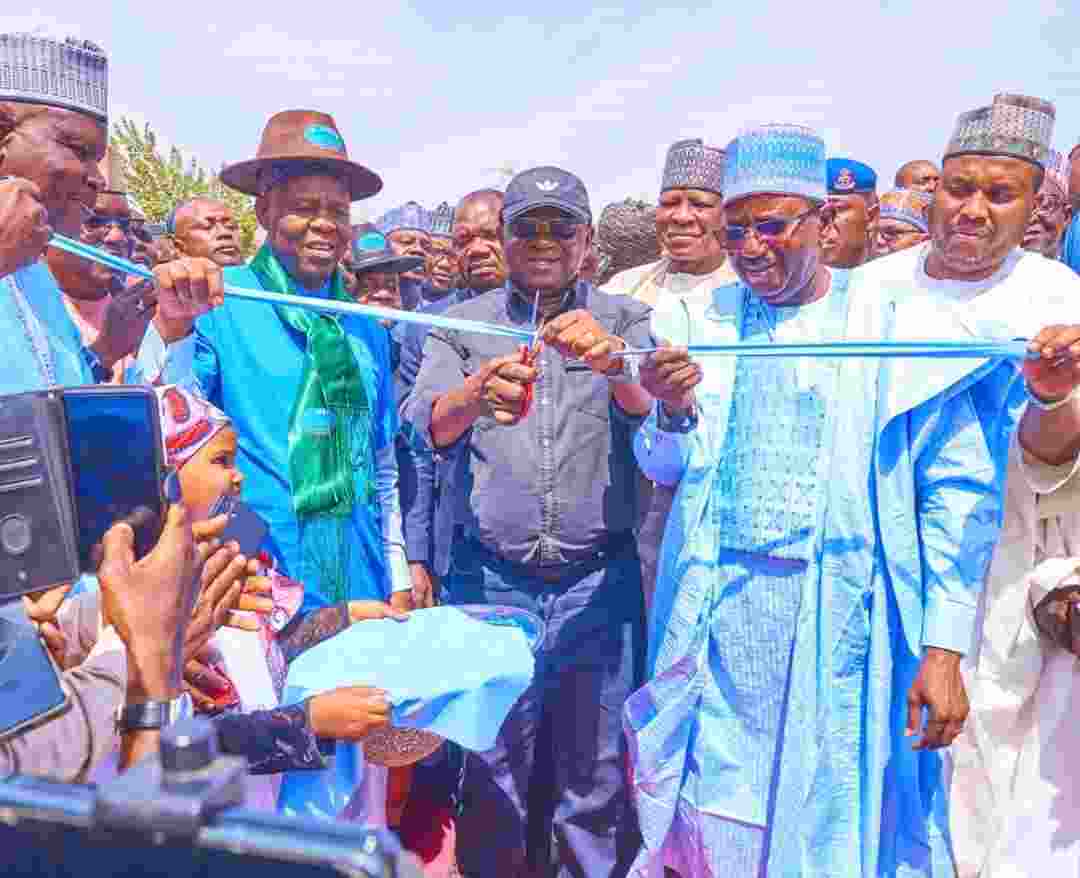
The Federal Government, through the Ministry of Water Resources and Sanitation, has officially launched a major Drainage and Erosion Control Project in Jahun Local Government Area, Jigawa State, aimed at curbing chronic flooding, preventing soil erosion, and promoting sustainable agricultural development.
Flagged off under the Hadejia Jama’are River Basin Development Authority (HJRBDA), the project was described by Minister Engr. Prof. Joseph Terlumun Utsev as a decisive response to decades of erosion and flooding that have destroyed farmlands and disrupted livelihoods in the community.
Speaking at the ceremony, Utsev explained that the intervention will protect lives and property while converting destructive water flows into a resource for productive agriculture, enabling year-round farming and boosting food production. He noted that the initiative aligns with President Bola Ahmed Tinubu’s Renewed Hope Agenda, which prioritises food security and economic growth nationwide.
Representing the Jigawa State Governor, Deputy Governor Engr. Aminu Usman Gumel commended the federal intervention, stressing that the project would improve quality of life, stimulate the local economy, and provide youth training in modern irrigation techniques such as drip irrigation.
Managing Director of HJRBDA, Rabiu Suleiman Bichi, described the project as a strategic move by the Tinubu administration to introduce modern irrigation systems in the region. He urged the community to maintain and protect the infrastructure to ensure long-term benefits.
The launch also featured a graduation ceremony for local youths trained in drip irrigation, underscoring the project’s focus on skills development and youth empowerment.
The event was attended by ministry directors, senior government officials, the Jahun District Head, local leaders, women, and youth stakeholders, reflecting a collaborative effort between government and community.
With its completion, Jahun LGA is expected to experience reduced flooding, enhanced agricultural output, and improved livelihoods, setting a model for similar initiatives across northern Nigeria.
By Juliet Ezeh, Abuja

