
By Chika Okeke
The Federal Government has identified poor logistics, high electricity tariffs and expensive credit as the biggest obstacles militating against the growth of the manufacturing sector while leaving the manufacturers in a dicey situation.
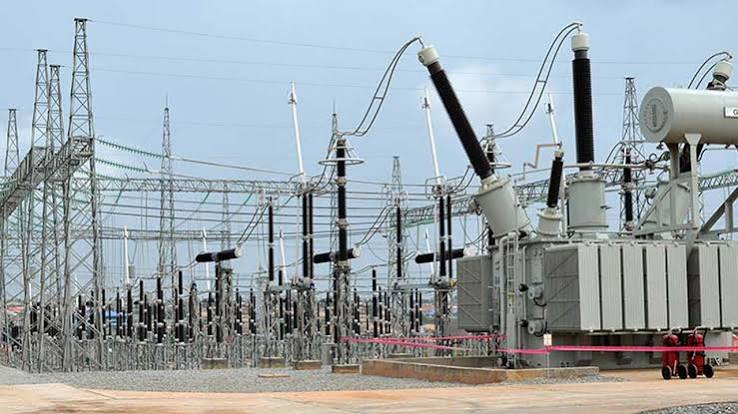
Regrettably, Nigerian factories paid between 15 cents and 30 cents per kilowatt-hour, compared with eight cents in Vietnam and 10 cents in China; while manufacturers spent about N1.34 trillion on electricity last year due to unreliable public power supply.
The Executive Secretary of National Sugar Development Council, NSDC, Mr Kamar Bakrin stated this while presenting a paper at the technical session of the 17th National Council on Industry, Trade and Investment, NCITI, in Abuja.
He lamented that every factory in Nigeria is running a second and unwanted business as a private power station, encouraging the Federal Government to cut production costs or risk losing the African market to more competitive economies under AfCFTA.
Bakrin disclosed that Nigeria faces a defining choice between competing for Africa’s 1.4 billion consumers or conceding the market to countries with lower production costs, lamenting that manufacturers also borrowed at interest rates between 27 per cent and 35 per cent, compared with nine per cent in Vietnam and three per cent in China.
He stated that the country ranked 88th out of 139 countries on the World Bank Logistics Performance Index, noting that manufacturing contributed only eight per cent to Nigeria’s Gross Domestic Product,GDP, while capacity utilisation declined to 57.7 per cent.
“None of this is a demand problem. We have a cost-of-production problem, and costs are within our power to fix,” he said.
Bakrin hinted that recent macroeconomic reforms had improved stability, with inflation easing and foreign reserves reaching $51 billion but added that global manufacturers relocating supply chains would not wait indefinitely for Nigeria to improve its competitiveness.
The ES cited an example with Nigeria’s urea industry, as proof that deliberate industrial policies could transform manufacturing and expand exports, saying that urea production rose from 500,000 tonnes in 2005 to 6.5 million tonnes after the government adopted supportive gas pricing.
To this end, he proposed reducing industrial electricity costs to between eight cents and 10 cents per kilowatt-hour, just as he recommended single-digit lending rates, port clearance below seven days and doubling worker productivity by 2030.
He encouraged every state to establish at least one industrial cluster with dedicated electricity within 12 months, proposing harmonising levies, introducing a State Industrial Competitiveness Index and enforcing Nigeria’s First procurement across governments.
Bakrin informed that tax incentives, subsidised power and other government support should remain tied to measurable and independently verified performance, pleading with states to improve electricity markets, secure industrial land, simplify levies and align technical education with industrial needs.
He was optimistic that stronger manufacturing will create jobs, reduce imports, strengthen the Naira and discourage youth emigration, adding that the industrial half of Nigeria’s story will be written in kilowatt-hours, lending rates and port days.

