
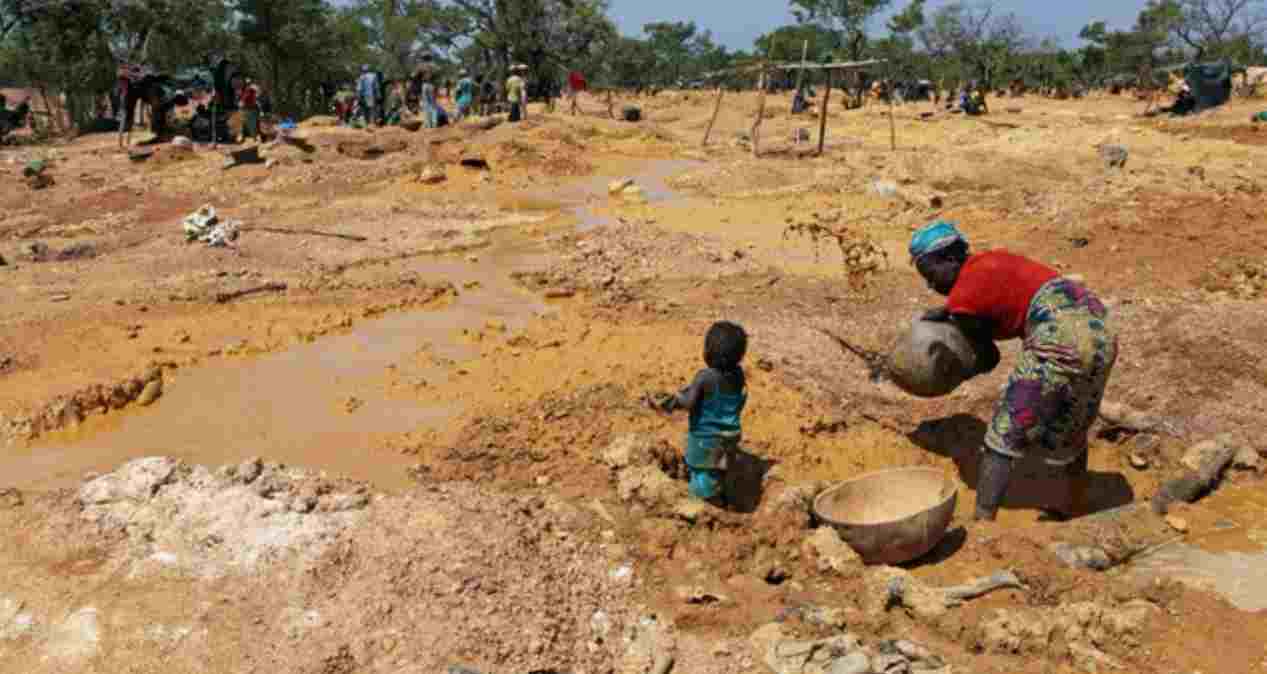
Women in Mining Africa (WiM-Africa) has today observed the Silent 15 of Bilalikoto – Honoring the Fallen, an annual continental day of remembrance dedicated to women who have lost their lives in mining accidents across Africa, with particular focus on artisanal and small-scale mining (ASM).
The commemoration recalls the tragic deaths of more than 48 artisanal miners, mostly women, who perished in a mine collapse in Bilalikoto, Mali, on 15 February 2025 while working to support their families.
In a press release, WiM-Africa noted that the Bilalikoto tragedy reflects a recurring pattern of preventable mining accidents across the continent. The statement cited similar incidents in Obuasi, Ghana, where dozens of miners were killed in unsafe underground workings; in the Democratic Republic of the Congo, where collapses in Katanga’s cobalt and copper sites have claimed many lives; in Zimbabwe’s Gwanda and Mashonaland West, where informal miners have died in collapses; in Nigeria’s Zamfara, Niger, and Benue States, where mine disasters exposed gaps in safety oversight; and in Kenya’s Siaya County, where recent gold mine collapses killed women miners.
WiM-Africa stressed that Silent 15 of Bilalikoto is not only a memorial but also a call for urgent, coordinated action to address systemic failures in mining safety, formalization, and accountability. The organization emphasized that women in ASM continue to operate in hazardous conditions, often outside legal frameworks, without adequate training, protective equipment, emergency response systems, or social protection.
“These deaths are not isolated accidents but symptoms of deeper structural challenges: weak enforcement of safety regulations, limited investment in formalization of ASM, lack of gender-responsive mining policies, and opaque mineral supply chains that disconnect buyers from conditions at mine sites,” the statement read.
WiM-Africa called on African Union institutions, national and local governments, mining companies, mineral buyers, development partners, and civil society to prioritize safety as a core pillar of mining governance. This includes formalizing artisanal mining, enforcing safety standards, ensuring compensation for families of deceased miners, strengthening traceability and accountability, and integrating women meaningfully into decision-making processes.
“As Africa positions itself as a key supplier of minerals critical to global development and the energy transition, it cannot ignore the human cost at the source. Women should not lose their lives extracting resources that fuel global economies,” WiM-Africa stated.
The organization concluded that Silent 15 of Bilalikoto stands as a continental reminder that remembrance must be matched with reform, and that the future of Africa’s mining sector must be built on safety, dignity, and justice for those who work within it.
By Palma Ileye, Abuja

