
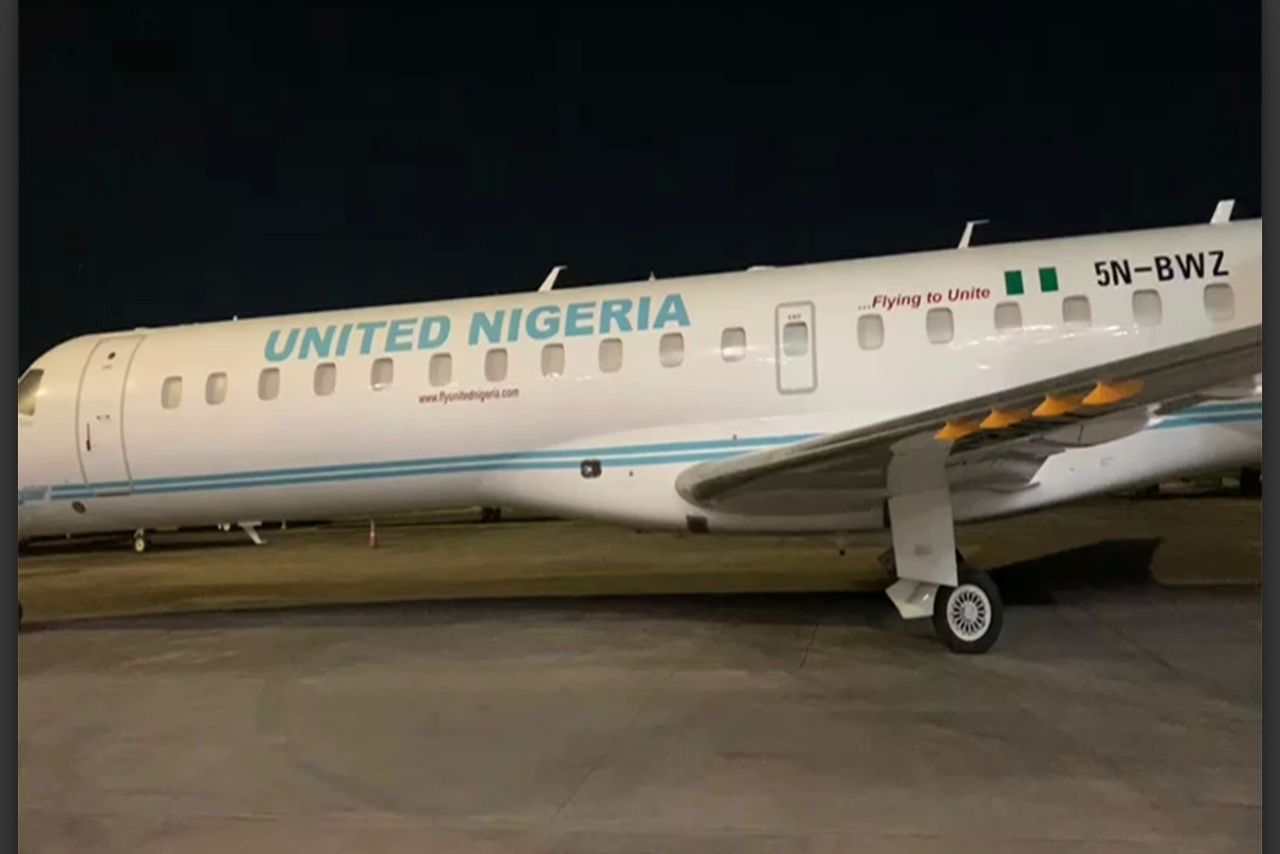
United Nigeria Airlines has once again attributed recurring flight delays and cancellations to systemic shortcomings within Nigeria’s aviation sector, highlighting the industry’s chronic inability to resolve long-standing operational failures.
Speaking during a strategic meeting in Lagos with the Managing Director of the Federal Airports Authority of Nigeria (FAAN), Olubunmi Kuku, the airline’s Chairman, Prof. Obiora Okonkwo, cited sunrise-to-sunset airport restrictions, limited Category II facilities, and constrained operating hours as major causes of persistent disruptions.
While these infrastructural deficiencies are undeniable, they are neither new nor unforeseen. Industry stakeholders have long pointed to inadequate runway lighting, limited instrument landing systems, and insufficient airport upgrades as barriers to seamless operations. The continued reliance on these explanations raises questions about planning, investment prioritisation, and accountability by both regulators and airlines.
Okonkwo also identified the growing incidence of bird strikes as a financial and operational burden. However, aviation experts note that wildlife hazard management is a routine global safety responsibility, and its persistence in Nigeria reflects lapses in environmental control and airport planning. He further raised concerns about rising cases of unruly passenger behaviour, which analysts suggest may be linked to mounting frustration over unreliable schedules, abrupt cancellations, and poor communication.
The airline additionally requested land in Abuja to establish a Maintenance, Repair and Overhaul (MRO) facility, underscoring Nigeria’s dependence on foreign providers and the slow pace of strategic aviation infrastructure development.
In response, FAAN reiterated its commitment to collaboration and disclosed ongoing environmental control measures to address bird strikes, including improved habitat management around airports. The authority also announced plans to upgrade airfield lighting at Category II airports to enable extended operations, with improvements underway in Benin and proposed for Jos.
Despite these assurances, the aviation sector remains characterised by delayed execution, incremental fixes, and structural fragility. Airlines cite infrastructure, regulators promise upgrades, but passengers continue to bear the brunt of disruptions. Without enforceable timelines, transparent funding, and stronger oversight, Nigeria’s aviation industry risks remaining locked in a cycle of explanations without durable solutions.
By Kehinde Ibrahim, Lagos

