
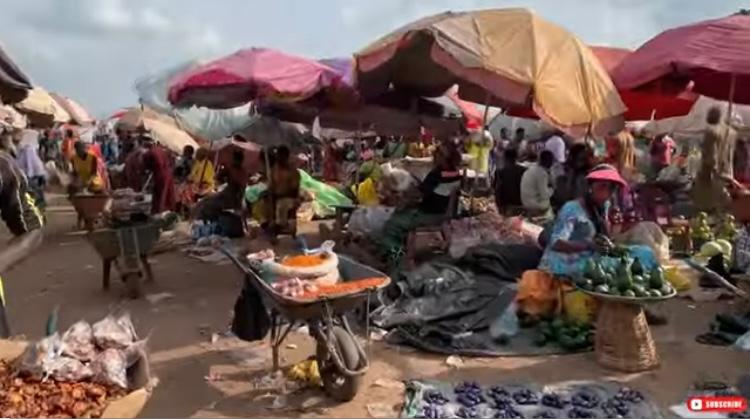
At Kabusa Market in Abuja, ₦5,000 no longer stretches the way it once did. What used to cover rice, beans, tomatoes and cooking oil now barely settles two items. Aisha Mohammed, a petty trader and mother of three, walks slowly between stalls, mentally crossing out what her family will go without.
There is no new tax,” she says quietly. “But every day, something is taken from us.”
There was no announcement from government, no bill passed by lawmakers, no official tax notice pasted on market walls. Yet millions of Nigerians are paying more each day just to survive. Economists describe it as inflation, but for ordinary citizens, it feels like an invisible tax deducted silently from their income without receipt or explanation.
Unlike statutory taxes backed by law, this one has no name and no rate. It appears quietly in rising food prices, transport fares, electricity bills, cooking gas, healthcare costs and rent. While incomes remain largely unchanged, the cost of living continues to climb, forcing households to spend more for the same basic needs.
In Abuja, where thousands depend on fixed salaries, the impact is especially sharp. Transport fares that once stood at ₦300 now cost as much as ₦1000 on some routes. A bag of rice that sold for about ₦35,000 now goes for nearly double. Cooking gas refills and bread prices have followed the same upward path. For families earning modest incomes, these increases translate into fewer meals, postponed hospital visits and growing debt.
Transport is often the first place residents feel the pressure. In suburbs like Nyanya, Kubwa and Gwagwalada, many commuters now trek long distances to reduce costs. Commercial driver Musa Abdullahi says rising fuel prices and vehicle maintenance expenses have left operators with little choice.
Fuel is expensive, spare parts are worse,” he explains. “If we don’t increase fares, we won’t survive.”
For civil servant Grace Okorie, the effect has been life-altering. Her salary has remained the same, but transport alone now consumes a significant portion of her monthly income.
My pay did not change, but everything around me did,” she says. “That is how this invisible tax works.”
Food inflation remains the most painful expression of the burden. At Garki Area 2 market, traders say customers now buy in cups instead of measures, while protein-rich foods such as meat, fish and eggs have become occasional luxuries.
People price and walk away,” one trader says. “They come back later with less money.”
Health experts warn that prolonged food inflation could worsen malnutrition, particularly among children, pregnant women and the elderly, as families adjust by cutting both quantity and quality of meals.
For pensioners and retirees, inflation has rewritten life plans entirely. Ibrahim Sadiq, a retired civil servant, says his pension has lost much of its value.
My pension is the same amount,” he says. “But drugs, food and transport are all higher. Every month, I remove something from my life.”
Students are also affected. University undergraduate Samuel James admits that attending lectures now depends on whether he can afford transport.
Sometimes transport money competes with feeding,” he says. “Something must give.”
Economists explain that inflation behaves like a regressive tax, hitting low-income earners harder than the wealthy. When prices rise faster than wages, purchasing power falls, effectively extracting income from households without legislative approval. Fuel price increases, foreign exchange pressures, electricity tariffs and logistics challenges have combined to push costs higher across sectors, turning inflation into a silent but powerful collector.
The Federal Government maintains that recent economic reforms are necessary to stabilise the economy and attract long-term growth. Officials have also announced social intervention programmes aimed at cushioning vulnerable Nigerians. However, many citizens say relief has not kept pace with rising prices.
We hear policies and plans,” Aisha says at Kabusa Market, “but hunger does not wait.”
What makes the invisible tax especially painful is its silence. There is no timeline for relief, no clear explanation at the point of purchase and no official acknowledgment in daily transactions. Every visit to the market or bus stop becomes a reminder that life is getting harder not because of a new tax law, but because inflation has quietly taken its place.
Economists warn that prolonged pressure on household income could deepen poverty and widen inequality if wages do not rise alongside costs. Until that balance is restored, Nigerians will continue to pay through reduced meals, delayed healthcare, limited movement and shrinking hope.
There may be no official levy to point to, but for millions, inflation has become Nigeria’s invisible tax: unannounced, unreceipted and unavoidable. The question many now ask is not whether they are being taxed, but how much longer they can keep paying.
By Juliet Ezeh

