
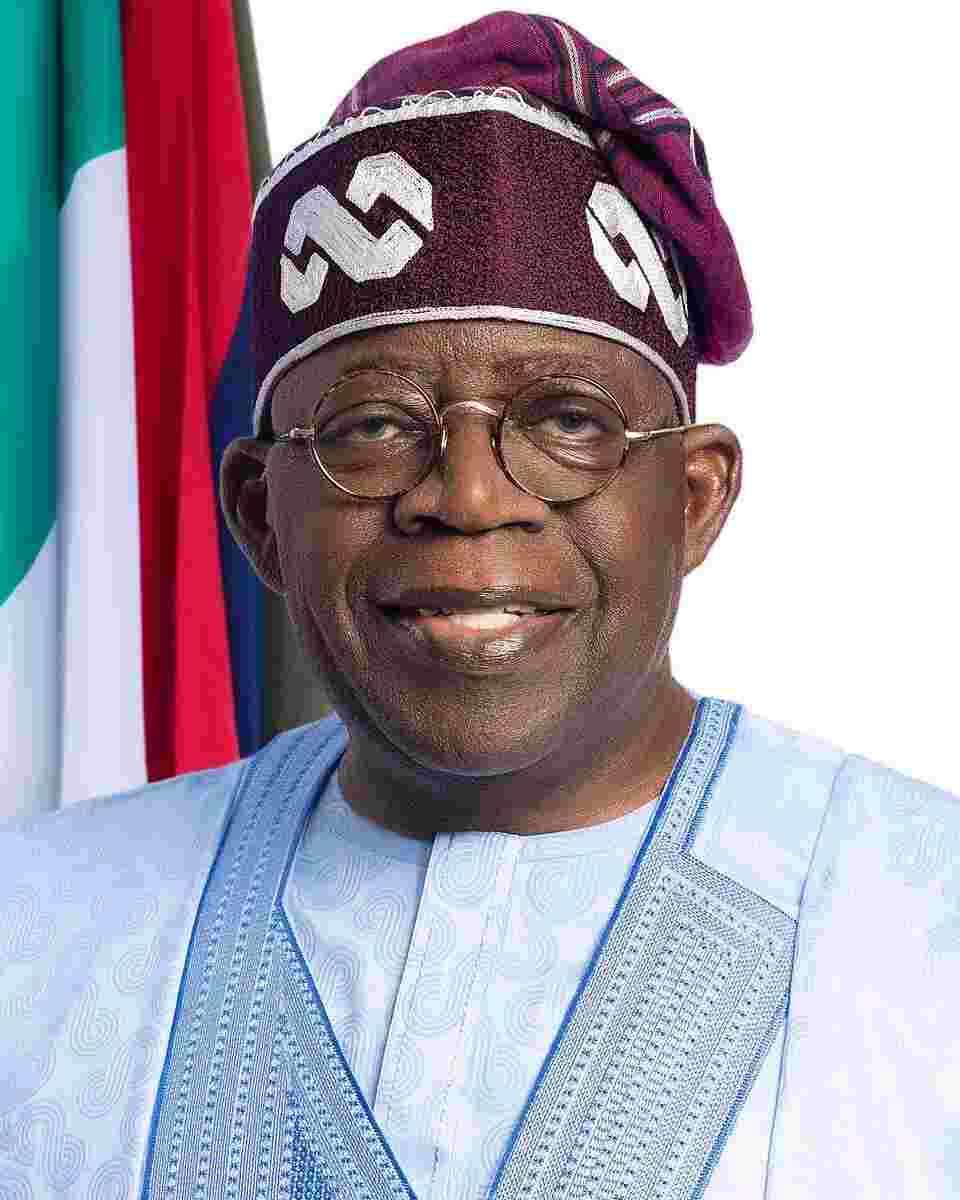
Tinubu’s Peace Deal
On September 22, 2025, President Bola Tinubu once again stepped into the turbulent political waters of Rivers State, brokering peace between Federal Capital Territory (FCT) Minister Nyesom Wike and his successor, Governor Siminayi Fubara. It was the fourth time the president had intervened in the bitter feud between the two men, and the intervention came shortly after the lifting of emergency rule imposed on the state at the height of conflict between estranged allies. This latest effort was a continuation of earlier reconciliations, including the June 25, 2025 “breakthrough” meeting at the presidential villa, which many had hoped would finally bring stability to the oil-rich state. Tinubu’s involvement in the Rivers crisis dates back to October 31, 2023, when he first attempted to halt impeachment proceedings against Fubara initiated by a pro-Wike faction in the state assembly. That was followed by another meeting on December 18, 2023, where both men signed an eight-point peace agreement under Tinubu’s watch. Despite these repeated interventions, the feud has persisted, growing more complex and more dangerous with each passing year.
The most recent development came on January 26, 2026, when Tinubu held a closed-door meeting with Wike before departing for Turkey. Reports suggested that the president prevailed upon the minister to allow peace to reign in Rivers State, but the outcome remains uncertain.
Genesis of the Feud
The feud is the result of a sudden emotional distance between Wike and Fubara, which severed a relationship built on loyalty and trust. Wike, who single-handedly installed Fubara as governor in May 2023, accused his successor of undermining his political structure and plotting to replace him as the de facto leader of Rivers politics. Fubara, on the other hand, claimed that Wike’s overbearing demands were suffocating governance and detrimental to the state’s progress. What began as a clash of interests soon escalated into a full-blown political war, with both men determined to assert dominance.
The crisis took a dramatic turn in December 2025 when Fubara defected from the Peoples Democratic Party (PDP) to the All Progressives Congress (APC). His defection came a day after meeting with President Tinubu on December8, 2025. On arrival in Port Harcourt, the governor officially announced his defection to the APC, declaring that he wanted to work closely with the president and offer him full support. Wike responded with fury. The FCT minister immediately embarked on a tour of Rivers State, campaigning for Tinubu’s reelection, and vowing to dethrone Fubara in 2027. During his visits to local government areas, Wike urged his supporters to prepare for a political war, insisting that Fubara had breached critical clauses in the peace agreements facilitated by the president.
The 2027 Interest
The political situation in Rivers has provoked strong reactions across Nigeria. Many citizens accuse Wike of bullying Fubara, while others question Tinubu’s repeated interventions that have failed to enthrone lasting peace in the melting pot of Nigeria’s oil belt. When the president invited Wike for a meeting last month, many believed it was to call him to order after receiving reports of his disruptive activities in Rivers. Yet, Wike further escalated the already tense political atmosphere on January 31, 2026, when he accused Fubara of denying him access to the Yakubu Gowon Stadium for a rally of his newly formed Renewed Hope Ambassadors in Port Harcourt. Speaking during the rally that eventually held at an alternative venue, Wike vowed to break open the facility if such denial occurred again, a threat that was widely condemned as incitement to violence.
Wike’s recalcitrant posture has raised questions about Tinubu’s genuine commitment to pouring oil on the troubled waters of Rivers State.Some high-profile politicians, such as Omoyele Sowore, argue that Tinubu owes Wike a debt of gratitude for delivering Rivers votes in the 2023 election and is,therefore,reluctant to confront him directly. Others, like former Vice President Atiku Abubakar, believe Tinubu is maintaining strategic neutrality for his own political gain in 2027. The battle for political dominance has evolved far beyond a local dispute. It has prompted emergency rule, party defections, and political realignments, transforming into a high-stakes national power struggle with Tinubu at the centre.
As many observers have suggested, Tinubu’s calm disposition is not indecision but strategy. The president needs decisive votes from Rivers State and will do nothing to jeopardise his chances in 2027. He needs Wike’s political weight to secure majority support in a state where other parties and presidential hopefuls will compete fiercely. He also needs Fubara, as the incumbent governor, to do the necessary groundwork for his electoral victory. Both men claim to be fighting for Tinubu’s survival, and analysts believe the president will avoid openly taking sides as the 2027 presidential election approaches. Instead, he appears to be balancing power between the feuding camps to perpetuate their loyalty and ensure that neither becomes too powerful to challenge his authority. Critics further argue that this is a replication of Tinubu’s loyalty-driven governance model in Lagos, where he has maintained control over successive transitions by ensuring that allies aren’t politically strong enough to break free of his influence.
The 2027 Interest: Implications for Democratic Survival
Politics is not the typical terrain for selfless leadership. Yet, this balancing act carries heavy implications for democratic governance. If Tinubu’s critics are correct, his 2027 game plan is on a collision course with the sanctity of the rule of law. The Rivers drama has already produced early campaigns that flout Nigeria’s Electoral Act, while unlawful legislative defections have mocked the 1999 constitution. Governance in Rivers State has stalled for over two years, reducing Nigeria’s “treasure base” to a theatre of unending political feud. The state, which should be driving national economic growth, has instead become a battleground for personal ambition.
As things stand, Tinubu faces a stark choice. He has the option to prioritise political survival by continuing to appease both Wike and Fubara, or assert his authority as Commander-in-Chief to restore constitutional order in Rivers State. The stakes are high, not just for the state but for Nigeria as a whole. When the quest for decisive votes supersedes the stability of institutions, it is not only the 2027 interest that is at risk, it is the very foundation of the federal republic.
The Rivers crisis illustrates the fragility of Nigeria’s democratic experiment. It shows how personal ambition, unchecked political influence, and weak institutions can derail governance. Tinubu’s repeated interventions demonstrate his awareness of the danger inherent in the Rivers political impasse, but his reluctance to intervene decisively reveals the limits of his strategy. By keeping both Wike and Fubara tethered to his political survival, the president risks fuelling a cycle of instability that could overheat the polity long after 2027.
For Nigerians watching from the sidelines, the Rivers drama is both exhausting and instructive. It is exhausting because it has dragged on for years, consuming national attention and resources. It is instructive because it highlights the dangers of over-centralised political power and the consequences of weak institutional checks. The feud between Wike and Fubara is not just about Rivers; it is about the future of Nigeria’s democracy. It is about whether the rule of law can withstand the pressures of political expediency. It is about whether governance can survive the weight of personal ambition.
Tinubu’s balancing act may secure him votes in 2027, but it comes at a cost. The cost is stalled governance in Rivers State, weakened institutions, and a dangerous precedent that political survival can trump constitutional order. As the nation inches closer to 2027, Nigerians must ask themselves whether this is the kind of democracy they want to sustain. For now, the chessboard remains in play, with Tinubu carefully moving pieces to secure his advantage. But the question remains: at what price?
By Tekena Amieyeofori, Abuja

