
Trade unions in Nigeria have expressed concern over the slow pace of implementing the International Labour Organisation’s Convention 190 (C190), which seeks to eliminate violence and harassment in the world of work.
Nigeria ratified the convention in November 2022, becoming the first country in West Africa to do so. However, union leaders say several gaps continue to hinder effective enforcement.
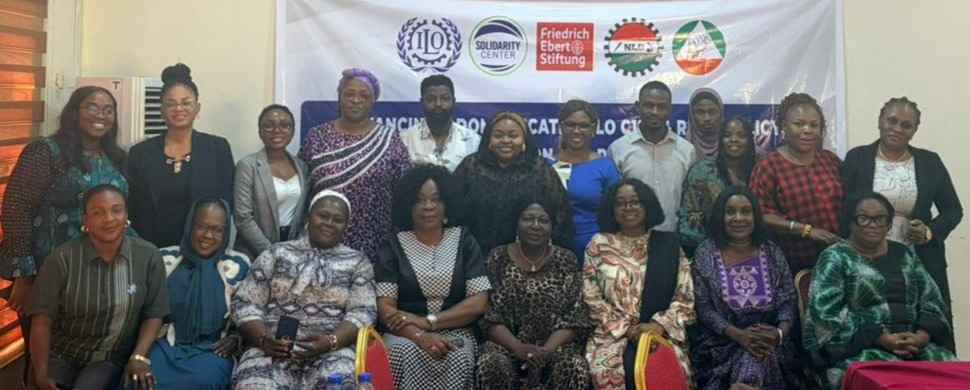
At a strategy workshop in Abuja on Wednesday, convened with support from the Solidarity Center, Rita Goyit, Head of the Women and Youth Department of the Nigeria Labour Congress (NLC), acknowledged progress but stressed that challenges remain.
“Despite the gains recorded, we still have gaps and that is why we are here to examine those gaps and develop strategies to speed up implementation,” she said.
The workshop brought together representatives from the ILO, Frederick Ebert Stiftung (FES), civil society, trade unions, and the media.
Goyit noted that unions played a critical role in Nigeria’s adoption of C190, adding that the NLC has since adopted a zero-tolerance policy on gender-based violence and harassment (GBVH). She highlighted achievements such as mainstreaming GBVH issues into union education programmes, incorporating provisions into Collective Bargaining Agreements, and creating safe spaces for survivors.
Despite these steps, she pointed to gaps including slow enforcement, inadequate consultation of unions by government, lack of a coordinated national plan, and the absence of designated GBVH inspectors within regulatory bodies.
Echoing her concerns, Esther Asabe Ahmadu, Chairperson of the Trade Union Congress (TUC) National Women Commission, said ratification has strengthened advocacy for safer workplaces. “Women now understand what GBVH is and what to do when they fall victims,” she noted.
Participants also raised alarm over harassment in the public service, particularly targeting junior workers, and highlighted growing risks faced by female e-hailing operators. They called for stronger protective mechanisms and awareness campaigns targeting management officials.
Suzie Okome, Programme Officer at the Solidarity Center, emphasized that the focus must now shift from ratification to implementation. “It is good that the convention has been ratified, but if we ratify it and do not make use of it, then it becomes useless,” she said.
She added that unions must continue to mainstream C190 provisions into internal policies and collective bargaining processes, stressing that the ultimate goal is improved workplace protection for Nigerian workers.
By Michael Oche, Abuja

