
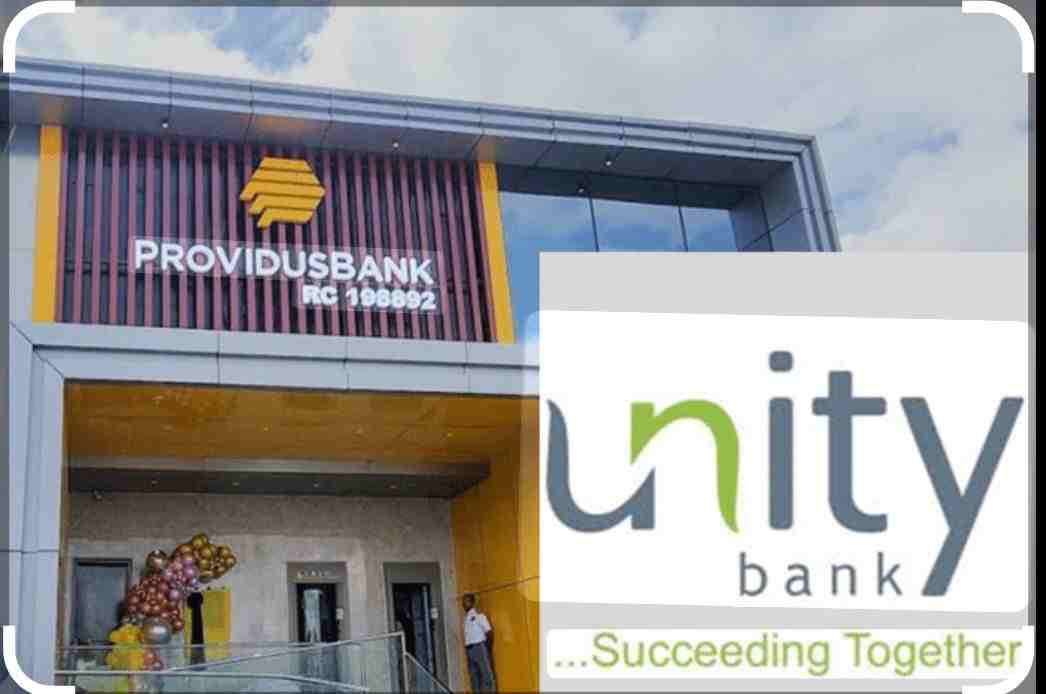
The proposed merger between Unity Bank Plc and Providus Bank Limited, though presented as a strategic consolidation, has raised fundamental questions about the underlying health of Nigeria’s mid-tier banking segment and the sustainability of compliance-driven mergers.
With shareholder approval secured at separate Extraordinary General Meetings in September 2025 and regulatory backing obtained from the Central Bank of Nigeria (CBN) and the Securities and Exchange Commission (SEC), the transaction now awaits final court sanction. Yet the speed of the deal appears driven more by regulatory pressure under the apex bank’s recapitalisation framework than by strategic foresight.
At the heart of the matter is capital adequacy. The enlarged institution’s combined capital base of just over ₦200 billion merely satisfies the minimum threshold required to retain a national banking licence. This narrow margin underscores the reality that both institutions, on a standalone basis, faced significant constraints in meeting the revised capital requirement independently.
While management has framed the merger as transformative, concerns remain over structural inefficiencies that often plague consolidation exercises, including overlapping branch networks, duplicated roles, integration risks, technology harmonisation challenges, and potential workforce rationalisation. Analysts warn that these factors could erode shareholder value if poorly managed.
Further unease stems from reported financial accommodation provided by the apex bank. Regulatory support may stabilise the immediate transaction, but it also signals fragility within parts of the sector. When consolidation depends partly on supervisory intervention, questions arise about whether the resulting institution is genuinely strengthened or merely stabilised.
The broader recapitalisation drive aims to fortify the financial system, deepen capital buffers, and reduce systemic vulnerabilities. However, the growing wave of survival-driven mergers suggests that the exercise is less about expansion and more about forced adaptation. Institutions unable to organically generate capital are being compelled to combine resources, potentially creating larger entities that still struggle with legacy weaknesses.
Market scepticism has also surfaced in reports of delays in the merger process, which the banks have dismissed. Yet the need for public clarifications reflects investor caution. Consolidation may solve an immediate compliance problem, but it does not automatically resolve long-standing issues such as asset quality, profitability pressures, cost-to-income imbalances, and governance concerns.
In essence, while the Unity–Providus merger satisfies regulatory requirements on paper, it remains unclear whether it delivers genuine strategic strength. Compliance with capital thresholds should not be mistaken for resilience. The true test will lie in the merged institution’s ability to generate sustainable earnings, manage integration risks effectively, and compete meaningfully in an increasingly demanding banking environment.
By Kehinde Ibrahim, Lagos

