
By Lanre Oloyede
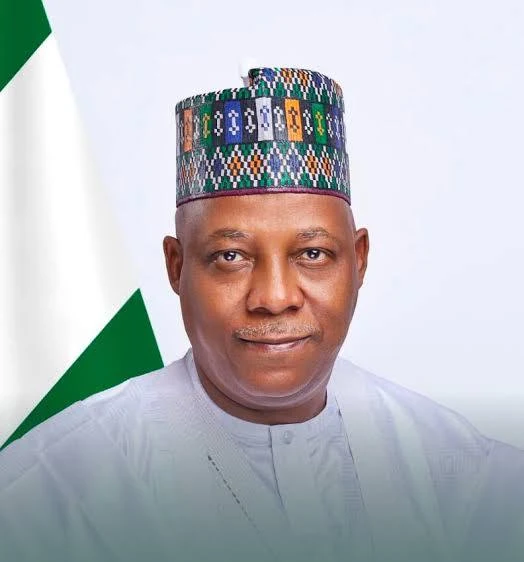
Vice President Kashim Shettima on Thursday led top figures of the ruling All Progressives Congress (APC) in formally submitting President Bola Ahmed Tinubu’s expression of interest and nomination forms for the 2027 presidential election, declaring that Nigeria has “crossed the river” under the current administration.
Speaking at the APC national secretariat, Shettima said President Tinubu has shown “capacity and resolve” in steering the country through economic turbulence and deserved another four-year mandate.
“We are here as Nigerians and secondly as members of the All Progressives Congress to submit this very priceless nomination and expression of interest form of our dear President and leader,” the Vice President said.
He argued that Tinubu inherited severe economic challenges, including dwindling foreign reserves, but chose to implement difficult reforms rather than “kick the ball down the road.”
“The storms of the past years have not diminished him. They have made a party hero out of him,” Shettima declared.
In a strong political message ahead of the 2027 race, the Vice President insisted that “Nigeria is now working” and urged Nigerians across political and religious divides to rally behind Tinubu’s second-term bid.
He said the administration’s “Renewed Hope Agenda” had already begun yielding “phenomenal” socio-economic gains, adding that the country was now “on a path to recovery and growth.”
Earlier, APC National Chairman Nentawe Yilwatda announced that the party’s National Working Committee had waived the screening process for Tinubu, citing an earlier endorsement by the APC National Executive Committee (NEC).
According to Yilwatda, the NEC — described as the party’s second highest decision-making organ — had unanimously endorsed Tinubu for a second term last year, making additional screening unnecessary.
“That is the reason why the National Working Committee, in its wisdom, decided to waive screening for Mr President,” he said.
The APC chairman defended Tinubu’s economic reforms, claiming they had prevented the collapse of Nigeria’s economy and boosted revenue allocations to states and local governments.
He also highlighted major infrastructure projects being undertaken by the administration, including the Lagos-Kano-Maradi railway, the Badagry-Sokoto highway corridor, and the Ajaokuta-Kaduna-Kano (AKK) gas pipeline.
Yilwatda described the proposed Maradi dry port as a strategic economic hub that could attract trade from neighbouring countries such as Niger, Chad and Burkina Faso, positioning it as a major non-oil revenue source for Nigeria.
In one of the strongest endorsements yet from the APC leadership, he said Tinubu’s reforms in the power sector had broken long-standing barriers by allowing states to independently generate and distribute electricity.
“Anyone in Nigeria knows that power supply is more stable today than before,” Yilwatda claimed.
He added that the APC leadership was united behind Tinubu’s re-election ambition, insisting the President had demonstrated the courage to take “difficult but necessary decisions” for the country’s long-term stability.
The event drew senior APC stakeholders, including governors and members of the National Executive Committee, underscoring the ruling party’s early mobilisation ahead of the 2027 general election.

