
By Godwin Ogar
The federal government has embarked on a nationwide study to capture the size of the livestock industry as well as relevant data as basis for adequate assessment of progress made, using its Monitoring and Evaluation, M&E, framework based on established, credible, evidence-based foundation.
A press statement signed by the Deputy Director, Information and Public Relations in the Federal Ministry of Livestock Development, Henrietta Okokon, states that “the initiative aligns with the Ministry’s broader commitment to transparency, accountability, and results-oriented governance within the national development agenda.”
The Baseline Study seeks to assess the status of the livestock sector, provide sound basis for policy formulation, planning, investment decision-making as well as enable systematic tracking of performance over time.
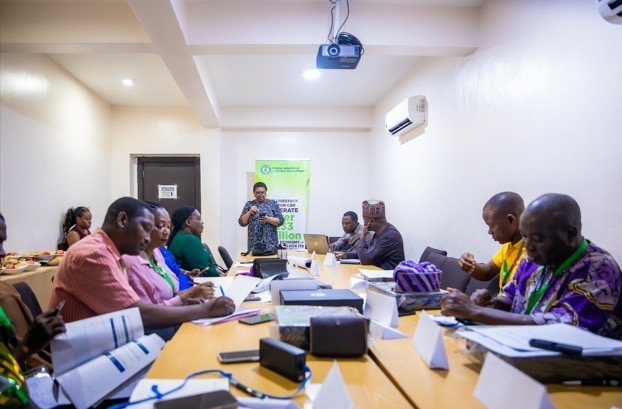
A rigorous mixed approach that integrates secondary data reviews, Focus Group Discussions, FGD, and Key Informant Interviews, KIIs, were utilized between April 20 and 24, 2026, in the course of the study to ensure “both qualitative precision and qualitative depth.”
The Ministry “has adopted a value chain approach, including cattle (beef and dairy), poultry (broilers, layers and hatcheries), small ruminants (sheep and goats), piggery, micro livestock, feed and fodder systems, and essential services such as veterinary care, logistics, and market infrastructure to ensure holistic coverage,” recognizing that the livestock sector is an interconnected system.
Stakeholders who participated in the study were drawn from across the livestock value chain, including producers, pastoralists, ranch operators, processors, aggregators, traders, marketers, input suppliers, service providers and relevant government and regulatory institutions, who conducted field activities across six selected states to capture Nigeria’s geographic and production diversity.
The Focus Group Discussions, FGD, during the five-day study provided direct insights into the challenges in production, market dynamics and key performance drivers, while Key Informant Interviews, KIIs, captured the opinions of senior government officials, technical experts and private sector stakeholders with strong institutional experience.
The findings of the Baseline Study are expected to be brought to the knowledge of the public in the coming weeks and is expected to provide a critical benchmark for measuring progress, “informing targeted interventions and strengthening coordination across the livestock ecosystem,” as well as play a key role in the drive for food security, economic diversification and sustainable livelihoods in Nigeria.

