
Ere-ebi Agedah Imisi
More than a decade after Boko Haram attacks tore through communities in northeastern Nigeria, many widows displaced by insurgency still live with grief, poverty, and uncertainty, struggling daily to provide for the children their late husbands left behind, our correspondent Ere-ebi Agedah Imisi writes.
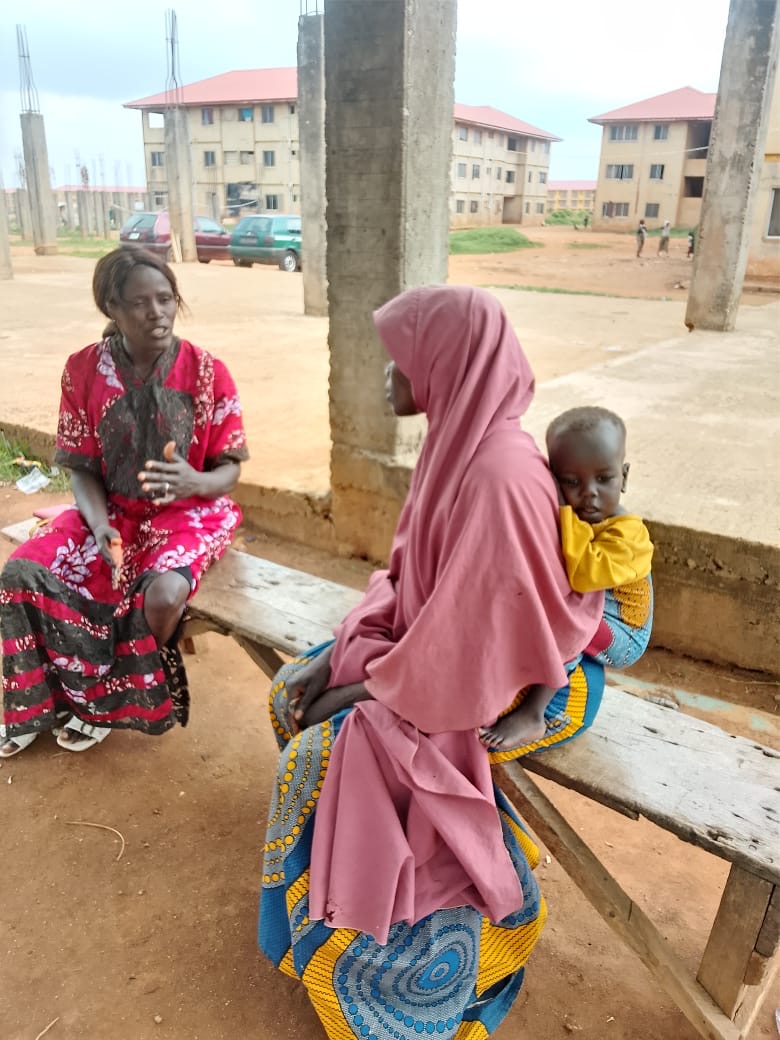
Eleven years after attacks forced thousands from Gwoza communities in Borno State, widows at the Malaysia Garden IDP camp in Abuja continue to battle trauma and hardship. For women like Aisha, Khadija, Amina, and hundreds of others, the death of their husbands meant the loss of their primary source of livelihood in a culture where men traditionally provide for the family.
Their husbands were killed during Boko Haram raids, forcing them to flee ancestral homes with nothing but memories of lives abruptly shattered by violence. Today, they remain in displacement camps, carrying scars that neither time nor distance has healed.
Fatima Idris, a 39-year-old mother of five, explained that she survives on petty trading, frying yam and potatoes bought on credit to feed her children. “They shot my husband during the attack. Since then, everything has been difficult. We have suffered for many years without help,” she said. Fatima noted that despite years in the camp, she still has no stable accommodation or reliable source of income. She appealed to the government to support displaced widows with empowerment programmes and housing. “We don’t want to continue begging. We need support so we can take care of our children,” she added.
For 37-year-old Kaliu Isahil, survival means washing clothes for other residents and selling groundnuts. With eight children, including one battling sickle cell anemia, she described life as overwhelming. “I am doing everything alone because my husband is dead. Sometimes when my child falls sick, I don’t even know where to get money for treatment,” she said. Kaliu explained that several individuals and groups have visited the camp over the years with promises of assistance, but little has changed. “Some people came and spoke with us, but we have not received anything meaningful,” she said.
Khadija Salisu, whose name has been changed for security reasons, said the trauma of displacement remains fresh. “The pain still feels like yesterday. We want peace so we can go back to our communities and continue our lives,” she added. For Khadija, every memory of Gwoza reminds her of the life she once had before violence destroyed her home and family structure.
Community leaders at the camp noted that widows are the most affected victims of conflict, often left to shoulder responsibilities alone. Hardiza Warabe, secretary of the women’s community, explained that most widows lack formal education or vocational skills, making sustainable livelihoods difficult. “Women suffer the most during insecurity. The government should provide empowerment programmes and sources of income for women in the camp,” she said.
Humanitarian agencies estimate that more than two million people remain displaced across northeastern Nigeria, with women and children accounting for nearly 80 percent. Aid organisations warn that limited funding worsens conditions in camps, exposing widows and children to malnutrition, economic hardship, and psychological trauma. Experts say prolonged displacement often strips women of dignity and independence, forcing them into menial jobs to survive.
Chigozie Effe, a volunteer with Sant Edigio Nigeria, described the situation as disheartening. “The camps are not habitable, hygiene is poor, most of the women are exposed to the poorest living conditions even during their monthly cycle, how much more providing for 4–8 children. I think it is time for the government to return them to their homes, and they should be given some form of empowered package especially the women who have lost their husbands,” he said.
Beyond the statistics, the daily reality of life in Malaysia Garden camp is one of struggle and resilience. Many widows wake up before dawn to fetch water, cook, and prepare their children for school, often without knowing how they will afford the next meal. Some engage in petty trading, selling vegetables, groundnuts, or cooked food, while others take up laundry services or manual labour. Yet, the income is barely enough to sustain their families.
Children in the camp face their own challenges. Many are out of school due to lack of funds, while those who attend classes often struggle with hunger and poor health. Mothers worry constantly about their children’s future, fearing that without education and proper care, they may fall into cycles of poverty or even be vulnerable to recruitment by insurgent groups.
The psychological toll is equally heavy. Widows recount sleepless nights haunted by memories of violence, the sound of gunfire, and the sight of loved ones killed before their eyes. Trauma counselling is scarce, leaving many to cope alone with grief and anxiety. Some women admitted that they still break down in tears when recalling the day they lost their husbands, describing the pain as “a wound that never heals.”
Despite these challenges, the women continue to show remarkable resilience. They form support groups within the camp, sharing food, pooling resources, and comforting one another. Community leaders organise small gatherings to discuss ways of survival and to encourage one another not to give up hope. Religious faith also plays a central role, with many widows finding strength in prayer and communal worship.
The broader context of insurgency in northeastern Nigeria underscores the scale of the crisis. Since 2009, Boko Haram attacks have killed tens of thousands and displaced millions across Borno, Adamawa, and Yobe states. While military operations have reclaimed some territories, insecurity persists, preventing many displaced persons from returning home. Camps like Malaysia Garden in Abuja have become semi-permanent settlements, with residents living in limbo, uncertain of when peace will allow them to rebuild their lives.
Aid organisations have repeatedly called for increased government intervention, not only in providing food and shelter but also in creating sustainable livelihood opportunities. Empowerment programmes, vocational training, and access to microcredit could help widows rebuild their lives and support their families. Without such interventions, many fear that displacement will continue to breed poverty, frustration, and hopelessness.
Eleven years after insurgency forced them from Gwoza, these women continue to live with uncertainty, hoping one day to return home not as victims, but as survivors who refused to surrender to despair. The nation may have moved on, but their scars and struggles remain a daily reminder that Nigeria’s insurgency changed their lives forever. Behind every statistic is a mother fighting to keep her children alive, a family waiting for peace, and memories of homes left behind.

