
By Patrick Wemambu
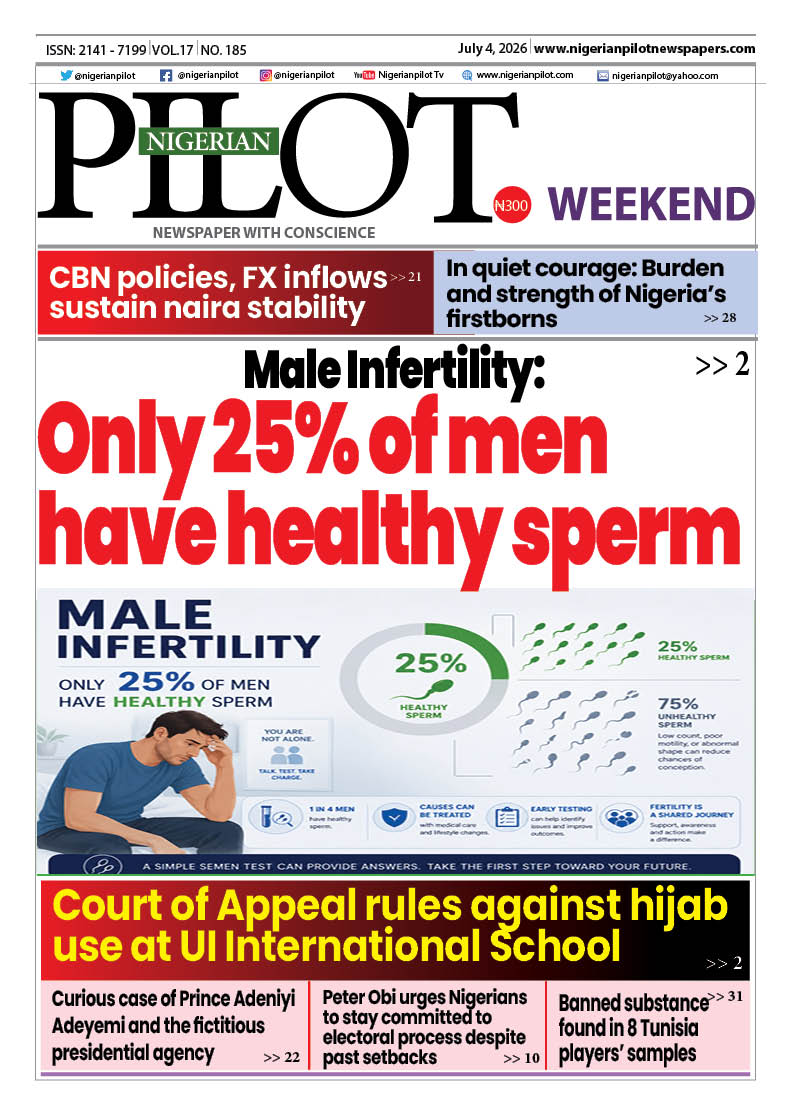
Only one in four men has optimal semen quality with underlying medical conditions which significantly contribute to infertility challenges. This was the declaration of medical experts during a recent webinar organized by the Nordica Medical Center in Nigeria.
Themed; ‘The forgotten men; Conversation on fertility,’ the online workshop interrogated specialty disciplines like andrology, reproductive medicine, public health and clinical urology.
Firing the first salvo, consultant gynaecologist, Dr Victor Ajayi, Chief Executive Officer of Nordica Fertility Centre, informed the audience that periodic studies by the World Health Organisation have indicated a global decline in male reproductive potential. This is said to result in sperm counts falling by more than 50 per cent over the past five decades.
According to the fertility specialist, only a few men now produce the 39 million sperm concentration considered necessary for natural conception. He posited that this contrasted with the 300 million to 500 million sperm per ejaculate commonly recorded decades ago.
Warning that the trend could have profound implications for human reproduction if left unchecked – Ajayi attributed declining sperm quality to obesity with unhealthy lifestyles. Other factors identified are sperm DNA fragmentation, scrotal overheating, psychological factors and related health conditions.
Decrying the perception of infertility as a women’s problem, the board-certified physician pointed out that men accounted for about 50 per cent of infertility cases.
He averred that infertility had been culturally and socially framed as a female problem, leaving women to bear stigma, undergo investigations and shoulder emotional burdens.
Noting that male infertility remained largely overlooked in spite of evidence showing that men contributed significantly to infertility cases, Ajayi stressed: “It is time to bring men into the conversation about reproductive health, not as bystanders, but as equal participants whose fertility matters.”
The senior gynaecologist declared that many of the factors affecting sperm quality were preventable and could be addressed through sustained lifestyle changes.
He called for increased public awareness, early intervention and proper counselling to address male infertility and encourage shared responsibility in reproductive health.
Contributing, Pilot Gbolahan, clinical psychologist at Nordica Fertility Centre, emphasized that men rarely displayed their emotional problems.
Harping on the imperatives of male fertility, Gbolahan alleged that many men were emotionally distant while suffering from depression caused by infertility. Yet while equally avoiding therapy.
“Infertility is a medical condition not a reflection of masculinity or strength. Male factors contribute to 50 per cent of infertility cases, yet many men delay in seeking fertility evaluation. Breaking the silence is the first step towards finding a solution,” the clinical psychologist admonished.
Whereas early assessment could make a significant difference, routine psychological services within fertility clinics and reproductive healthcare settings across Nigeria were advocated as panacea.
Can sexual function be equated to reproductive capacity? Jesse Atongo, consultant gynecologist, Nordica Fertility Centre, replied in the negative, even as he observed that most men think it can.
Highlighting various measures for diagnosing infertility, Atongo listed medical history, physical examination and semen analysis.
The consultant OBGYN noted that male infertility treatment was individualized based on the identified etiology, severity of sperm impairment and the couple’s overall fertility profile.
According to him, infertility could be managed through medications, surgery and assisted reproduction. He encouraged men to eschew illicit substances, excessive heat, alongside alcohol, and maintain a healthy weight and safe sex.

