
By Olugbenga Salami
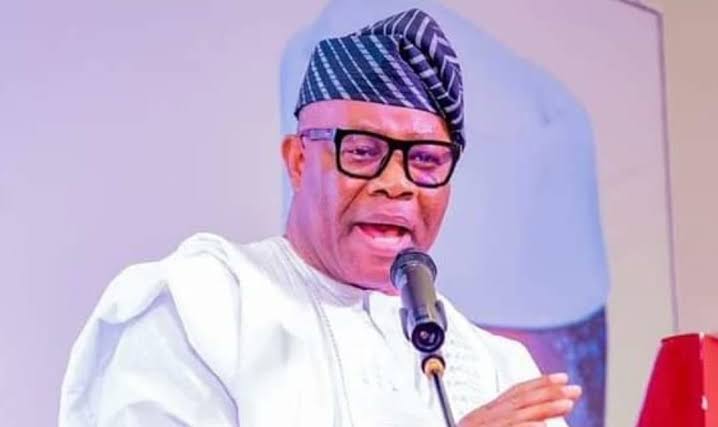
President of the Senate, Senator Godswill Akpabio on Tuesday declared the 2026 National Assembly Open Week open, urging Nigerians to take ownership of parliament and actively participate in governance.
Speaking at the flag-off ceremony at the National Assembly complex, Abuja, Akpabio said democracy cannot thrive behind closed doors, noting that the essence of parliament is to deliberate under the watchful eyes of citizens.
“There is a fascinating truth about the world’s great parliaments. Long before architects concerned themselves with domes and pillars, they confronted a far more profound question: Where will the people stand?
“Courts administer justice in the name of the people. Governments exercise authority on behalf of the people. But Parliament alone deliberates under the watchful eyes of the people. Parliament is not a theatre performed for the people; it is the people’s institution,” he said.
The Senate President said the Open Week was designed to bring citizens closer to the legislature, stressing that the walls of the National Assembly were built not to keep Nigerians out, but to welcome them in as rightful owners of democracy.
He commended the Speaker of the House of Representatives, Rt. Hon. Abbas Tajudeen, for partnering with the Senate to deepen legislative openness, pointing out that despite the traditional rivalry between both chambers; the 10th National Assembly had worked with uncommon harmony over the last three years.
Akpabio stressed that openness means more than allowing citizens to observe proceedings, adding that it means assuring every Nigerian that no community is too remote and no voice too quiet to deserve representation.
“Public confidence is earned not by asking citizens to trust institutions blindly, but by embracing transparency and accountability. Questions strengthen democracy. Transparency strengthens legitimacy. The more Nigerians understand our work, the stronger our democracy becomes,” he stated.
The Senate President said parliament should not fear informed criticisms, and therefore, invited Nigerians to attend public hearings, read laws passed, and challenge lawmakers where necessary.
“Come closer. Attend our public hearings. Read the laws we make. Question us. Challenge us. Encourage us. Whether you are with us today, following online, listening on radio, or gathered beneath a mango tree in a village square, this Parliament belongs to you,” he said.
Akpabio reeled out some achievements of the 10th Assembly in the last three years, disclosing that it had passed well over 100 bills, the highest at this stage of any democratic dispensation.
He listed key areas to include laws to strengthen security, return out-of-school children to classrooms, modernize tax laws, approve a new national minimum wage, stimulate enterprise through investment legislation, and establish Regional Development Commissions.
“We strengthened laws against terrorism and insecurity because every Nigerian deserves to live in safety. We enacted measures to return out-of-school children to the classroom because no nation can mortgage its future by abandoning its children,” Akpabio said.
On Nigeria’s global parliamentary standing, the Senate President said the country had returned to the Executive Committee of the Inter-Parliamentary Union after nearly six decades.

