
By Aaron Ossai
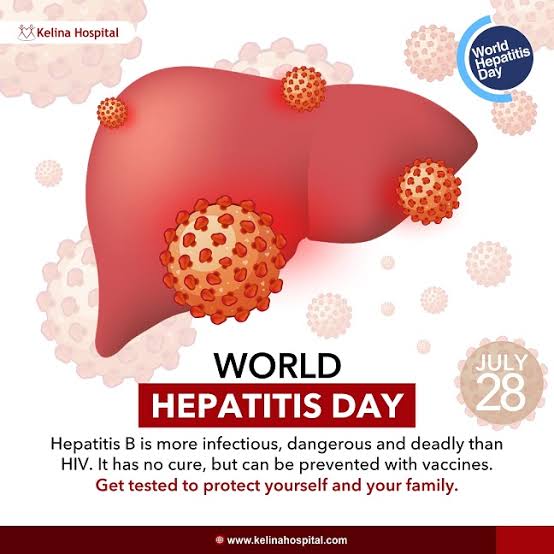
Every year on July 28, the international medical community marks World Hepatitis Day. Red ribbons are displayed, press releases are distributed, and global health agencies publish sobering infographics outlining the burden of viral hepatitis.
Yet, once the commemorations wrap up and the news cycle shifts, the world returns to a state of collective amnesia regarding one of the most destructive communicable diseases in human history.
Viral hepatitis primarily driven by the Hepatitis B (HBV) and Hepatitis C (HCV) strains continues to tear through communities across the globe with terrifying stealth.
According to data from the World Health Organization (WHO), viral hepatitis claims approximately 1.3 million lives every single year. That translates to more than 3,500 deaths every day, or roughly one life cut short every twenty-five seconds.
To put that statistic into perspective, viral hepatitis kills as many people annually as tuberculosis, and significantly more than HIV/AIDS or malaria. Yet, despite this staggering toll, viral hepatitis rarely dominates political debates, headlines, or budgetary priorities.
It remains trapped in the shadow of other public health crises. As we reflect on this year’s World Hepatitis Day, one reality becomes inescapably clear: without an aggressive, sustained, and uncompromising national and global awareness campaign, our efforts to curb further infections will continue to falter, leaving millions more to suffer preventable deaths.
The Anatomy of a “Silent Killer” The defining tragedy of viral hepatitis lies in its stealth. Unlike acute infections that sound immediate alarms through high fevers, painful rashes, or visible distress, chronic Hepatitis B and C are quiet invaders.
An individual can contract the virus and live with it for two, three, or even four decades without experiencing a single obvious symptom. During this prolonged silent phase, the virus wages a slow war of attrition against the liver.
It triggers chronic inflammation, which gradually turns into severe scarring (cirrhosis), ultimate organ failure, or primary liver cancer (hepatocellular carcinoma).
For many patients, the very first indication that they carry the virus arrives only when they begin vomiting blood, develop abdominal swelling, or receive a terminal cancer diagnosis.
By then, the window for simple, curative, or preventative intervention has closed. Worldwide, nearly 300 million people are currently living with chronic Hepatitis B or Hepatitis C infections.
The vast majority an estimated 80 to 90 percent are entirely unaware of their status. They walk among us as unwitting carriers, capable of passing the virus to partners, children, or medical patients through blood contact, unsterilized instruments, or mother-to-child transmission during childbirth.
This massive diagnostic deficit is the engine driving the epidemic. You cannot treat a patient who does not know they are sick, and you cannot break transmission chains when the carriers themselves are oblivious to the risk.
The Medical Paradox: Tools Without Awareness What makes the viral hepatitis crisis so frustrating for health professionals is that, scientifically speaking, we already possess the weaponry needed to eradicate it. The Tools Exist: We have a highly effective vaccine for Hepatitis B that offers nearly 100% protections when administered at birth and through routine infant series.
For Hepatitis C, modern Direct-Acting Antiviral (DAA) medications can cure over 95% of infected individuals in a matter of weeks with minimal side effects. If medical science has provided both a shield (vaccines) and a sword (curative treatments), why are transmission rates and death tolls still rising in many parts of the world? The answer boils down to a failure of communication, education, and political delivery.
Information Gaps: Public knowledge regarding transmission routes remains shockingly poor. In many regions, people still conflate Hepatitis A (transmitted through contaminated food and water) with Hepatitis B and C (blood-borne and body-fluid pathogens).
False beliefs lead people to fear casual contact while ignoring genuine risks like unscreened blood transfusions, shared razors, unsafe injections, or unsterilized tattoo needles.
Social Stigma: Due to misconceptions linking hepatitis exclusively to drug abuse or promiscuity, infected individuals frequently face severe social ostracization. Fear of stigma deters people from walking into clinics for a routine blood test.
Institutional Neglect: In many developing economies, hepatitis screening is not integrated into basic primary care services or routine maternal checkups. Even where vaccines exist, supply chain failures and lack of awareness prevent newborns from receiving the crucial “birth dose” within 24 hours of delivery the most critical defense against vertical transmission.
What an Aggressive Campaign Must Look Like: If we are serious about curbing further infections and meeting the World Health Organization’s target of eliminating viral hepatitis as a public health threat by 2030, incremental measures will no longer suffice. We need an aggressive, multi-pronged awareness campaign that treats hepatitis with the same urgency applied to major global health emergencies.
Mass Demystification and Media Blitzes Awareness cannot be confined to hospital waiting rooms or specialized health journals. Governments and public health agencies must launch high-visibility campaigns across television, radio, social media, and community centers.
The messaging must be simple, relatable, and actionable: Hepatitis is silent. Testing takes minutes. Hep B is preventable; Hep C is curable. By normalizing hepatitis testing as a standard health check no different than measuring blood pressure or checking blood sugar we can strip away the paralyzing stigma that keeps millions in the dark.
Universal “Know Your Status” Testing DrivesAwareness without access is an empty gesture. Public health authorities must pair educational blitzes with free or heavily subsidized point-of-care screening drives.
Mobile testing units should be deployed to rural communities, urban markets, places of worship, and educational institutions. Rapid diagnostic kits now deliver results in less than 20 minutes from a simple finger-prick.
Integrating these tests into workplace wellness programs and routine pre-natal care would immediately uncover millions of hidden cases, connecting patients to care before irreversible liver damage sets in.
Focus on Maternal and Child Health Over 60% of new Hepatitis B infections in high-burden regions occur during early childhood or via mother-to-child transmission. An aggressive awareness campaign must prioritize expectant mothers.
Every pregnant woman must be routinely screened for Hep B, and health systems must enforce universal birth-dose vaccination within 24 hours of delivery. Educating traditional birth attendants and rural healthcare workers on the non-negotiable importance of the birth-dose vaccine is one of the most cost-effective ways to safeguard future generations.
Direct Engagement with High-Risk Communities Harm-reduction programs must be expanded and destigmatized. People who inject drugs, incarcerated populations, sex workers, and individuals receiving frequent blood products face disproportionate risk. Outreach programs must deliver targeted education, needle exchange facilities, and direct access to antiviral therapies directly to these groups without judgment or criminalization.
The Economic and Human Cost of Inaction Skeptics often point to the financial costs of mounting large-scale public health campaigns and expanding screening access. But this is a classic case of penny-wise, pound-foolish thinking. Dimension The Price of Inaction The Benefit of ActionHealthcare ExpensesLate-stage liver failure, frequent hospitalizations, and complex cancer care place massive financial strains on families and national budgets.
Early screening and generic oral treatments cost a fraction of late-stage interventions. Economic ProductivityChronic hepatitis primarily strikes individuals during their most productive economic years (ages 30–55) cutting down breadwinners and draining household savings.
Preserves the health and earning power of the workforce. Human Cost Millions of preventable deaths, orphaned children, and devastated households. Millions of lives saved and transmission chains broken permanently.
The math is unambiguous: investing in aggressive awareness and early detection today saves exponentially more money and lives tomorrow.
Time to End the SilenceViral hepatitis has survived for decades in the fertile soil of ignorance, shame, and political indifference. It prospers because it is quiet, and it kills because we let it stay that way.
World Hepatitis Day cannot remain a annual ritual of empty slogans and symbolic gestures. It must serve as a clarion call for aggressive, sustained action. Governments must allocate dedicated funding, health institutions must integrate screening into everyday practice, and communities must speak openly about the disease.
We have the scientific tools to relegate viral hepatitis to the history books alongside smallpox and polio. What we lack is the collective urgency to ensure every citizen knows their status, gets vaccinated, or receives a cure.
Until we replace passive health advisories with an aggressive, relentless campaign of public awareness, thousands of lives will continue to be lost every single day to a killer that flourishes only in the dark.

