
By Aaron Ossai
The G100 political movement and the Minority Caucus of the House of Representatives have intensified efforts to unite Nigeria’s opposition parties ahead of the 2027 general elections, warning that continued fragmentation could hand another electoral advantage to the ruling All Progressives Congress (APC).
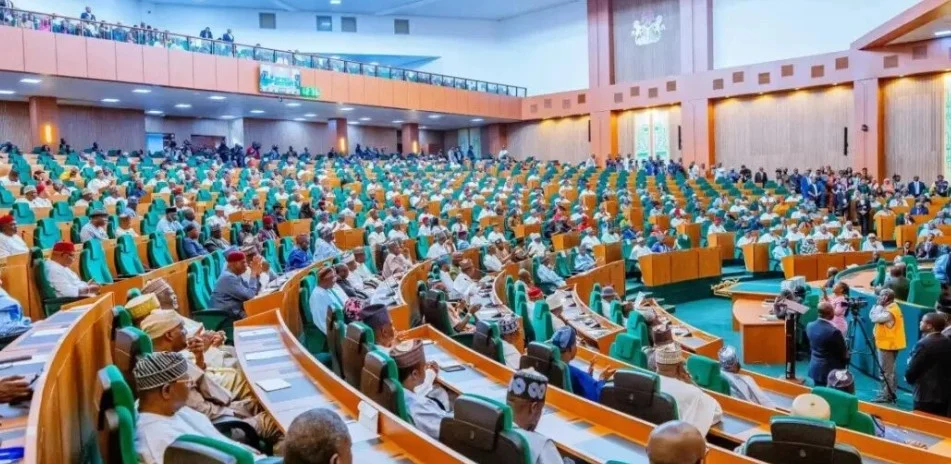
The latest push followed a meeting between a G100 delegation led by its Convener, Salihu Lukman, and the House Minority Caucus led by Minority Leader Fred Agbedi at the National Assembly Complex, Abuja, on Tuesday.
The meeting formed part of consultations ahead of the G100’s proposed Summit of Opposition Political Parties scheduled for August 31. The summit is expected to produce a broader framework for cooperation among opposition parties, presidential aspirants and other political stakeholders.
Agbedi described the meeting as the “consummation” of the partnership between the G100 and the Minority Caucus, saying both groups had agreed to work together to strengthen democracy and provide Nigerians with a credible alternative to the APC.
He urged opposition leaders to put aside personal ambitions and partisan differences, arguing that the country’s economic and social challenges made unity more urgent.
“Strength is in unity,” Agbedi said, calling on opposition politicians to work together to mount a serious challenge to the APC in 2027.
Lukman said the G100 was created out of concern over the fragmentation of opposition forces and the possibility of a repeat of the 2023 presidential election, when opposition parties largely contested separately.
He said the movement was not established to promote a particular individual or political party but to facilitate negotiations for a common political arrangement.
The G100 has already consulted leaders and key figures from six opposition parties—the African Democratic Congress (ADC), New Nigeria People’s Party (NNPP), Peoples Democratic Party (PDP), Action Peoples Movement (APM), Peoples Redemption Party (PRP) and Social Democratic Party (SDP).
According to Lukman, the consultations have involved presidential candidates, running mates and national chairmen, with responses reportedly encouraging enough to justify a wider summit.
The summit was initially planned for August 18 but was postponed to August 31 following appeals from political leaders involved in a peace accord facilitated by the National Peace Committee. The postponement, Lukman said, also provided additional time to expand consultations.
A technical committee has meanwhile been established to develop the framework and operational modalities for the proposed opposition collaboration. The Minority Caucus has agreed to nominate lawmakers to participate in the committee.
Agbedi said several members of the caucus had remained in Abuja during the legislative recess to continue consultations with opposition parties, presidential candidates and other stakeholders.
He described the G100 initiative as consistent with the caucus’s own objective of building a “strong and virile opposition” ahead of 2027.
The proposed alliance comes against the backdrop of growing concerns over the ability of opposition parties to overcome longstanding disagreements over leadership, candidate selection and power-sharing.
Agbedi also cited the August 15 Osun governorship election as an example of the importance of voters defending their choices, describing the outcome as a victory for opposition politics while cautioning that the election was not perfect.
As the August 31 summit approaches, the major test for the G100 and its allies will be whether political actors can translate broad calls for unity into a workable coalition.
The emerging partnership has generated momentum, but its ultimate success will depend on whether competing parties and presidential ambitions can be reconciled around a common leadership structure, decision-making process and electoral strategy capable of challenging the APC in 2027.
End

