
By Aaron Ossai
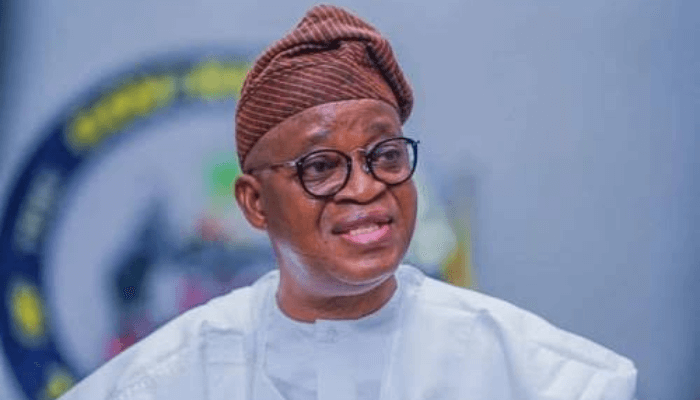
Nigeria’s maritime sector generated a record N1.83 trillion in revenue in 2025, representing a 160 per cent increase from the N700.79 billion recorded in 2023, the Minister of Marine and Blue Economy, Dr. Adegboyega Oyetola, has said.
Oyetola disclosed this while presenting the three-year scorecard of the ministry, established by President Bola Ahmed Tinubu in August 2023, saying the sector had undergone significant transformation in revenue generation, port infrastructure, maritime security, regulation, indigenous shipping, human capital development, fisheries and inland-waterway safety.
According to him, the revenue growth was driven by regulatory reforms, stronger revenue assurance, digitisation and measures to close financial leakages across agencies under the ministry.
“At the heart of our mandate is a simple but powerful objective: to turn Nigeria’s vast marine resources into sustainable economic value for Nigerians,” the minister said.
He said the government had moved to harness the economic potential of Nigeria’s 853-kilometre coastline and extensive inland waterways, with the marine and blue economy positioned as a major driver of revenue, trade, security and job creation.
Oyetola identified the approval of Nigeria’s first National Policy on Marine and Blue Economy in May 2025 as one of the major milestones of the administration’s reform programme.
He said the policy replaced the fragmented approach previously used in managing the country’s marine resources with a unified framework covering shipping, fisheries, offshore energy, marine biotechnology and other emerging opportunities.
“This policy gives us a clear roadmap. It provides the predictability and transparency investors need while ensuring that our marine resources are developed sustainably,” he said.
According to him, the policy would guide government interventions and provide greater certainty for private-sector investors across the marine and blue economy value chain.
The minister said modernisation of Nigeria’s major seaports remained central to the government’s transformation agenda.
He listed Apapa, Tin Can Island, Onne, Rivers, Calabar and Warri ports as beneficiaries of a comprehensive upgrade programme involving channel improvements, modern cargo-handling infrastructure and increased digitisation of terminal operations.
The objective, he said, was to improve operational efficiency and enable Nigerian ports to handle larger volumes of international trade.
The reforms have also earned international recognition, with the World Bank and S&P Global Market Intelligence ranking Tin Can Island Port 10th and Lagos Port Complex, Apapa, 12th among the world’s 20 most improved container ports between 2020 and 2025.
Oyetola said the government had also made progress in reducing congestion around Apapa through the electronic truck call-up system, dedicated holding bays and expanded inland barging.

