
By Augustine Ehikioya
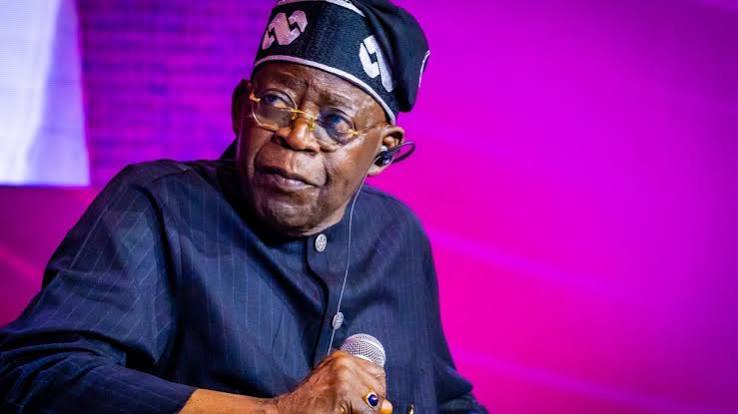
President Bola Ahmed Tinubu has called for a shift from purely kinetic responses to insecurity in the North Central, urging traditional rulers, religious leaders, communities, youths, women, the private sector and development partners to drive early warning, reconciliation and economic investment across the region.
He made the call at the 2026 North Central Regional Security Summit in Makurdi, Benue State.
The President was represented by the Secretary to the Government of the Federation, Sen. George Akume.
Speaking on the theme “Collaborative Approaches to Strengthening Security and Regional Stability”, President Tinubu said insecurity in the region cuts across boundaries and mandates.
“No single agency, no single tier of government and no single community can secure this region acting alone. Insecurity does not respect state boundaries or agency mandates. Criminals move freely across local government areas while our responses are too often slowed by rivalry, duplication and the withholding of information. That must end,” he stated in a statement by Yomi Odunuga, Special Adviser, Media and Publicity to SGF.
The President said the administration had strengthened the security architecture through better collaboration among the Armed Forces, Nigeria Police Force and intelligence services, new military platforms, and the rebuilding of the indigenous defence industry via the DICON Act.
He also noted gains including the neutralisation of terrorist commanders, surrender of fighters, rescue of captives, and return of normalcy to some communities.
President Tinubu, however, cautioned that force alone would not deliver lasting peace.
“Military action alone will not deliver lasting peace to the North Central. Force can suppress violence; it cannot resolve the grievances that produce it,” he said.
He identified competition over land and water, climate change, desertification, unresolved land-use issues, weak dispute-resolution mechanisms and proliferation of illicit weapons as drivers of conflict.
To address these, he cited federal interventions including the Ministry of Livestock Development’s transition from open grazing to modern settled livestock production, and the Ministry of Defence’s “Reclaiming the Ungoverned Space for Economic Benefits Programme” which will deploy retired military personnel to secure and revive communities.
He also listed investments in irrigation, mechanised agriculture, rural roads and credit under the Renewed Hope Agenda.
The President tasked traditional and religious leaders to serve as the region’s first line of defence through intelligence and mediation.
“To our revered traditional rulers and religious leaders, you hold an authority that no uniform confers. You know your communities intimately. I ask you to be our first line of early warning and our most trusted voice of reconciliation,” he said.
He also warned against “inflammatory rhetoric around ethnic, religious and other differences.”
President Tinubu urged citizens to share timely information with security agencies and “refuse to shield criminality out of kinship or sentiment.”
He placed women “not at the margins of this conversation but at its centre” as effective peacebuilders, and assured youths of expanded economic opportunities to make “a rifle a far less attractive prospect than a livelihood.”
He invited the private sector and development partners to see the North Central as an investment destination.
“Peace and investment reinforce one another. Every factory built, every farm expanded and every young person employed in this region is a contribution to its security,” he said.
The President directed the Minister of Defence, Gen. Christopher Gwabin Musa (Rtd), to transmit the Summit’s outcomes and report on implementation.
He warned against another communiqué “filed away and forgotten,” insisting on “clear and practical recommendations, each with an identified owner, a defined timeline and a measurable outcome.”
“We will be judged not by the quality of our deliberations here, but by whether a farmer in this region sleeps more soundly a year from now,” he said.
The Makurdi Summit is the second in a series of regional engagements after the South East Regional Security Summit in Umuahia on July 30, 2026.

