
By Eunice Orike
The League of Women Voters of Nigeria has urged women to turn their numerical strength into political power ahead of the 2027 general elections, stressing that women must move beyond voting to actively influence political leadership and policies.
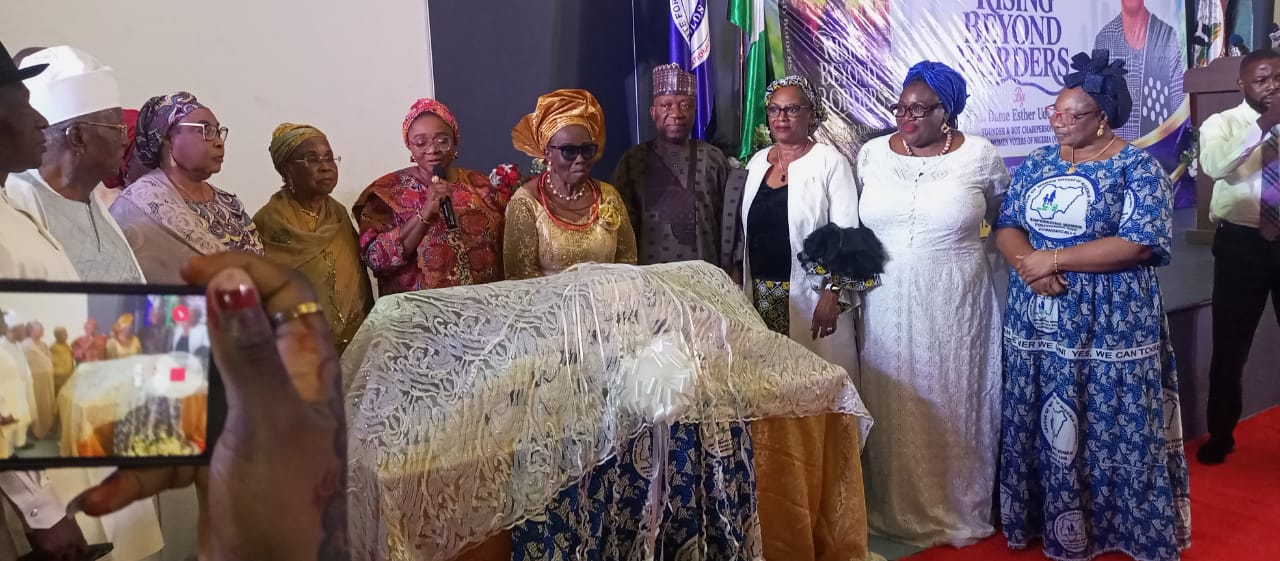
The President of the League, Irene Awunah Ikyegh, made the call on Tuesday in Abuja at the public presentation of Rising Beyond Borders, a book authored by former Deputy Speaker of the House of Representatives and founder of the National League of Women Voters of Nigeria (NILOWV), Rt. Hon. Dame Esther Uduehi.
Awunah said the women’s movement must continue to push for reforms that would create more opportunities for women in leadership, education and public life.
She specifically called for action on the Special Skills Bill for Women, expressing concern that the proposed legislation had yet to be brought forward for voting.
She appealed to stakeholders to sustain advocacy for the bill, saying its passage would provide additional opportunities for women and help address persistent gender imbalance in representation.
Awunah said the presentation of Rising Beyond Borders marked the opening chapter of NILOWV’s 30th anniversary celebration and provided an opportunity to preserve the history of the women’s movement while inspiring a new generation to understand and confront the barriers to women’s participation.
She urged universities, particularly departments of gender studies, political science, development studies, history and government, to consider the book as a supplementary text for teaching and research on women’s leadership, political participation, democracy and social transformation.
The League president also called on women-led organisations, civil society groups, political women’s groups and development partners to obtain copies of the book and make them available in libraries, offices, training centres and mentorship programmes.
She said preserving the history of the movement was important because future generations needed to understand the sacrifices and struggles that contributed to the progress recorded by Nigerian women.
“A movement that does not preserve its history risks losing the lessons that made its progress possible,” Awunah said.
Also speaking, the Minister of Women Affairs and Social Development, Imaan Sulaiman-Ibrahim, called for greater mobilisation of Nigerian women ahead of the 2027 elections, urging them to unite around common interests and make informed choices based on issues, values and programmes.
The minister drew attention to the “10 Million” women platform, describing it as more than a numerical target but a means of organising women across the country to participate more meaningfully in civic and democratic processes.
She said the platform could connect women at the grassroots with institutions that shape their lives, while enabling them to articulate their concerns, understand public policies and translate their collective interests into constructive civic engagement.
According to her, the significance of the platform had become more pronounced as Nigeria approaches the 2027 elections, with the slogan, “One Voice. One Movement. One Choice,” providing a framework for women to unite around shared aspirations.
Sulaiman-Ibrahim stressed that such unity should cut across ethnic, religious, regional and socioeconomic differences while allowing women to retain the diversity of their backgrounds and experiences.
She said women should not merely be mobilised in numbers but must be adequately informed and equipped to participate meaningfully in the democratic process.
“Women must rise beyond the borders that divide us without surrendering the diversity that makes Nigeria strong,” she said.
The minister urged women to make electoral choices based on “issues, values, programmes and the future we want for Nigeria,” adding that their participation should extend beyond voting on election day.
She also linked political participation with economic empowerment, arguing that women who are economically secure and knowledgeable about their rights would be better positioned to make independent choices and influence policies affecting their families and communities.
“A truly empowered woman is not merely mobilised,she is informed, she is not merely counted, she is heard, and she is not merely present, she participates meaningfully,” the minister said.
On his part, former National Chairman of the Peoples Democratic Party, Kabiru Tanimu Turaki, said the struggle for women’s political participation must go beyond encouraging them to vote, stressing that their votes must also count in determining political leadership.
Turaki commended Uduehi for sustaining women’s political advocacy over the past three decades, recalling that she had taken the campaign for women’s voting rights and political participation to the front burner.
“Thirty years on, you took your activism to the front burner to say Nigerian women must not only be allowed to vote, but their votes must count,” he said.
Turaki said Uduehi’s efforts had helped inspire women aspiring to occupy leadership positions, describing her as an important voice in the Nigerian women’s movement.
He also noted her role in the PDP, where he said she had become an important voice within the party’s Board of Trustees.
He said the growth of the movement demonstrated that sustained efforts to empower women could produce lasting benefits for future generations.

