
By Ere-ebi Agedah Imisi
Stakeholders have called for the integration of persons with disabilities, PWDs into Nigeria’s climate change policies, legislation and emergency response systems, warning that their continued exclusion exposes them to heightened risks from climate-related disasters.
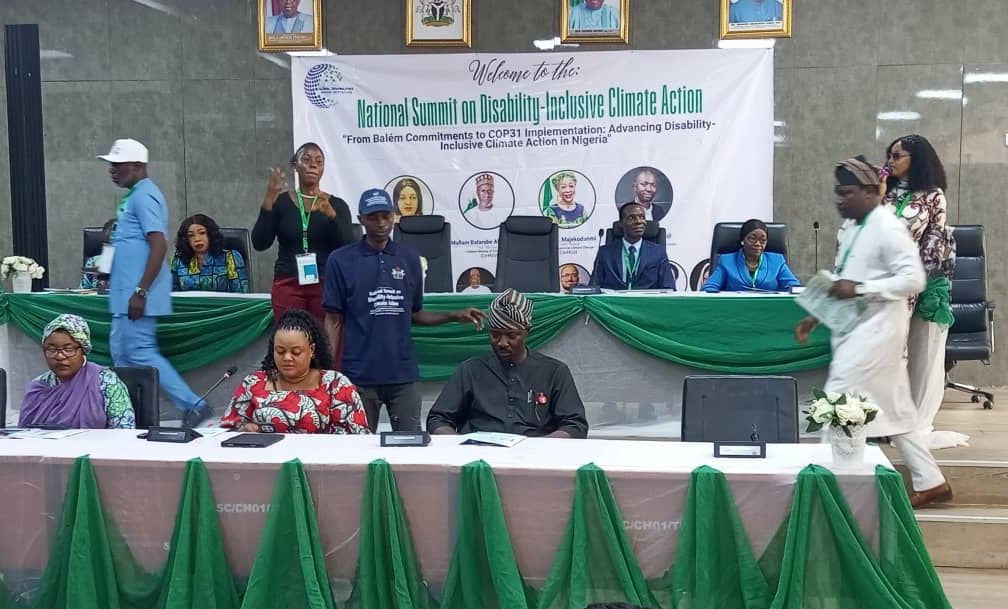
The call was made at the National Summit on Disability-Inclusive Climate Action, organised by the Global Disabilities Green Initiative, GDGI in Abuja, where participants advocated enforceable policies, accessible climate information and increased participation of PWDs in climate decision-making.
Presenting a welcoming address, the President of GDGI, Angelina Ugben, said persons with disabilities were among the most affected by climate change but remained largely overlooked in climate planning, disaster preparedness and public awareness campaigns.
Citing flooding in Borno and Niger states, Ugben lamented the lack of disability-specific data to identify affected persons and ensure appropriate emergency interventions.
“Do we know what happened to them? Nobody knows because they were not mentioned. The data was not there,” she said.
She warned that conventional emergency alerts and evacuation arrangements often failed to accommodate persons with visual impairments and wheelchair users, calling for accessible early-warning systems and inclusive evacuation plans.
Ugben also urged stakeholders to recognise PWDs not merely as beneficiaries but as active participants, innovators and decision-makers in developing climate solutions.
She said the summit would promote practical interventions, including inclusive climate policies, accessible green jobs, renewable energy, climate-smart agriculture and resilient communities.
Also speaking, the Senior Special Assistant to the President on Climate Technology and Innovation, Omamide Fadish, said Nigeria must move beyond climate commitments to practical implementation, investment and measurable outcomes.
Fadish said the forthcoming COP31 presented opportunities to strengthen international cooperation, mobilise climate finance and demonstrate how climate action could improve livelihoods and community resilience.
“The success of climate policies should be measured by their impact on people’s lives, employment opportunities created, technologies deployed and resilience built within communities,” he said.
Similarly, the Director-General of the National Council on Climate Change, Tenioye Majekodunmi, represented by Saadatu Madaki, said PWDs must be meaningfully involved in climate dialogue, policy development, adaptation planning and implementation.
She described the proposed Abuja Declaration on Disability-Inclusive Climate Action as an opportunity to strengthen accountability and accessibility across climate governance, financing and resilience programmes.
The Chairman of the House of Representatives Committee on Disability Matters, Bashiru Daudu, described disability inclusion as a civil rights issue rather than charity, disclosing that amendment of the disability law was ongoing.
He urged Nigerians to comply with the Discrimination Against Persons with Disabilities (Prohibition) Act, 2018, and encouraged PWDs to understand its provisions to better advocate for their rights.
Meanwhile, the Country Director of Christian Blind Mission Nigeria, Samuel Omoi, represented by Fwangshak Guar, said disability inclusion must be prioritised in government policies and financial plans.
“For millions of Nigerians with disabilities, climate change is not simply an environmental issue. It is a human rights issue,” he said, noting that climate shocks worsened existing inequalities and threatened access to food, water, shelter, healthcare and livelihoods.
The summit was supported by the United Nations Development Programme, Christian Blind Mission, the Federal Ministry of Environment, the International Labour Organisation and other development partners.
Participants are expected to advance recommendations for the proposed Abuja Declaration to guide disability-inclusive climate action in Nigeria.

