By Michael Oche
The International Labour Organisation (ILO) and development partners have urged the Sokoto State House of Assembly to prioritise funding for social protection programmes through effective budget scrutiny, legislative oversight and accountability.
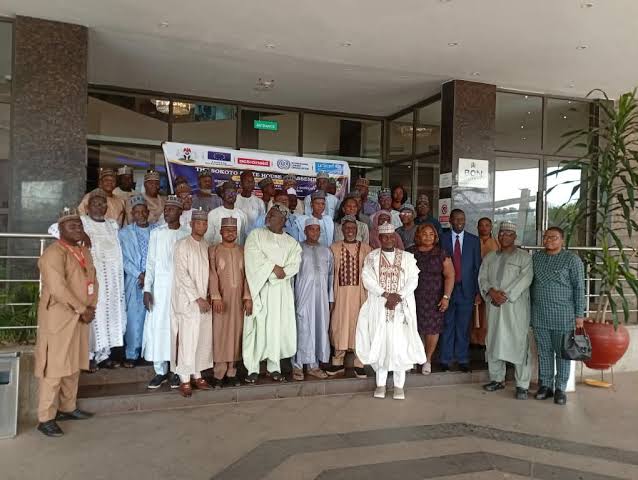
The ILO Country Director for Nigeria, Ghana, Liberia and Sierra Leone, Dr Vanessa Phala, made the call at a two-day Legislative Capacity Building workshop for Sokoto lawmakers held on Tuesday in Abuja.
The workshop was organised by the United Nations Children’s Fund (UNICEF), ILO and ActionAid Nigeria, with funding support from the European Union, to strengthen legislative capacity and promote inclusive social protection in the state.
Phala said lawmakers had critical roles to play in ensuring adequate budgetary allocations, effective implementation and accountability in social protection programmes.
She noted that effective legislative oversight and budget scrutiny would enable the Assembly to identify and allocate resources to critical social protection interventions.
“Through effective budget scrutiny, legislative oversight and policy support, the House can actually ensure that social protection priorities are adequately funded.
“That is the core and main contributor of expanding and extending social protection, to be able to identify within our state budgets lines that will be dedicated to different social protection interventions,” she said.
Phala reaffirmed the ILO’s commitment to working with development partners and government institutions to advance decent work, social justice and universal social protection.
She said the organisation, in collaboration with UNICEF and ActionAid, was supporting efforts to strengthen social protection systems and institutional capacity across Sokoto State.
According to her, stakeholders from the state’s 23 local government areas had received training through the ILO’s TRANSFORM capacity-building module, which focuses on designing, implementing and monitoring social protection interventions.
She added that the ILO was collaborating with the Sokoto State Contributory Health Management Agency (SOCHEMA) to enrol informal-sector workers in health insurance schemes.
The initiative, she explained, was aimed at expanding access to healthcare and ensuring that workers could obtain medical attention without losing their livelihoods.
Phala also disclosed that the organisation was working with the National Bureau of Statistics (NBS) to generate data that would identify gaps in social protection coverage and vulnerable populations requiring targeted interventions.
She said the ILO was supporting the review of Sokoto State’s Social Protection Policy, while also strengthening information management systems and coordination between federal and state databases.
She further stressed the need to extend social protection coverage to informal-sector workers, who remained largely excluded from existing schemes.
Also speaking, the Deputy Country Director and Director of Programmes at ActionAid Nigeria, Mr Suwaiba Dankabo, said Sokoto recorded Nigeria’s highest multidimensional poverty rate of 91 per cent, according to the 2022 NBS report.
Dankabo said the high poverty rate, coupled with insecurity, displacement and disrupted economic activities, underscored the need for stronger legislative accountability and targeted public investments.
He urged lawmakers to ensure that women, young people, persons with disabilities and internally displaced persons were adequately captured in government policies and budgetary allocations.
“Every budget line presents an opportunity to improve lives, reduce poverty, strengthen resilience and deepen citizens’ trust in democratic institutions,” he said.
The UNICEF Chief of Social Policy, Dr Moses Sichei, also called on the Assembly to strengthen the legal and financial frameworks for social protection, particularly to address child poverty and protect vulnerable populations.
Sichei commended the lawmakers for identifying the workshop’s training priorities, describing the approach as evidence of legislative ownership and commitment to their constitutional responsibilities.
“Behind each of these figures is a child who is out of school, malnourished and whose future depends on decisions taken in Sokoto State,” he said.
In his remarks, the Speaker of the Sokoto State House of Assembly, Mr Tukur Bodinga, said the legislature had a strategic responsibility to ensure that public resources were properly appropriated and transparently utilised.
Bodinga urged lawmakers and legislative staff to embrace digital tools for monitoring budget implementation, strengthening accountability and tracking government projects.
He emphasised that adequate funding, effective coordination and sustained monitoring were essential to ensuring that vulnerable residents benefited from social protection programmes.
The Speaker also called for stronger collaboration between the Assembly, development partners and relevant government agencies to improve service delivery and promote inclusive development.
Editorial adjustment: The revised story places the funding demand in the lead, keeps legislative oversight as the central theme and uses Sokoto’s 91 per cent poverty rate to reinforce the urgency of the intervention. It also retains the key contributions of ILO, ActionAid, UNICEF and the Assembly Speaker.

