
Nigeria’s economy is increasingly becoming a tale of two realities. The first exists in government reports, economic briefings, and statistical dashboards. It is a story of rising external reserves, slowing inflation, improving GDP growth, stronger non-oil exports, and an economy supposedly moving from stabilization toward prosperity. President Bola Tinubu recently declared that Nigeria had left the “emergency ward” and was on course toward becoming a $1 trillion economy by 2030, citing external reserves of about $55 billion, higher non-oil exports, and ongoing economic reforms.
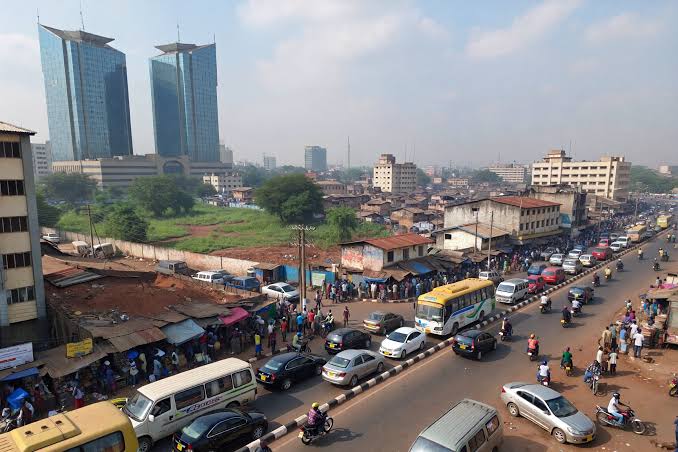
The second reality exists in markets, bus parks, workshops, farms, and homes across the federation. It is the reality of families struggling to put food on the table, workers watching salaries evaporate before the end of the month, small businesses battling rising costs, and young people navigating an economy that still seems unable to create enough opportunities.
Between these two realities lies one of the greatest political and economic dilemmas confronting Nigeria today: How can an economy be improving on paper while millions of citizens continue to experience hardship in their daily lives? This question matters because economic reforms are ultimately judged not by charts but by people.
To be fair, there are signs that some of the government’s policies are yielding results. Economic indicators have shown improvement. Inflation has moderated compared to previous peaks. External reserves have strengthened. Foreign exchange stability has improved relative to the turbulence that followed the removal of fuel subsidies and exchange-rate reforms. Leading economists have acknowledged that difficult decisions were taken to address structural distortions that had burdened the economy for years.
But economic statistics tell only part of the story. For the average Nigerian, the economy is not measured in reserve figures or technical indicators. It is measured in the price of rice at the market, the cost of transportation to work, school fees for children, rent payments, electricity bills, and the ability to save for the future.
This is where the disconnect emerges. The Nigerian Economic Society recently warned that while macroeconomic conditions may be improving, the gains have yet to translate into shared prosperity. Its President, Dr Baba Yusuf Musa, captured the paradox succinctly when he argued that economic stability does not automatically mean citizens are better off. According to him, “Macroeconomic stability is necessary, but it is not yet shared prosperity.”
That observation speaks directly to what millions of Nigerians are experiencing. A stable exchange rate means little to a trader whose purchasing power has collapsed. Rising reserves offer little comfort to a family struggling to afford basic food items. Positive GDP numbers mean little to graduates searching endlessly for employment opportunities.
Economic reforms often require sacrifice. Governments around the world implement painful measures with the promise that long-term benefits will outweigh short-term suffering. The challenge for policymakers is ensuring that citizens can survive the transition period.
Many Nigerians understand that reforms were necessary. What increasingly worries them is the distance between the promised benefits and their everyday realities.
The danger is not merely economic. When citizens consistently hear declarations of economic progress while experiencing declining living standards, frustration grows. Confidence weakens. Trust in institutions declines. The credibility of reforms becomes harder to defend, regardless of their technical merits.
This is particularly significant as the country moves closer to the 2027 general elections. Political campaigns will inevitably become battlegrounds over economic performance. The ruling party will point to stronger reserves, fiscal reforms, and improved macroeconomic indicators. The opposition will point to hardship, unemployment, poverty, and the rising cost of living.
Both sides will have evidence to support their arguments. But ordinary Nigerians are likely to judge the economy through a much simpler lens: Has life become better?
That is the question policymakers must confront honestly. The goal of economic management cannot simply be stability. Stability is important, but it is only a foundation. The ultimate objective must be prosperity that is visible, measurable, and widely shared.
The true success of reforms will not be determined by the applause of international financial institutions or the approval of investors. It will be determined by whether farmers can earn more, workers can save more, businesses can grow more, and families can live with greater dignity.
An economy is not successful because government reports say so. It is successful when citizens feel the difference.
Until the gains reflected in national statistics find their way into household budgets and family welfare, Nigeria will remain trapped between two competing realities: progress in the numbers and hardship in the streets. And that is a contradiction no nation can afford to sustain indefinitely.

