By Palma Ileye
Federal Government has launched the National Policy on Menstrual Health and Hygiene Management 2026–2030, aimed at improving access to affordable menstrual products, safe sanitation facilities and menstrual health education for women and girls across the country.
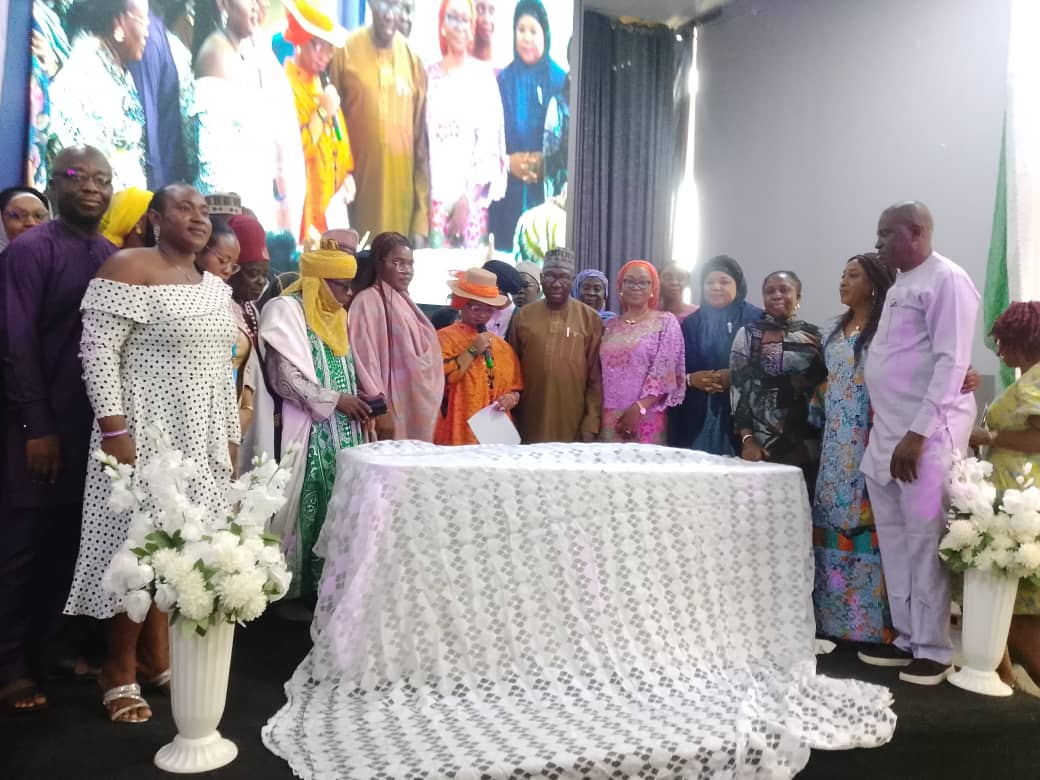
The Minister of Women Affairs and Social Development, Hon. Imaan Sulaiman-Ibrahim, who was represented by the Chairman of the Governing Council, Maryam Babangida National Centre for Women Development, Princess Jummai Idonije, unveiled the policy on Thursday at the 2nd National Summit on Menstrual Health and Hygiene Management in Abuja.
The Minister said the policy marked a significant milestone in the government’s efforts to protect the dignity, health and economic potential of more than 50 million Nigerian women and girls of reproductive age.
She said the policy was developed in partnership with Population Services International (PSI), WaterAid Nigeria and the National Technical Working Group on Menstrual Health and Hygiene Management, following technical reviews, consultations across the six geopolitical zones and national validation.
According to her, the Federal Executive Council approved the policy on October 28, 2026, alongside the National Care Policy and Implementation Plan 2026–2030 and the National Costed Action Plan on Ending Violence Against Children.
Presenting the Minister’s address, Idonije said available statistics showed significant inequalities in access to menstrual hygiene products and facilities, particularly among rural and low-income women and girls.
She cited the 2024 Nigeria Demographic and Health Survey, which showed that 46 per cent of women aged 15 to 49 used cloth during their last menstrual period, while 54 per cent used disposable sanitary pads.
She added that disposable pad usage stood at 76 per cent in urban communities compared with 32 per cent in rural areas, while only 10 per cent of women in the lowest income group used disposable pads, against 90 per cent in the highest income group.
The Minister further cited UNICEF’s 2024 Situation Analysis of Children and Adolescents in Nigeria, which revealed that only eight per cent of schools had separate toilet compartments for girls with menstrual hygiene provisions, while just three per cent provided basic gender-sensitive water, sanitation and hygiene services.
“These figures expose the stark inequalities that continue to prevent millions of Nigerian women and girls from managing their menstruation safely and with dignity,” she said.
She noted that the consequences were particularly severe for rural schoolgirls, internally displaced women and girls, persons with disabilities and low-income households, where access to sanitary products, privacy and clean water remained limited.
“No girl should forfeit her education to a natural biological cycle, no woman should suffer indignity due to poverty or conflict, and no community should be denied basic WASH infrastructure because of geography,” she said.
The Women Minister said the policy aligned with President Bola Tinubu’s designation of 2026 as the Year of Families and Social Development and the Renewed Hope Agenda.
She explained that the Ministry was implementing the Renewed Hope Social Impact Intervention Framework (RHSII)-774, designed to deliver social protection, inclusion and economic opportunities across the 774 Local Government Areas.
On implementation, she called on State governments to domesticate the policy and introduce dedicated menstrual health budget lines in their annual fiscal plans also urging local government authorities to direct resources towards public schools, primary healthcare centres and displacement settlements, while calling on development partners and the private sector to support sustainable financing and affordable supply chains.
She further appealed to banks, airlines, railway operators, hotels, shopping malls and other public-facing institutions to provide emergency menstrual products in public restrooms and maintain clean, private sanitation facilities.
“No woman or girl should suffer embarrassment or compromised dignity while banking, travelling, working, or patronising public spaces,” she said.
She announced that the Ministry would institute an Annual National Menstrual Dignity and Hygiene Excellence Competition and Awards to recognise States, Local government authorities, development partners, traditional institutions and private organisations making outstanding contributions to menstrual health.
The Minister also highlighted the economic opportunities in the menstrual health value chain, estimated at N184 billion annually, saying the government would promote local manufacturing and women-owned businesses through affirmative procurement, tax waivers and targeted financing.
Earlier, the Permanent Secretary of the Ministry, Esuabana Nko Asanye Esuabana, represented by the Director, Child Development Department, Ali Andrew Madugu, said the summit provided an opportunity to review progress since the first national summit held in June 2025, identify gaps and strengthen institutional coordination.
She reaffirmed the Ministry’s commitment to providing national leadership and ensuring effective implementation of the policy.
She urged stakeholders to develop practical recommendations that would translate the policy into sustainable interventions, stressing that the lived experiences of women and girls must remain central to the process.
In his remarks, the Head of Strategy, Programme Effectiveness and Learning at WaterAid Nigeria, Abdulmalik Abubakar, who represented the Country Director, Ibby Mirri, attributed the successful development of the policy to government leadership, strong partnerships, institutional resilience and broad stakeholder consultations.
He commended the Ministry for sustaining the policy development process despite changes in institutional leadership.
He particularly acknowledged the contributions of Population Services International, saying its willingness to collaborate with WaterAid had strengthened the process.
“The successful development of this policy is also a demonstration of what is possible when collective action, collaboration and partnership are robust, focused and result-driven,” he said.
He stressed that the next phase required states to domesticate or adapt the policy, develop a costed implementation strategy and establish clear targets and timelines.
He also called for sustained resource mobilisation, budgetary allocation and coordinated implementation to ensure that the policy translated into tangible improvements.
“Policy approval is the beginning of a more demanding phase. The unique achievement will be whether this policy translates into accessible and affordable menstrual products, safe and dignified sanitation facilities, accurate information, quality menstrual health services and supportive schools and workplaces,” he said.
In his vote of thanks, Madugu appreciated the Minister, Permanent Secretary, development partners, civil society organisations and members of the Technical Working Group for their contributions to the development and successful unveiling of the policy.
He particularly acknowledged WaterAid Nigeria and PSI for their technical and financial support throughout the policy development process.
He said the success of the summit would ultimately be measured by the Ministry’s ability to translate policy commitments into concrete actions that improve the lives of Nigerian women and girls.
The summit brought together government representatives, development partners, civil society organisations, traditional and religious leaders, private sector operators, academia and other stakeholders to strengthen national commitment to menstrual health and hygiene management.

