
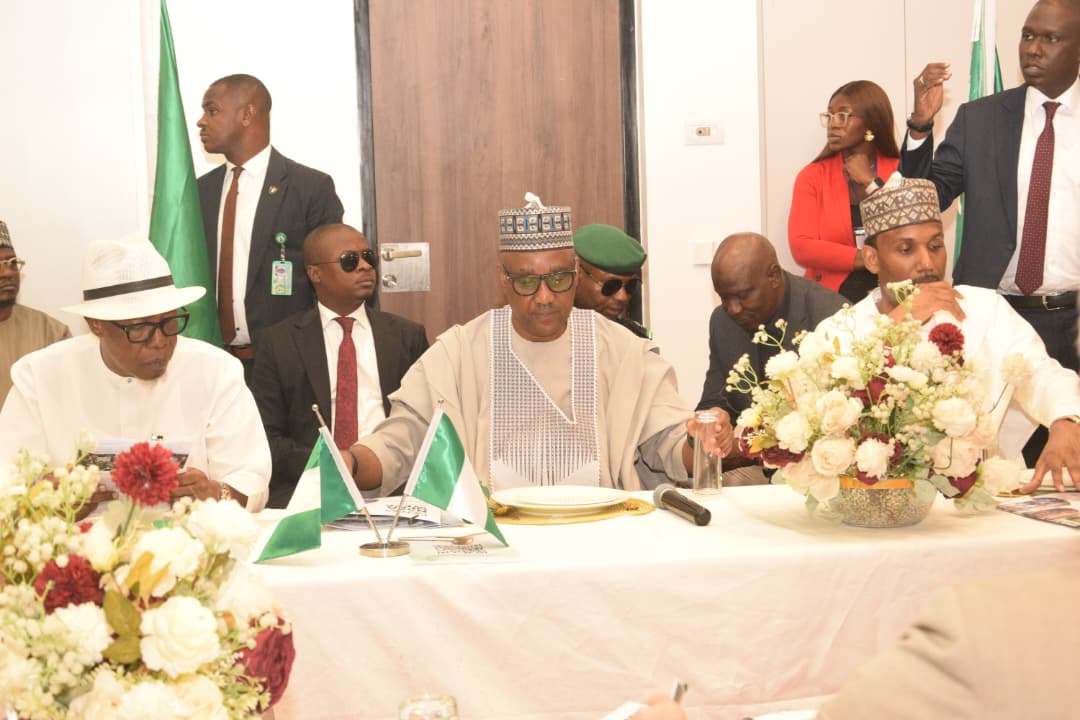
By Aaron Ossai
Speaker of the House of Representatives, Hon. Abbas Tajudeen, has pledged that the National Assembly will prioritise legislation that promotes investment, reduces the cost of doing business and strengthens Nigeria’s private sector as a driver of economic growth.
Speaking at the Legislative Business Breakfast during the 2026 National Assembly Open Week in Abuja on Thursday, Abbas said the House would measure its success by whether its laws enable businesses to invest, expand and create jobs.
He acknowledged concerns raised by the organised private sector, including high borrowing costs, foreign exchange challenges, unstable electricity supply, multiple taxation, port inefficiencies, insecurity and policy uncertainty, describing them as “the honest testimony of the men and women who create our jobs.”
While admitting that the Federal Government’s economic reforms had imposed short-term hardships, the Speaker said measures such as fuel subsidy removal, exchange rate unification and fiscal reforms were necessary to stabilise the economy. He noted that international institutions had endorsed the reforms and projected economic growth above four per cent this year but stressed that the gains must translate into improved living standards.
Abbas highlighted key legislative interventions by the 10th National Assembly, including the passage of tax reform laws, the Electricity Act, a new Investments and Securities Act, six regional development commissions and expanded student loan and consumer credit schemes. He also said the Public Accounts Committee had recovered over N60 billion owed to the government by defaulting companies.
The Speaker announced five commitments by the House to support economic transformation. These include ensuring greater regulatory certainty, harmonising taxes and levies across different tiers of government, improving access to finance for businesses, repealing obsolete laws that hinder investment, and strengthening legislative oversight to ensure faithful implementation of reforms.
He also urged the private sector to engage more actively with the National Assembly by participating in public hearings, presenting data-driven policy recommendations and providing feedback on the effectiveness of existing laws.
To institutionalise collaboration between lawmakers and businesses, Abbas proposed the establishment of a National Assembly and Business Executive Roundtable (NABER), to be convened twice annually. The forum, he said, would bring together legislators, the organised private sector, labour unions and development partners to review the business environment, monitor reform implementation and develop a shared pro-growth legislative agenda.
“The commitment is that this House will remain pro-growth and pro-business because every job you create is a family lifted, and every investment you make is a vote of confidence in Nigeria,” Abbas said.

