
By Palma Ileye
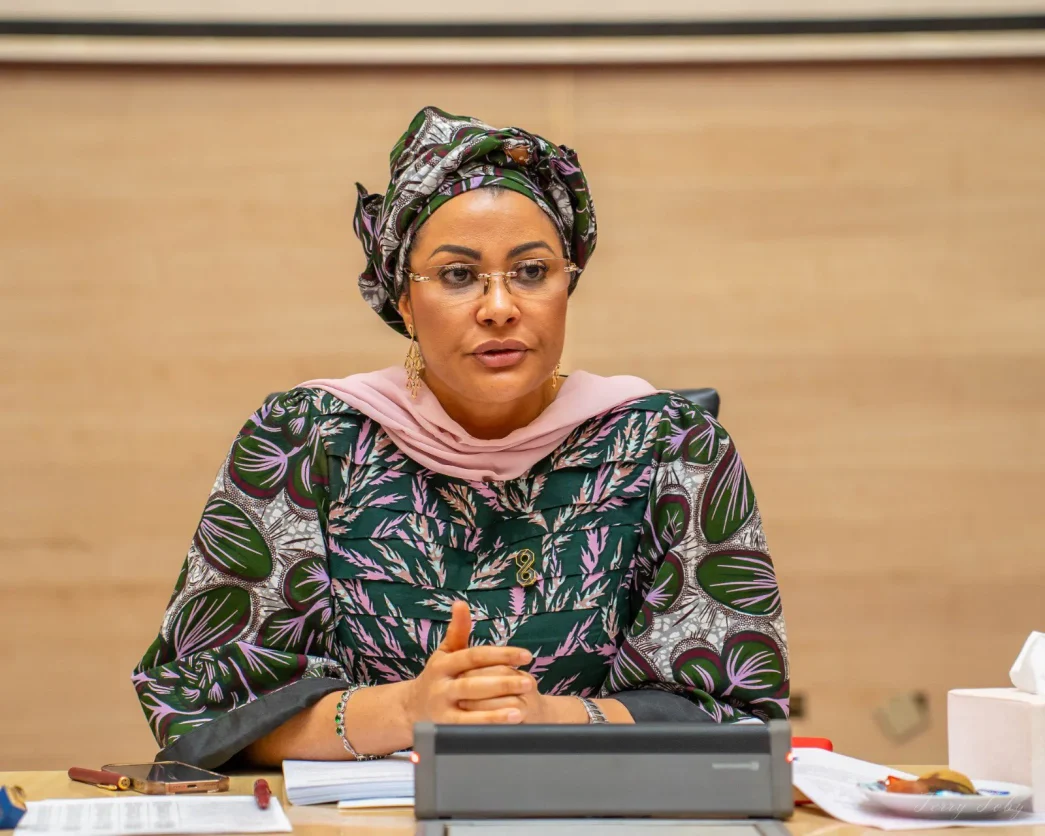
The Minister of State for Budget and Economic Planning, Dr. Doris Uzoka-Anite has urged State Commissioners for Budget and Economic Planning to play a more strategic role in aligning their development priorities with the Federal Government’s ambition of building a $1 trillion economy by 2030.
Speaking at a two-day retreat for State Commissioners, Permanent Secretaries and Directors of Budget and Economic Planning in Abuja, the minister stressed that achieving the country’s ambitious economic target would require stronger collaboration, policy coordination and shared commitment between the Federal and State governments.
The retreat, themed “Aligning State Priorities for National Development,” brought together key stakeholders to strengthen cooperation and harmonise planning frameworks in support of Nigeria’s long-term economic transformation.
Uzoka-Anite described the 2030 economic vision as a national imperative rather than a distant aspiration, emphasising that its success depends on immediate, coordinated and sustained action across all levels of government.
She called on State governments to move beyond routine policy implementation by identifying and leveraging their comparative economic advantages while aligning their budgets, development plans and policy initiatives with national priorities.
According to the minister, the Renewed Hope Agenda provides the political will and strategic direction required to drive the country’s economic transformation, while the forthcoming 2026–2030 Medium-Term National Development Plan, MTNDP, will serve as the principal framework for implementation.
She noted that greater synergy between the Federal Government and the states would be critical to accelerating economic growth, enhancing productivity and delivering inclusive development across the country.
The Permanent Secretary of the Federal Ministry of Budget and Economic Planning, Dr. Deborah Odoh said that the retreat was convened to deepen collaboration between the Federal and State governments, strengthen institutional capacity and improve the quality of planning and budgeting processes.
Odoh underscored the importance of professionalism, sound policy formulation and sustained stakeholder engagement in achieving national development objectives.
She added that the effectiveness of the country’s planning architecture, including the National Economic Council’s initiatives, depends on strong intergovernmental cooperation and active participation by all stakeholders.
The Permanent Secretary encouraged participants to take full advantage of the retreat by engaging meaningfully in discussions and contributing practical ideas that would enhance policy implementation and development outcomes.
The newly elected Chairman of the Community of Practice, Mr. Sonny Akporokiamo Ekedayen urged his colleagues to commence work immediately in advancing Nigeria’s development agenda.
Ekedayen reaffirmed the commitment of State Commissioners for Budget and Economic Planning to supporting national economic growth through improved planning, stronger collaboration and effective implementation of development policies.
The retreat featured a series of technical sessions facilitated by development experts, policymakers and senior ministry officials, focusing on strategies for strengthening national planning and enhancing coordination between the Federal Government and the states.
Among the presentations, development expert, Prof. Ken Ife delivered papers on the critical role of states in driving national development and strategies for aligning State development plans with the 2026–2030 National Development Plan.
The retreat is expected to strengthen institutional collaboration and provide a unified framework for integrating State development strategies with national priorities as Nigeria intensifies efforts to achieve sustainable economic growth and realise its $1 trillion economy target by 2030.

