
By Eunice Nnachi, Yenagoa
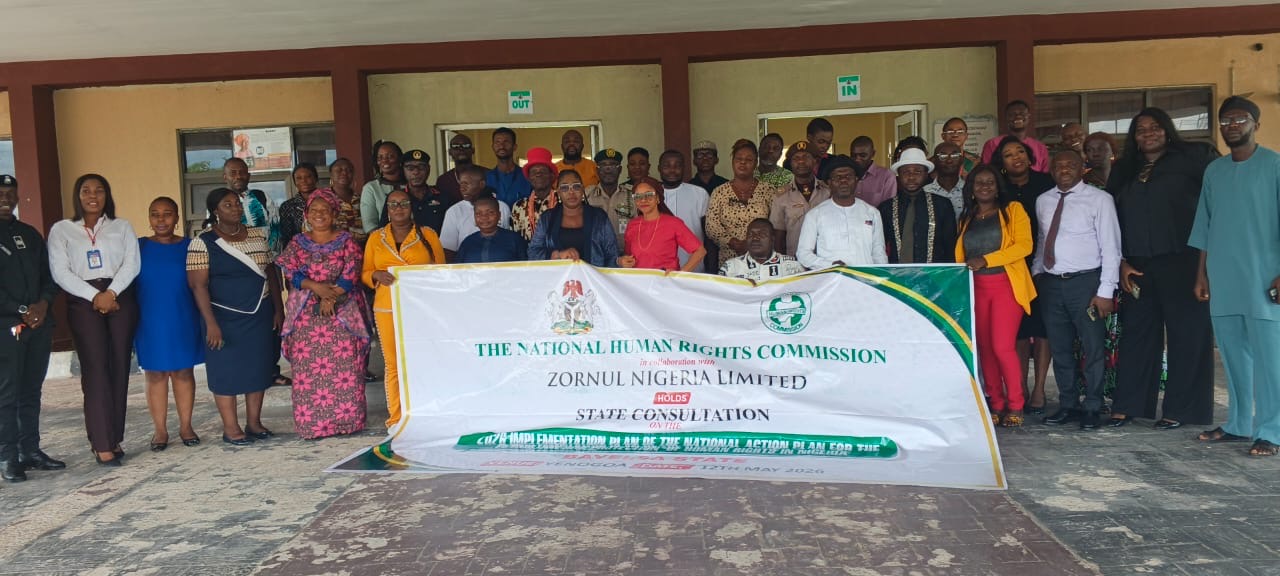
Concerns over persistent human rights violations and the need for stronger institutional accountability took center stage as the National Human Rights Commission (NHRC) convened stakeholders at a Pre-Zonal Consultative Meeting on the National Action Plan (NAP) 2024–2028 in Bayelsa State.
The meeting brought together representatives of government agencies, civil society organizations, development partners, security agencies, legal practitioners, women and youth groups, among other stakeholders, to deliberate on strategies for effective implementation of the National Action Plan across Nigeria.
Speaking during the consultation, the Executive Secretary of the National Human Rights Commission, Dr. Tony Ojukwu, SAN, represented by the Bayelsa State Coordinator of the Commission, Dr. Eugene Baadon, said the forum was organized to deepen collaboration among stakeholders and ensure a coordinated approach toward advancing human rights in the country.
According to him, the meeting provided a platform for participants to discuss and clarify their respective roles and responsibilities in implementing the National Action Plan, identify existing gaps, and strengthen partnerships between government institutions and civil society organizations.
Dr. Baadon stressed that the promotion and protection of human rights require collective efforts, noting that the success of the NAP largely depends on the commitment and cooperation of all relevant actors.
He explained that the NAP 2024–2028 serves as a strategic roadmap for addressing critical human rights challenges in Nigeria while aligning the country’s obligations with international best practices.
“The consultative meeting is essential because it provides stakeholders the opportunity to contribute meaningfully to the implementation framework of the National Action Plan. It is also aimed at fostering synergy among institutions and organizations working in the human rights sector,” he said.
He reaffirmed the commitment of the NHRC to ensuring that the rights of all Nigerians are protected irrespective of gender, ethnicity, religion, or social status.
Speaking on the objectives of the National Action Plan, Lady Chinwe Ubani said the initiative seeks to enhance awareness and understanding among stakeholders at both national and state levels regarding human rights principles and implementation strategies.
She noted that the plan would also help identify gaps and opportunities through stakeholders’ input while establishing functional systems for monitoring, evaluation, and reporting of NAP activities across the country.
According to her, the National Action Plan is a comprehensive framework for the promotion and protection of human rights and reflects Nigeria’s commitment to democratic principles, justice, accountability, equality, and the rule of law.
Lady Ubani stated that effective implementation of the plan would help address issues such as gender-based violence, discrimination, unlawful detention, abuse of vulnerable persons, and violations of socio-economic rights.
She added that the consultative process would promote inclusiveness and encourage active participation from communities and organizations directly affected by human rights concerns.
Some stakeholders commended the NHRC for organizing the consultation, describing it as timely in view of growing concerns over human rights protection in the country.
They called for sustained advocacy, increased funding, institutional reforms, and stronger collaboration between government and civil society groups to ensure successful implementation of the action plan.
Participants also emphasized the need for continuous public sensitization on human rights issues, particularly at the grassroots level, noting that many citizens remain unaware of their rights and available mechanisms for redress.
The stakeholders further urged security agencies and public institutions to uphold professionalism and accountability in the discharge of their duties in line with international human rights standards.
The meeting ended with renewed commitments from participants to work collectively toward the successful implementation of the National Action Plan 2024–2028 and the advancement of human rights protection in Nigeria.

