
By Kehinde Ibrahim, Lagos
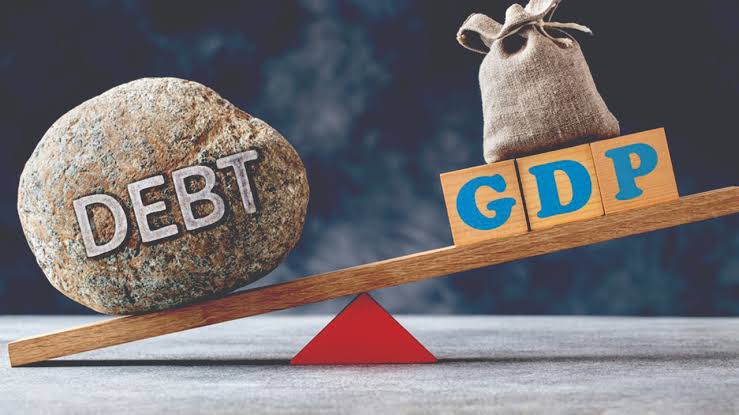
Nigeria’s public finance outlook has come under renewed scrutiny following fresh data indicating that the Federal Government’s rising debt servicing obligations are rapidly outpacing revenue growth, leaving little room for meaningful investment in infrastructure and economic development.
An assessment of the amended 2025 Federal Government budget by Cowry Asset Management has exposed deep structural weaknesses in the country’s fiscal management, despite official claims that reforms are improving revenue mobilisation. The report suggested that while government earnings have shown modest improvement, the gains have been overwhelmed by escalating debt repayments and poor implementation of capital projects.
According to the analysis, debt servicing consumed about 72 per cent of Federally generated revenue during the first nine months of 2025, a level many economists consider unsustainable for a developing economy struggling with inadequate infrastructure, high unemployment and rising poverty.
Although the Federal Government projected total revenue of N49.8 trillion for the 2025 fiscal year, implying expected collections of about N37.35 trillion by the end of September, actual revenue stood at only N17.1 trillion. This represented just 45.8 per cent of the target, leaving a revenue gap of more than N20 trillion.
The significant shortfall has renewed concerns over the government’s budgeting assumptions, with analysts questioning whether successive budgets have become increasingly ambitious without realistic projections for revenue generation. While improvements in oil receipts and tax administration contributed to higher collections compared with previous periods, they were insufficient to meet expenditure commitments.
More troubling is the continued rise in debt servicing costs. Total debt service payments reached N12.3 trillion during the review period, exceeding the budget benchmark by nearly 18 per cent. Domestic interest payments alone climbed to N9.3 trillion against a projected N5.4 trillion, reflecting the impact of elevated interest rates and the high cost of government borrowing in the domestic market.
The consequence is that an increasing share of public revenue is being used to meet financial obligations rather than finance projects capable of stimulating economic growth. Analysts warn that this trend continues to erode fiscal flexibility and reinforces Nigeria’s dependence on additional borrowing to finance routine government operations.
The report also highlighted the government’s poor performance in implementing its capital budget. Against a nine-month capital expenditure benchmark of approximately N17.5 trillion, only N1.3 trillion had been released, translating to an execution rate of just 7.3 per cent. Similarly, Ministries, Departments and Agencies, MDAs, received only a fraction of their expected allocations, significantly delaying project implementation across key sectors.
Equally concerning is the disclosure that no funds were disbursed under project-tied multilateral loans, domestic project financing or external borrowing programmes during the period under review. Persistent delays in procurement, project approvals and financing drawdowns continue to stall infrastructure development, despite repeated government assurances of accelerating capital investment.
While recurrent expenditure remained broadly within expectations, government-owned enterprises exceeded their overhead budgets by approximately 35 per cent, driven by inflation, exchange-rate pressures and rising operational costs. More than N413 billion earmarked for service-wide votes and intervention programmes also remained undisbursed, further highlighting inefficiencies in budget execution.
The broader implication is that Nigeria risks sacrificing long-term development for short-term fiscal survival. Weak investment in roads, power, healthcare and education could undermine productivity, discourage private investment and slow economic growth at a time when the country urgently requires broad-based economic expansion.
Cowry Asset Management identified continued dependence on crude oil revenues, elevated domestic interest rates, inflationary pressures and delays in multilateral financing as major risks to fiscal performance in the final quarter of the year. The firm argued that improving budget execution would require faster capital releases, stronger non-oil revenue mobilisation and better coordination of public spending.
Ultimately, the report reinforces concerns that Nigeria’s fiscal challenges extended beyond revenue generation. Without stronger discipline in borrowing, more realistic budget assumptions and a sustained commitment to executing development projects, the country’s finances are likely to remain under severe pressure. The 2025 budget, despite its historic size, risks being remembered not for delivering transformative growth but for exposing the widening gap between government ambitions and actual implementation.

