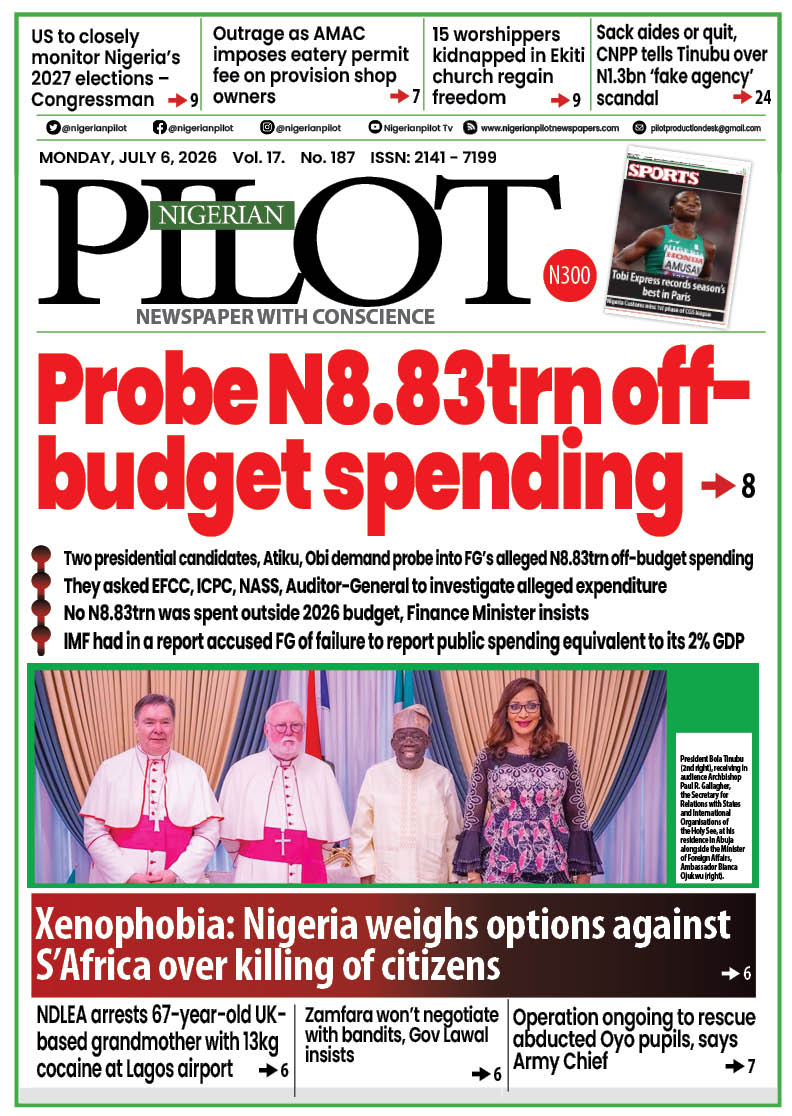
Two presidential candidates, Atiku, Obi demand probe into FG’s alleged N8.83trn off-budget spending
*They asked EFCC, ICPC, NASS, Auditor-General to investigate alleged expenditure
*No N8.83trn was spent outside 2026 budget, Finance Minister insists
*IMF had in a report accused FG of failure to report public spending equivalent to its 2% GDP
By Palma Ileye
Presidential candidate of the African Democratic Party, ADC, Atiku Abubakar and that of the Nigerian Democratic Congress, NDC, Peter Obi have called for investigations into reports that Nigeria recorded about ₦8.83 trillion in public spending outside the formal budget framework, while the Federal Government has dismissed the claims, insisting no such “shadow budget” exists.
The opposition leaders were reacting to comments attributed to the International Monetary Fund (IMF) Resident Representative in Nigeria, Christian Ebeke, who reportedly said the country failed to disclose public expenditure equivalent to about two per cent of its Gross Domestic Product (GDP) in recent budgets.
According to the IMF official, Christian Ebeke, the unreported spending, linked partly to major government projects executed outside the formal budget process, made Nigeria’s fiscal deficit appear lower than its actual financing needs and raised concerns about fiscal transparency.
Reacting to the development, Atiku called on the Economic and Financial Crimes Commission (EFCC), the Independent Corrupt Practices and Other Related Offences Commission (ICPC), the National Assembly and the Auditor-General of the Federation to investigate the alleged off-budget expenditure.
The African Democratic Congress (ADC) presidential candidate said the reported two per cent of GDP amounted to about ₦8.8 trillion, describing it as public funds allegedly spent without legislative approval, audit or public accountability.
He argued that the IMF’s findings indicated that multi-trillion-naira projects were executed outside the oversight of the National Assembly, the Auditor-General and Nigeria’s procurement laws.
Atiku further alleged that the Tinubu administration had maintained what he described as a “shadow treasury” despite implementing difficult economic reforms. He also claimed that an additional ₦800 billion had been deducted from statutory allocations due to states and alleged that the funds were being accumulated as a political war chest ahead of the 2027 general elections.
He urged the National Assembly to commence an immediate investigation into the IMF’s findings, conduct an independent audit of the alleged off-budget expenditures and ensure the refund of the ₦800 billion he claimed was deducted from state allocations.
Similarly, Obi described the IMF report as further evidence of what he termed “grand corruption” under the current administration.
In a post on X, the Labour Party presidential candidate said the reported ₦8.83 trillion expenditure was not reflected in the national budget and therefore fell outside legislative oversight.
He noted that the amount represented more than 35 per cent of the 2025 capital budget and exceeded the combined federal allocations to the education and health sectors. According to Obi, if properly managed and accounted for, the funds could have significantly improved public education and healthcare delivery.
Obi said the report highlighted a pattern of financial mismanagement and renewed his call for President Bola Tinubu to resign, arguing that the administration had failed to demonstrate commitment to accountability, public welfare and national security. He also urged Nigerians to continue demanding greater transparency in the management of public resources.
The IMF reportedly explained that the discrepancy arose mainly from government projects executed outside the formal budget process. The institution, however, noted that the Federal Government had begun taking steps to address the issue through revisions to budget laws and improvements in fiscal reporting, while encouraging greater transparency and timely publication of budget implementation reports.
However, the Federal Government rejected suggestions that it spent about ₦8 trillion outside the 2025 budget.
Minister of Finance and Coordinating Minister of the Economy, Wale Edun, responding to the IMF official’s remarks, said reports claiming that about two per cent of Nigeria’s GDP was spent through a “shadow budget” were not supported by evidence.
In a statement issued on Sunday, the minister maintained that the Federal Government does not operate any unofficial budget, stressing that all public spending and withdrawals are authorised through Appropriation Acts, Supplementary Appropriation Acts and other laws duly passed by the National Assembly.
He insisted that government expenditures remain subject to the country’s legal and constitutional budgetary framework.

