
Every year, thousands of Nigerian women are diagnosed with cervical cancer, a disease largely caused by the Human Papillomavirus (HPV). Yet, despite its devastating impact, cervical cancer is one of the most preventable forms of cancer when tackled early through vaccination and regular screening. As Blessing Bature reports, while the disease often strikes women in adulthood, the battle against it begins much earlier with adolescent girls. Protecting them before they are exposed to the virus is the most effective way to reduce future cases and save lives.
Recognising this, governments, development partners, and initiatives such as the OYA Campaign have intensified efforts to raise awareness, dispel myths, and improve access to the HPV vaccine among eligible girls. Despite these efforts, misinformation, cultural misconceptions, limited access to healthcare, and vaccine hesitancy continue to prevent many girls from receiving the protection they need.
Health experts agree that the most effective way to reduce future cases of cervical cancer is to protect girls before they are exposed to the Human Papillomavirus (HPV). Recognising this, governments, development partners, and initiatives such as the OYA Campaign have intensified efforts to raise awareness, dispel myths, and improve access to the HPV vaccine among eligible girls. Yet challenges remain: misinformation, cultural misconceptions, limited healthcare access, and vaccine hesitancy continue to prevent many girls from receiving the protection they need.
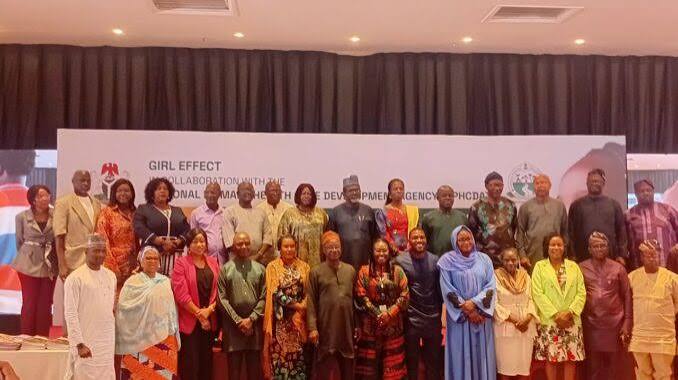
At the Girl Effect OYA Campaign Learning and Sustainability Project Close-Out and Dissemination Meeting, Director of Disease Control and Immunisation at the NPHCDA, Dr. Garba Rufai, noted that Nigeria has continued to make progress in immunisation despite misinformation and anti-vaccine campaigns circulating on social media. He stressed the need for state governments to strengthen local capacity and reduce reliance on donor-funded programmes, warning that sustained immunisation efforts would determine the long-term success of the campaign.
The Country Director of Girl Effect Nigeria, Boladale Akin-Kolapo, explained that strategic investments in advocacy, communication, and community engagement have played a significant role in increasing awareness and uptake of the HPV vaccine among adolescent girls. Supported by Gavi, the Vaccine Alliance, the initiative was designed to accelerate access to health services for adolescent girls and young women while addressing harmful gender norms. According to her, the project focused on increasing demand for and acceptance of the HPV vaccine, as well as improving awareness and utilization of Sexual and Reproductive Health and Rights (SRHR) and nutrition services in Kaduna, Delta, Ekiti, Ondo, and Oyo states.
Through innovative social and behaviour change interventions, Girl Effect partnered with government agencies at national and state levels to support HPV vaccine demand generation and uptake. Initiatives such as the Champions Approach in schools and communities, OYA campaign activations with First Ladies, awareness and vaccination outreaches, and support during immunisation campaigns and health commemorative events contributed to Nigeria’s achievement of vaccinating more than 16 million girls against HPV.
Akin-Kolapo described the close-out event as an opportunity for stakeholders to reflect on achievements, share lessons, and develop strategies for sustaining gains. She emphasised that Nigeria’s introduction of the HPV vaccine into the national immunisation programme in 2023 was a landmark achievement. But she stressed that public trust and community engagement were critical to translating vaccine availability into actual uptake. “Vaccines do not save lives sitting in cold-chain facilities. Vaccines save lives when people trust them, when parents understand them, when communities embrace them and when girls are empowered to access them,” she said.
The OYA Campaign was conceived as a national call to action aimed at mobilising parents, schools, communities, healthcare workers, and government institutions to protect girls from cervical cancer through vaccination. Over time, it evolved into a movement across the five participating states, bringing together governments, First Ladies, health and education sectors, traditional institutions, community leaders, and frontline health workers.
Highlighting the project’s impact, Akin-Kolapo disclosed that more than 4.1 million people were reached through digital platforms, while approximately 18 million people were reached through radio programming. Over 7,800 school and community engagement sessions were conducted, while hundreds of teachers and healthcare workers were trained and equipped to serve as trusted vaccine advocates. More than 32,000 parents and caregivers and 18,000 adolescent girls received accurate information on HPV vaccination and adolescent health, while over 26,000 girls went on to receive the HPV vaccine. “These achievements belong to all of us: government, health workers, schools, communities, parents and every girl who chose protection over fear and facts over misinformation,” she said.
Despite the progress, Akin-Kolapo warned against complacency. Sustaining demand for HPV vaccination remains a major challenge as the programme transitions from introduction to routine immunisation. She stressed that advocacy and social behaviour change communication should not be treated as an add-on but as a core component of vaccination success. “Communities must continue to be engaged, trusted champions must continue to be supported, schools must remain active partners, and demand generation must become institutionalised within government systems,” she said.
She called on federal, state, and local governments to take ownership of HPV vaccination awareness efforts and ensure that successful approaches developed under the OYA Campaign are integrated into health systems for long-term sustainability. Akin-Kolapo reaffirmed Girl Effect’s commitment to supporting adolescent health and development, noting that investments in communication and behaviour change remain essential for improving vaccine uptake, reducing child marriage, advancing sexual and reproductive health, and addressing broader challenges facing young people. She expressed appreciation to Gavi, the National Primary Health Care Development Agency, state governments, healthcare workers, educators, traditional and religious leaders, civil society organisations, and community-based groups for their contributions to the project.
Other stakeholders echoed similar sentiments. Dr. Aruwa Oteri, Senior Programme Officer at the Bill & Melinda Gates Foundation, commended the campaign’s emphasis on social and behaviour change communication, describing it as critical to addressing cultural barriers. Dr. Chisom Emeka, representing the World Health Organisation, praised the campaign’s youth-centred and digital engagement strategies, reaffirming WHO’s commitment to supporting Nigeria’s routine immunisation programme. Representing the implementing states, Oyo State Commissioner for Health, Dr. Oluwaserimi Ajetunmobi, said the campaign’s evidence-based approach and focus on adolescent girls would help shape future health policies and investments in the state.
The introduction and scale-up of the HPV vaccine in Nigeria marks a significant milestone in the fight against cervical cancer. But as health experts and campaign leaders emphasised, vaccines only save lives when communities trust them, when parents understand them, and when girls are empowered to access them. The OYA Campaign has shown that with strategic advocacy, community engagement, and youth-centred communication, Nigeria can overcome barriers of misinformation and cultural resistance. The challenge now is to sustain these gains, institutionalise demand generation, and ensure that every girl, regardless of background, has the chance to be protected against cervical cancer.

