
By Aaron Ossai
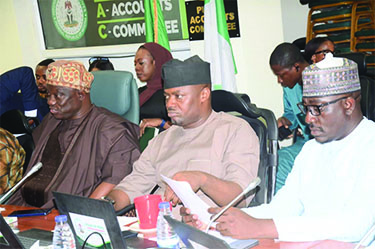
The Chairman of the House of Representatives Ad Hoc Committee on Mineral Exploitation, Security and Anti-Money Laundering, Hon. Sanni Egidi Abdulraheem, has called for stronger collaboration among government agencies, security institutions, state governments, mining operators and other stakeholders to tackle illegal mining and the laundering of proceeds from Nigeria’s solid minerals sector.
Speaking at a High-Level Stakeholders Workshop on Extractive Industry Governance in Abuja, Abdulraheem said the fight against illegal mineral exploitation requires a coordinated national response, stressing that no single institution can address the challenge alone.
He described the committee’s assignment as “a national duty” aimed at ensuring Nigeria derives maximum benefit from its vast mineral resources while protecting communities from criminal activities associated with illegal mining.
“Nigeria is blessed with enormous mineral deposits, including gold, lithium, tin, coal and tantalite. On paper, these resources should be transforming livelihoods, funding schools and hospitals, and strengthening our national economy. Yet, for too long, a troubling gap has persisted between the wealth in our ground and the prosperity in our communities,” he said.
According to the lawmaker, the gap has been fuelled by illegal mining, weak enforcement mechanisms and the laundering of proceeds that should accrue to the Nigerian people.
He noted that criminal networks have continued to exploit mineral resources, resulting in significant revenue losses and worsening insecurity in mining communities across the country.
Hon. Abdulraheem said the House constituted the ad hoc committee to investigate the scale of illegal mineral exploitation, trace financial flows linked to illicit mining activities, assess the effectiveness of security arrangements in mining communities and examine whether existing laws and regulatory institutions are adequate to address the problem.
He disclosed that the committee has held several investigative sittings and engaged relevant government agencies in the course of its assignment, adding that summons were issued where cooperation was inadequate.
“We do this not out of confrontation, but out of conviction because oversight without candour achieves nothing, and reform without accurate information is guesswork dressed as policy,” he said.
The Committee Chairman urged the Federal Ministry of Solid Minerals Development and the Nigeria Mining Cadastre Office to work closely with the committee by providing licensing data and other critical information needed to strengthen oversight of the sector.
He also called on security agencies, including the Nigeria Security and Civil Defence Corps and Mining Marshals, to identify operational and capacity gaps requiring legislative support.
Hon. Abdulraheem further urged the Nigerian Financial Intelligence Unit (NFIU) and the Economic and Financial Crimes Commission (EFCC) to intensify efforts to trace illicit financial flows associated with illegal mining.
“The financial trail is often where the truth is hardest to hide. Illicit proceeds do not vanish; they move through accounts, shell arrangements and cross-border channels that can be traced with the right tools and the right political will,” he said.
He appealed to state governments and traditional rulers to support efforts to curb illegal mining by providing intelligence from mining communities, while assuring licensed operators that the committee’s investigation is intended to protect legitimate investments rather than target lawful businesses.
The lawmaker also commended the role of civil society organisations and the media in promoting transparency and accountability in the extractive industry.
He said submissions and recommendations from the workshop would form part of the committee’s report to the House of Representatives, adding that the report would focus on practical legislative, regulatory, security and administrative reforms.
“We are not here merely to catalogue problems we already know exist. We are here to identify concrete legislative, regulatory, security and administrative solutions that can survive beyond this committee’s tenure and outlast any single administration,” the lawmaker said.
He reaffirmed the committee’s commitment to conducting its assignment with fairness, transparency and dedication to safeguarding Nigeria’s mineral wealth for the benefit of all citizens.

