
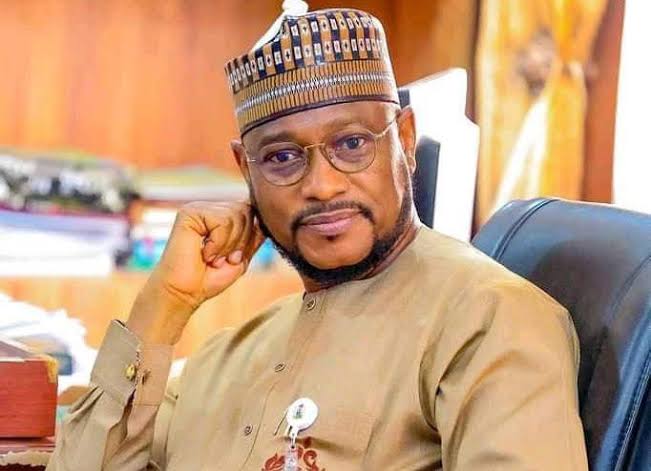
*Zamfara Gov reveals how he refused to pay N300m ransom to bandits who abducted his brothers
*Recalls that after 3 months, his brothers were released without any payment
*Insists that negotiating with criminals only encourages more abductions
*That criminals will think twice about abducting people if ransom payment stops
By Palma Ileye
Zamfara State Governor, Dauda Lawal, has disclosed that he refused to pay a N300 million ransom after his brothers were abducted by kidnappers in 2019, saying yielding to ransom demands only fuels more criminal activities.
The governor made the revelation on Thursday during the ARISE News and THISDAY Townhall Conference in Abuja, where he reiterated his long-standing opposition to negotiating with kidnappers.
Recounting the incident, Lawal said the abductors demanded N300 million for the release of his brothers, but he rejected the demand despite the personal risk involved.
“My own brothers were kidnapped in 2019, and these criminals were demanding about N300 million at the time. I told them I was not going to pay a dime. If they wanted, they could kill them,” he said.
According to the governor, his brothers regained their freedom after spending three months in captivity, with no ransom paid.
Lawal argued that paying ransom only emboldens criminal groups and encourages further kidnappings.
“The more we continue to pay ransom, the more we encourage these people to kidnap others. If people stop paying, they will eventually begin to think twice before carrying out these crimes,” he said.
He maintained that his position remains unchanged, insisting that he would never negotiate with or pay ransom to kidnappers.
“I will not negotiate, and I will not pay ransom to any criminal, no matter what happens,” the governor declared.
Speaking on the country’s security challenges, Lawal renewed his call for the establishment of state police, arguing that governors should have operational control over security agencies if they are expected to be accountable for protecting lives and property.
He lamented that although governors are referred to as the chief security officers of their states, they lack the authority to direct the operations of security agencies.
“As much as I am called the chief security officer of the state, I do not have the command and control structure to determine what happens or give instructions to the security agencies,” he said.
Lawal questioned how governors could be held responsible for insecurity without the necessary powers to manage policing and security operations.
“My primary responsibility is the protection of lives and property, yet I do not have that control. So how do you hold me accountable?” he asked.
He argued that creating state police would strengthen accountability by enabling residents to directly assess the performance of elected leaders on security while allowing state governments to adequately fund, train and equip security personnel.
The governor also criticised the Nigeria Police Force, saying inadequate funding, poor welfare and insufficient training have weakened the effectiveness of officers across the country.
Highlighting his administration’s investment in security, Lawal disclosed that Zamfara State currently finances more than 30 per cent of security operations within the state.
He said the government has acquired over 500 operational vehicles for security agencies in the past three years and recently supplied 35 Armoured Personnel Carriers (APCs) and Mine-Resistant Ambush Protected (MRAP) vehicles to strengthen security efforts.
Lawal added that the state has embraced technology to combat insecurity, including the deployment of surveillance and attack drones to support security operations against bandits and other criminal groups.
“We bought drones, both surveillance drones and attack drones, to aid the security forces in fighting these criminals in their respective areas,” he said.
The Governor maintained that investing in security agencies through improved funding, training and technology offers a more effective solution to banditry and kidnapping than negotiating with armed groups.
His comments come amid renewed nationwide discussions on the creation of state police and broader security reforms, with supporters arguing that decentralising policing would improve accountability and enhance responses to local security threats.

