
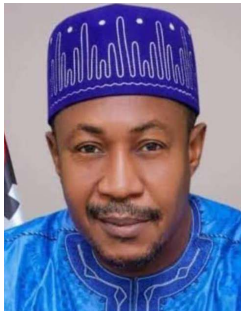
By Michael Oche
Every morning, thousands of health workers across Nigeria put on their uniforms and head to hospitals, clinics and health centres to care for other people’s lives. But behind that commitment are workers who are themselves struggling with poor remuneration, inadequate equipment, difficult working conditions and the rising cost of living.
For years, health workers’ welfare has remained one of the unresolved issues in Nigeria’s healthcare system. Yet, these workers are still expected to provide quality care to Nigerians, often under circumstances that would test even the most committed professional.
These challenges have contributed to growing frustration, with many health workers migrating in search of better opportunities abroad, leaving those who choose to remain to work within an already stretched healthcare system, inadequate equipment and persistent concerns over their welfare.
This is the reality that makes the welfare of Nigeria’s health workers more than a labour issue. It is a healthcare issue, and ultimately, a question of whether Nigerians can receive the quality care they deserve.
On November 15, 2025, health workers were forced to declare an indefinite strike which lasted for 84 days, making it one of the longest strikes in the history of the health sector in Nigeria. The government shockingly remained adamant, without considering the kind of lives that were lost in federal health institutions during the strike.
The health workers would later suspend the strike on passionate grounds. With the issue unresolved, despite signing terms of settlement with the Federal Ministry of Labour and Employment, stating that the adjustment would be concluded on or before April 2026. Four months later, the issues
Comrade Kabiru Ado Minjibir, National President of the Medical and Health Workers Union of Nigeria (MHWUN) and Chairman of the Joint Health Sector Unions (JOHESU), says one of the most troubling issues that is yet to be resolved is the issue of CONHESS adjustment.
The issue has lingered for more than 12 years, with the union accusing successive governments of failing to address what it considers an imbalance between CONHESS, which covers many non-medical health professionals, and the Consolidated Medical Salary Structure, CONMESS, for medical doctors.
According to Comrade Minjibir, the problem dates back to the implementation of the two salary structures in 2009
He said an agreement between labour and government provided for relativity and parity between the two structures, including a provision that any upward review of one should trigger a corresponding review of the other.
But, according to Minjibir, that understanding was not sustained.
“During the administration of President Goodluck Ebele Jonathan, CONMESS was reviewed upward, leaving CONHESS behind, and the agitation started from there,” he said.
“Along the line, two other major reviews were carried out in favour of CONMESS, while CONHESS was left unchanged.”
In other words, Minjibir said, CONMESS has been reviewed three times without a corresponding adjustment to CONHESS.
He says, “Apart from the CONHESS adjustment, we have other issues, including the outstanding payment of nine months’ arrears of the 25 per cent and 35 per cent consequential adjustments. We also have outstanding COVID-19 allowances, among others.But the CONHESS adjustment remains our flagship demand.
“I want to use this opportunity to call on the government, particularly the Federal Ministry of Health and other stakeholders, to do the needful. The Minister of Labour and Employment is the chairman of the CBA committee, while the Minister of Finance is the chairman of the Presidential Committee on Salaries, which is expected to do the needful and pass the CONHESS adjustment through the National Salaries, Incomes and Wages Commission so that this issue can finally be laid to rest. These are some of the challenges we currently face in the health sector, and we pray and hope that the government will do the needful to prevent another industrial crisis in the health sector.”
Many health professionals say the challenge is not simply about earning a better salary. It is about being able to work in an environment where they have the tools to do their jobs, where their efforts are valued and where staying in the profession does not come at the cost of their own wellbeing.
“A lot needs to be done, and there are many factors driving our members out of the country. These include poor remuneration, inadequate welfare, poor working conditions and lack of hospital equipment,” Minjibir said.
His assessment captures a crisis that is no longer confined to the question of how much health workers earn. It is about whether the Nigerian health system is creating conditions that make skilled professionals willing to remain, build their careers and serve the communities that trained them.
The Federal Government itself has acknowledged that health workforce shortages, migration, infrastructure and healthcare financing remain major challenges. It has introduced measures aimed at recruitment, training and retention, including a national policy on health workforce migration. But for workers on the frontline, the real test is not the number of policies announced. It is whether those policies change what happens when they report for work.
In some rural communities, Minjibir said, community health workers are forced to spend their personal resources providing items that should ordinarily be supplied by the government.
“If you go to rural areas where our members work, you will see situations where a community health extension worker has to use personal resources to provide things in a health facility that should ordinarily be the responsibility of the government. Even in some state hospitals, you find similar problems,” he said.
With political campaigns now beginning ahead of the 2027 general elections, healthcare workers want the conditions under which they work to become part of the national political conversation.
The 2027 elections therefore offer an opportunity to move the healthcare debate beyond the usual promises to build hospitals and provide equipment.
Political candidates should be asked what they intend to do about the workers who will staff those hospitals. What will they do to resolve longstanding salary disputes? What will they do to stop skilled health workers from leaving? How will they improve working conditions? How much will they invest in equipment and primary healthcare? And, perhaps most importantly, what mechanisms will ensure that campaign promises become measurable policies after the elections?
“Healthcare should be at the forefront of the campaigns. Politicians should put it on their agenda,” the JOHESU chairman said.
But he immediately adds an important caveat: campaign promises must translate into action.
“It is not enough for politicians to put it in their campaign promises; they must implement those promises when they win elections.”
That distinction is critical. Nigerians have heard promises about healthcare for decades. What is often missing is the sustained political commitment required to improve the conditions under which healthcare is delivered.
He said, “That is very important. As health workers, we operate all over the country. We work in federal health institutions, at the state level and at the local government level. We are very close to the populace, even at the grassroots.
“We have families, and we also have a role to play in elections. It is not only politicians or political party leaders who determine who comes into office. We are also part of those who participate in the electoral process.”
Nigeria has a particularly difficult choice to make. It can continue to train skilled professionals who eventually find more attractive working conditions elsewhere, or it can begin to treat retention as seriously as recruitment.
Minjibir’s argument is that the resources exist, but healthcare must become a political priority. He noted that the question of funding should not be used to push healthcare to the background.
“No. First and foremost, it is a matter of priority. Government has to prioritise healthcare delivery,” he said when asked whether the government has the financial capacity to adequately fund the sector.
“Even if the government says it does not have enough money, it has to start from somewhere. It cannot continue to remain where we are or keep going backwards.”
That argument will inevitably become part of the broader 2027 debate. At a time when governments at federal, state and local levels are sharing increased revenues, health workers want to know how much of the available resources will translate into better facilities, improved remuneration and stronger healthcare delivery.

