
By Ere-ebi Agedah Imisi
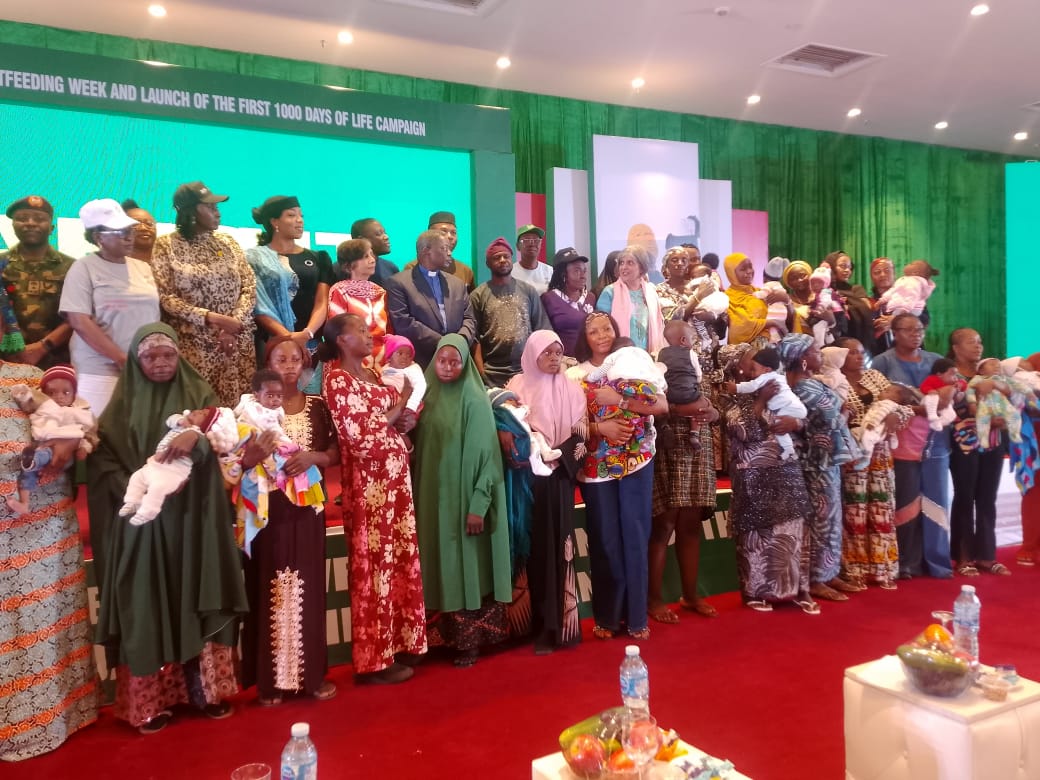
The Federal Ministry of Health and Social Welfare, FMOHSW, in collaboration with the Civil Society Scaling Up Nutrition in Nigeria, CS-SUNN, development partners, healthcare professionals and other nutrition stakeholders, on Monday commemorated the 2026 World Breastfeeding Week with a renewed call on nursing mothers to exclusively breastfeed their babies and sustain optimal feeding practices during the first 1,000 days of life.
The event, themed “Breastfeeding for a Sustainable Start in Life: Strengthen What Works”, also featured the official launch of the First 1,000 Days of Life Nutrition Social and Behaviour Change, SBC Campaign, an initiative aimed at promoting optimal maternal, infant and young child nutrition practices while strengthening community awareness and support for breastfeeding across Nigeria.
Speakers at the event described breast milk as the ideal source of nutrition for infants, urging families, communities and employers to support mothers in ensuring children receive the health and developmental benefits associated with breastfeeding during their first 1,000 days.
Permanent Secretary of the Federal Ministry of Health and Social Welfare, Daju Kachollom, reaffirmed the Federal Government’s commitment to protecting, promoting and supporting breastfeeding, describing it as one of the most effective and affordable ways to improve child survival and development.
Kachollom said this year’s theme, highlights the need for stronger policies, quality healthcare services, breastfeeding-friendly workplaces and greater community support for mothers.
“Breastfeeding is one of the most effective, life-saving and cost-effective interventions for ensuring healthy child survival and development,” Kachollom said.
She explained that the first 1,000 days of life from conception to a child’s second birthday represent a critical period for physical and cognitive development, warning that poor nutrition during this window can result in stunted growth, impaired brain development, weak immunity and reduced productivity in adulthood.
Despite high breastfeeding rates, Kachollom said Nigeria still falls short of recommended practices. Citing data from the 2023/2024 Nigeria Demographic and Health Survey, she noted that only 36 per cent of babies are breastfed within one hour of birth, while 29 per cent are exclusively breastfed for the first six months. She added that just 23 per cent of children continue breastfeeding up to 24 months.
“These figures remind us that much more needs to be done. We must strengthen our collective commitment to ensuring that every child receives the best possible start in life,” she said.
She called on families and healthcare providers to adopt the recommendations of the World Health Organisation and UNICEF by initiating breastfeeding within one hour of birth, practising exclusive breastfeeding for six months and continuing breastfeeding alongside appropriate complementary feeding up to two years and beyond.
According to the Permanent Secretary, delayed breastfeeding, harmful cultural practices, inadequate counselling, poor workplace support, aggressive marketing of breastmilk substitutes and weak community engagement remain major obstacles.
“Overcoming these challenges requires collective action by governments, healthcare workers, employers, development partners, communities and families,” she added.
Kachollom said the government is addressing these gaps by strengthening maternal and child nutrition programmes, expanding Baby-Friendly Hospital and Community Initiatives, training healthcare workers, enforcing regulations on breastmilk substitutes and promoting breastfeeding-friendly workplaces.
She noted that the newly launched First 1,000 Days of Life Nutrition SBC Campaign would boost awareness and encourage evidence-based nutrition practices.
“The campaign promotes improved maternal nutrition, early initiation of breastfeeding, exclusive breastfeeding, timely complementary feeding, continued breastfeeding and stronger community ownership of optimal nutrition practices,” she said.
Earlier, the Director of Nutrition, Olufunmilola Adegbite, described breastfeeding as an investment in Nigeria’s future.
“Breastfeeding is not only a health intervention but an investment in education, economic productivity, environmental sustainability and national development. A child who receives adequate nutrition during the first 1,000 days is more likely to become a healthy, educated and productive adult,” she said.
Also speaking, the Senior Special Assistant to the President on Public Health, Uju Rochas-Anwukah, delivered a goodwill message on behalf of Vice President Kashim Shettima, who described breastfeeding as one of the most impactful public health interventions.
“This is why the Vice President has directed that breastfeeding be treated, not only as a maternal choice, but as a national investment. A breastfed child is a healthier child. A breastfed child is a smarter child. A breastfed child is a more productive citizen in waiting,” she said.
She added that the Vice President welcomed the launch of the campaign and urged stakeholders to ensure it reaches all 774 local government areas, every ward, primary healthcare centre and household across the country.
Additionally, the Civil Society Scaling Up Nutrition in Nigeria, CS-SUNN called for stronger policies and greater support for breastfeeding to improve maternal and child health outcomes across the country.
Delivering a goodwill message on behalf of the Executive Secretary of CS-SUNN, Mr. Sunday Okoronkwo, the organisation’s Programme Manager, Ridwan Awosanya, said the 2026 World Breastfeeding Week serves as a reminder that breastfeeding is not only a health intervention but also a critical investment in Nigeria’s human capital and sustainable development.
Speaking at the flag-off ceremony in Abuja, Awosanya urged governments, employers, development partners, communities and families to strengthen systems that enable mothers to initiate breastfeeding early, exclusively breastfeed for the first six months and continue breastfeeding in line with global recommendations.
He reaffirmed CS-SUNN’s commitment to promoting evidence-based advocacy, community mobilisation and multi-sectoral partnerships to improve maternal, infant and young child nutrition, while commending the Federal Ministry of Health and Social Welfare and development partners for their sustained efforts to improve nutrition and save lives.

