
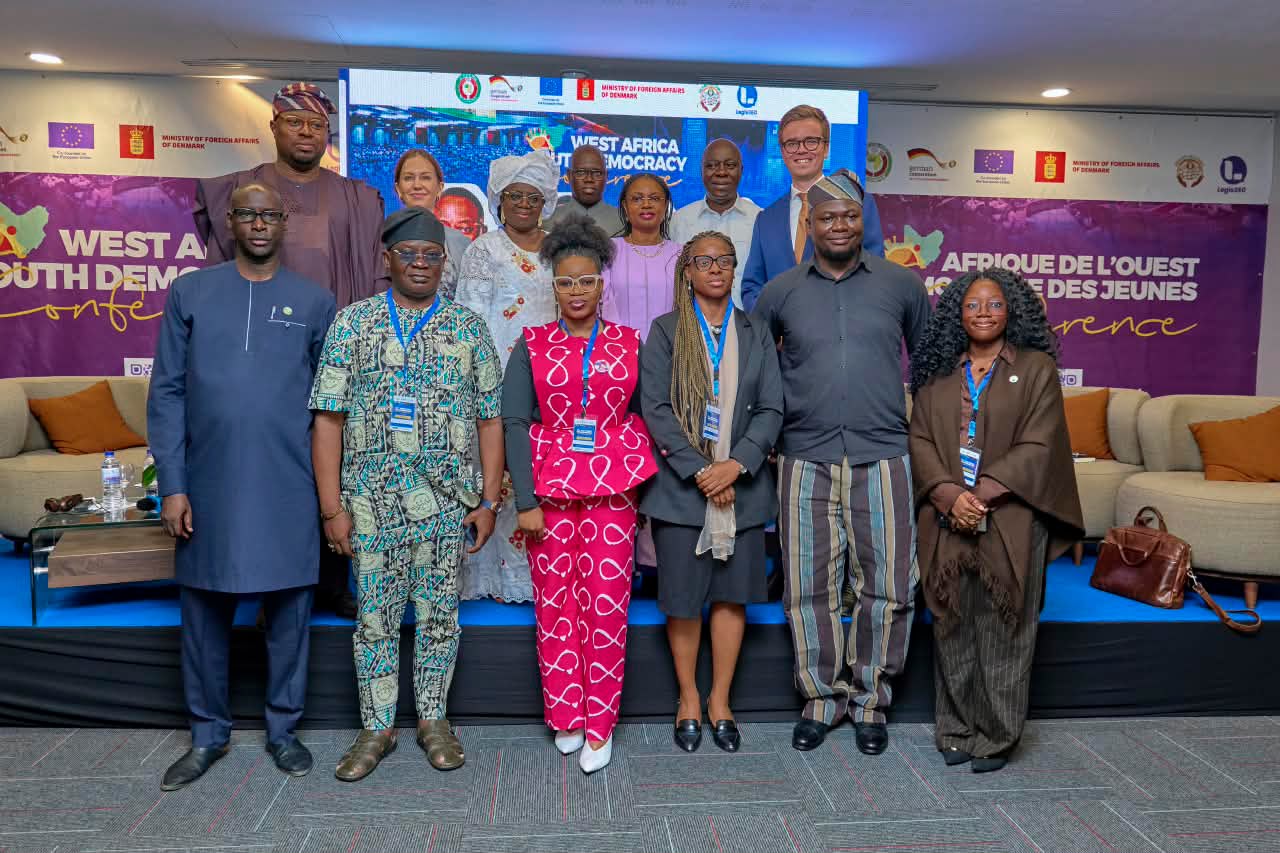
*As ECOWAS reaffirms commitment to youth inclusion in democratic system
By Michael Oche
Democracy stakeholders and youth advocates have called for concrete action to remove legal, financial and technological barriers limiting young people’s participation in politics and democratic processes across West Africa.
The call was made on Tuesday at the opening of the three-day West Africa Youth Democracy Conference in Dakar, Senegal, organised by Legis360 to examine the state of youth political inclusion and develop practical mechanisms for greater participation.
Speaking at the conference, Founder and Executive Director of Legis360, Samuel Folorunsho, said West Africa had no shortage of young people with ideas but lacked the institutional mechanisms required to translate those ideas into policies and rules.
The conference, themed, “From Participation to Power: Re-evaluating the Political Inclusion of Young People in West Africa and Advancing a Regional Agenda for Democratic Governance,” seeks to assess progress made on youth political inclusion, examine persistent barriers and promote evidence-based political and institutional reforms across ECOWAS member states.
“West Africa is not short of young people with ideas. What we have been short of is the machinery to turn those ideas into rules,” Folorunsho said.
He challenged political parties, legislators and other institutional stakeholders to move beyond recommendations and commitments on youth inclusion and take concrete steps to create meaningful opportunities for young people to participate in political processes.
According to him, the conference would confront the persistent gap between recommendations on youth political participation and their implementation.
He said the programme would move from diagnosis to practical solutions, with political parties expected to respond to questions on youth inclusion, while legislators would be engaged on the legal and institutional environment required to facilitate greater participation.
Folorunsho added that five policy labs would examine the legal, financial and technological barriers confronting young people seeking to participate in politics.
Meanwhile, the ECOWAS Commission has reaffirmed its commitment to strengthening the inclusion of young people in the democratic systems of West Africa.
Speaking on behalf of ECOWAS, the Commission’s Resident Representative in Senegal, Amb. Zelma Yollande Nobre Fassinou, commended Legis360 for placing youth participation at the centre of the regional democracy debate.
She said the initiative aligned with ECOWAS’ vision of making the inclusion of young people an essential component of democratic consolidation in the region.
“The political inclusion of young people must not be seen as a favour. It is an investment in the future and in the resilience of our democracies. This responsibility also falls on the institutions,” Fassinou said.
Also speaking, Director of Political Affairs, ECOWAS Commission, Dr Babatunde Afolabi, reaffirmed the Commission’s commitment to strengthening youth inclusion through initiatives such as the ECOWAS Youth Electoral Observation Mission.
Afolabi said young people, when trained, equipped and given responsibilities, could make significant contributions to inclusive governance and credible elections across West Africa.
He emphasised that, when young people are trained, equipped and given responsibilities, they can make a significant contribution to inclusive governance and credible elections across West Africa.
“We hear the sound of the wall crumbling, but never that of the wheat growing,” said Mr Moustapha Mamadou Seck, Representative of the ECOWAS National Office in Senegal, in commending the efforts of the Commission and its Directorate of Political Affairs to involve young people in electoral processes, notably through their participation in election observation missions in Côte d’Ivoire and Benin.
Similarly, Mr Moustapha Mamadou Seck, Representative of the ECOWAS National Office in Senegal, commended the efforts of the Commission and its Directorate of Political Affairs to involve young people in electoral processes, particularly through their participation in election observation missions in Côte d’Ivoire and Benin.
“We hear the sound of the wall crumbling, but never that of the wheat growing,” Seck said.
He stressed the importance of sustaining efforts to create meaningful opportunities for young people to contribute to electoral and democratic processes.
The Director of Communications at the German Embassy in Senegal, Mr Jonas Tylewski, urged participants to use the conference as an opportunity to share experiences, deepen their knowledge and develop concrete proposals for more inclusive democratic governance.
Folorunsho said the conference would culminate in the adoption of the Dakar Declaration and a Regional Action Framework, as well as the introduction of the West Africa Youth Observers Network.
He said the proposed network would provide a platform for sustaining the commitments and actions agreed at the conference beyond the three-day meeting.

