
By Patrick Wemambu
On 7th October 1967, during the fraticidal Nigerian Civil War, government troops entered Asaba – then Mid-Western region – in pursuit of retreating ‘rebel’ Biafran army. They were met by joyful Ahaba indigenes – adorning their traditional white attire christianed Akwa-Ocha – who sang, danced and chanted ‘One Nigeria.’ Reception choruses were rendered to welcome the visitors.
However, the troops separated the women and children from the men and boys. Then the shootings began. Within minutes, the soldiers had slaughtered thousands of peaceful unarmed civilians who had gathered to receive them.
Devastatingly, the attackers left the then sleepy town in ruins. News of the atrocity was allegedly suppressed by the Nigerian government, with the complicity ostensibly of Britain. And the significance of the ex-colonial masters in the subsequent progress of that conflict was misunderstood.
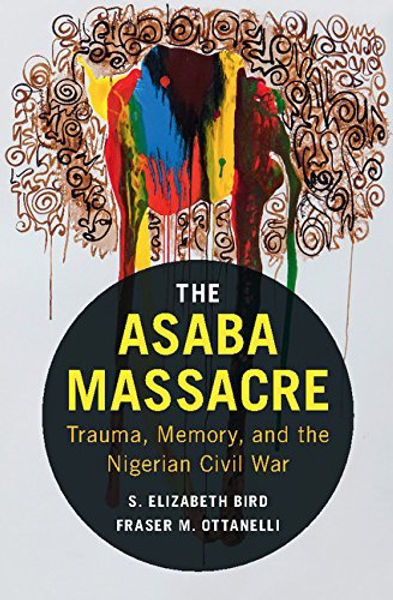
Drawing on archival sources on both sides of the Atlantic and interviews with survivors of the killing, pillaging and rape, as well as with high-ranking Nigerian military and political leaders, Schmidt Elizabeth Bird and Fraser M. Ottanelli offered an interdisciplinary reconstruction of the history of the Asaba Massacre.
In their brilliant exposition titled: “The Asaba Massacre: Trauma, Memory and the Nigerian Civil War,” the erudite scholars who later became Professor Emerita of Anthropology and Professor, Chair of History, respectively at the University of South Florida, USA, way back then in 2017 redefined their award-winning discourse as a pivotal point in the history of the Nigerian war.
Through the Cambridge University Press publication, the American savants moreover explored the long afterlife of trauma, the reconstruction of memory and how it intersects with justice. The task of reconciliation in a nation where a legacy of ethnic suspicion continues to reverberate was similarly interrogated.
Aside from providing a remarkable insight into the development and history of the Nigerian Civil War, focusing on the lived experiences of survivors, for those interested in Nigeria’s first major post-colonial conflict – the seeming monograph offered an interdisciplinary approach to the study of trauma, memory and war. It produced a robust and comprehensive study of the massacre for those from multiple backgrounds and disciplines.
Asaba Massacre similarly describes and analyzes the long-term impact of the pogrom on survivors, for readers interested in memory construction as social justice and the lasting effects of injustice.
What is the relevance of this book 59 years later? Why the focus on the vexatious issue now? Are Nigeria’s many wounds not enough to warrant adding an additional cancerous lesion? Agreed, it is a long time to keep mourning. Yet, it is also a short time to be kept waiting for measures to address the imbroglio. Talking about putting the memory to eternal rest.
Likewise, it is incumbent to remember now because the political parties, APC, NDC, ADC, SDP, NNPP, APGA, PRP, etc are apparently promoting national integration. Harping on the essence of healing. But healing without truth is amnesia. You cannot build a house on a foundation you refuse to name.
And we must remember now because the witnesses are leaving. In ten more years, there will be no one left who heard the shots at Ogbeosowa. There will be only archives. If we do not listen now, we will commit a second death – the death of forgetting. To remember Asaba properly is not to reopen a wound for politics. It is not to score points for any side in the war. It is to say three simple things. Need I mention them?
Which perhaps explains why the Asagba of Asaba, HRM Obi Prof. Epiphany Azinge (SAN), has reiterated that no force under the sun would sweep away the mindless and baseless massacre of hundreds of innocent Asaba people by the federal troops in early October 1967 during the Nigerian Civil War.
The monarch was speaking in Asaba, Delta State, last week at the 59th anniversary of the tragic incident, when the Convener of the Asaba Massacre Memorial, Chief Chuck Nduka-Eze, unfolded to stakeholders the preparations for the 60th anniversary of the massacre and plans towards the actualisation of the proposed Asaba Massacre Memorial Centre or complex.
The occasion also featured the presentation of a special audio-visual message from Nigeria’s former President, Chief Olusegun Obasanjo, who appealed for forgiveness and reconciliation while regretting the unfortunate massacre of Asaba indigenes, who were mainly men, in 1967.
Obasanjo, who was scheduled to chair the 59th anniversary of the memorial programme, described the massacre as “one of the most painful, one of the most terrible aspects” of the Nigerian Civil War. Obasanjo rued: “This marks the remembrance of one very sad aspects of the Nigerian Civil War. Of course, the war in its entirety was an unfortunate event which should never happen.
“However, the Asaba Massacre – as it is called – was one of the most painful, one of the most terrible aspects of that war.” He admitted that he wept after receiving documents on the massacre from Chief Chuk Nduka-Eze, as the full import of the incident dawned on him.
A visibly-shaken Obasanjo admonished: “To all of you assembled, let us keep one thing in mind: forgiveness, forgiveness, and forgiveness again.”
Reminiscing, Asagba Azinge asserted: “We may not forget, but certainly we have to forgive. Indeed, we have shown resilience and unwavering commitment to peace as a people, without any sense of animosity towards anybody.”
He appreciated the fact that an erstwhile military Head of State, General Yakubu Gowon, had apologized while out of office, just as one-time President, Olusegun Obasanjo had done at the 59th anniversary celebration.
While acknowledging the deep sense of responsibility and uncommon courage exhibited by Major-General Ahmed Ibrahim Taiwo (retired), the son of the late Colonel Ibrahim Taiwo, a top military officer allegedly involved in the military operation that culminated in the Asaba massacre, the monarch stressed the need to forgive and forge ahead as a people.
Earlier, the youthful retired army general had said that he was in Asaba “to render our deepest regrets and apologise on behalf of our father and family for any act of omission or commission on his part that led to this heinous massacre.
In a solidarity message, the Delta State Governor, Sheriff Oborevwori, represented by the Secretary to the State Government (SSG), Dr Kingsley Eze Emu, said that researchers and community historians had estimated that more than 1,000 people lost their lives in the Asaba Massacre.
However, he pledged continued support for the overall development of Asaba and obtaining national recognition for the massacre as well as the establishment of a fitting national memorial in Asaba.
Nduka-Eze, Convener of the Asaba Massacre Memorial, disclosed that preparations were already underway for 2027, next year’s 60th memorial, including efforts to actualise the Memorial Centre as a permanent place for remembrance, documentation, and education.
The event also featured remarks by Mr. Enotie Ogbebor, son of the late Col. Paul Ogbebor, who is credited with intervening to save lives during the tragedy, and Chief Chike Ogieh, whose father fled with his whole family from Benin City to eastern Nigeria to escape the Asaba massacre.
“The Asaba massacre should be remembered all over the world, not just in Nigeria,” Ogbebor said, adding that the memorial would be “a reminder for humanity that no innocent lives should be lost unfairly for any reason.”
Also, the Obi of Onitsha, His Majesty, Igwe Nnaemeka Alfred Ugochukwu Achebe (Agbogidi), who was among the notable personages at the event, harped on the need for restitution, reconciliation, and forgiveness.

