
By Michael Oche
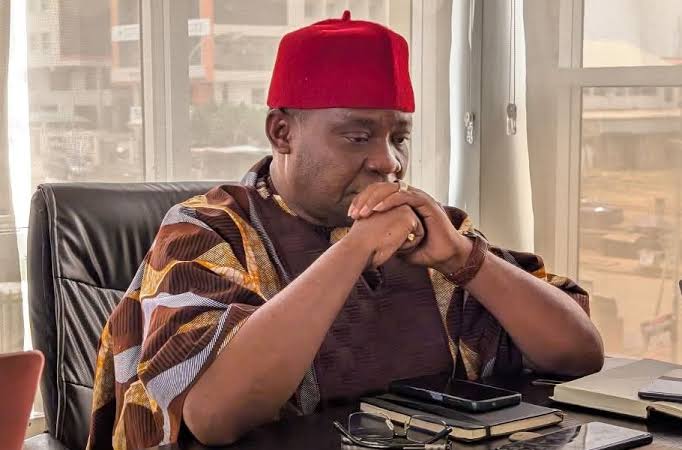
Two weeks ago, I was at the office of my boss and mentor, Chief Ezenwa Nwagwu, to attend the monthly Sectoral Reflection Series, an initiative he established to bring civil society actors, media practitioners and other stakeholders together to identify gaps and propose solutions to Nigeria’s democratic and electoral challenges.
The edition focused on young people’s participation in Nigeria’s elections. It was a subject that reminded me of one of the things I have come to appreciate about Ezenwa: his enduring commitment to inclusion, particularly the participation of young people and women in our democracy.
But it was something he said during the conversation that stayed with me long after I left his office. Chief Ezenwa observed that when Africans are asked to name great Pan-Africanists, the names that readily come to mind are Kwame Nkrumah, Nnamdi Azikiwe and other historical figures who fought for freedom, self-determination and the emancipation of African people. Yet, many of these men have been dead for decades.
He wondered whether this meant there were no living Pan-Africanists whose contributions deserved similar recognition.
The answer, of course, is no. There are people who continue to devote their lives to democracy, good governance, social justice and the advancement of their societies. The problem is that we do not always tell their stories while they are alive and actively doing the work.
We seem more comfortable celebrating heroes after their death than acknowledging their contributions during their lifetime. That conversation reinforced why I consider it important to celebrate Ezenwa Nwagwu as he turns 60.
I have always disliked a particular expression frequently used by government media aides when someone dies: “He left when Nigeria needed him the most.”
Whenever I hear that phrase, I wonder why we wait until people are gone before acknowledging how much we need them. Why must it take death for us to appreciate those who have spent their lives working to make Nigeria a better place?
For me, that is the spirit of this tribute. It is about celebrating a man who is still here, still thinking, still challenging conventional wisdom and still investing his time, resources and experience in the future of Nigeria’s democracy.
Chief Ezenwa is the Executive Director of the Peering Advocacy and Advancement Centre in Africa (PAACA), a civil society organisation involved in democratic development, electoral reform and citizen participation. He also chairs Partners for Electoral Reform and convenes the Say No Campaign Nigeria. Through these platforms, he has engaged domestic and international stakeholders on governance, elections and accountability.
But titles and positions, important as they are, do not fully explain the man. What stands out about Ezenwa is that he is a deep thinker and a patriot who genuinely wants others to thrive. He creates opportunities for people irrespective of their tribe or religion. Indeed, his ability to communicate fluently in Hausa, Yoruba and his native Igbo reflects the breadth of his engagement with people across Nigeria’s diverse communities.
He has travelled to every state in the country, educating citizens on democracy and elections. His physical agility, intellectual alertness and social dexterity are remarkable. He has a distinctive way of looking at issues, often approaching familiar questions from perspectives others might not immediately consider.
That advice says a lot about the man. Ezenwa values independent thinking and is not afraid to challenge popular opinion when he believes there is a need to do so.
He is forthright and honest, willing to disagree openly without malice. He is not one to hold grudges simply because people hold different views. Those who misunderstand him may fail to appreciate his ability to navigate opposing positions and engage people with different interests and perspectives. To me, this reflects his sagacity and understanding of human behaviour.
My relationship with Ezenwa has taught me that mentorship goes beyond offering encouragement or creating opportunities for younger people. Sometimes, genuine mentorship means challenging your assumptions, questioning your conclusions and making you look at an issue from a perspective you had not considered.
Spending time with him is often an exercise in intellectual discovery. A conversation that begins with what appears to be a straightforward question can quickly become a deeper examination of politics, leadership, human behaviour and the workings of society.
You may arrive with a settled opinion, convinced that you understand an issue. Then he begins to ask questions, drawing your attention to details you have overlooked and connections you have not made. Before long, you find yourself reconsidering your position. That, to me, is the value of being around people who are committed to learning and thinking deeply.
Ezenwa is widely read and deeply informed. He also has a book in his hands each time I visit his office. He has an unusual ability to connect developments in Nigeria’s political environment to broader questions of institutional behaviour, democratic culture and leadership. He also challenges those around him to read more, think critically and resist the temptation to settle for convenient explanations.
He is not always interested in telling people what they want to hear. When it comes to hard truths, he does not necessarily soften the edges. He can challenge an argument directly and is unlikely to abandon a difficult point simply because it makes the person listening uncomfortable.
But there is value in that kind of intellectual honesty. A mentor who agrees with everything you say may make you comfortable, but one who challenges your thinking can help you grow.
Over the years, Ezenwa has become one of the most recognisable figures in election monitoring and electoral reform in Nigeria. His work has helped sustain conversations about credible elections, citizen participation and accountability in the political system.
His advocacy goes beyond observing elections and pointing out irregularities. He consistently draws attention to the broader political and institutional problems that undermine democracy.
Elections, in his view, must produce accountable leadership. Political parties must practise democracy within their own structures, while citizens must be able to question those who govern them without being treated as enemies.
These are some of the issues he continues to raise through public engagements, policy conversations and civic education. They are also questions that go to the heart of Nigeria’s democratic challenges.
Indeed, one of the things I have come to understand about him is that he is more interested in asking the questions that need to be asked than in offering convenient answers. His willingness to confront uncomfortable truths is one of the qualities I admire most about him.
Perhaps the most important lesson I took from Ezenwa’s observation about Pan-Africanists is that we must be deliberate about documenting the contributions of people who are still making a difference.
We cannot continue to speak endlessly about the great men and women of the past while overlooking those who, in their own ways, are confronting the challenges of the present.
This is not to diminish the contributions of Kwame Nkrumah, Nnamdi Azikiwe and other historical figures. Their place in African history is well established. Rather, it is to ask why we struggle to recognise and celebrate contemporary champions of democracy and social progress with the same seriousness with which we revisit the lives of those who came before them.
There are people who continue to challenge injustice, defend democratic institutions, educate citizens and insist that public office must come with accountability.
Ezenwa is one of those people whose contributions deserve to be acknowledged while he can still see, hear and appreciate the impact of his work.
At 60, he has accumulated years of experience in civil society engagement, electoral reform and democratic advocacy. Yet, what I find particularly encouraging is that he remains actively engaged with the questions that will determine Nigeria’s future. He continues to convene conversations, challenge assumptions and encourage people to think about what a more accountable and inclusive democracy should look like.
His 60th birthday should, therefore, be more than an occasion for exchanging goodwill messages. It should also be an opportunity to reflect on the value of his work, the people he has mentored and the importance of sustaining the democratic ideals to which he has devoted so much of his life.
For me, it is also an opportunity to celebrate a mentor who has taught me that independent thinking comes with a responsibility to stand by one’s convictions, even when doing so is uncomfortable.
Happy 60th birthday, my boss and mentor. Thank you for the lessons, the conversations, the challenges and the opportunity to learn from you. Thank you for reminding us that democracy requires courage, that mentorship requires honesty, and that the people working to make society better deserve to be celebrated while they are still doing the work.
Here is to many more years of impact, intellectual growth and service to our country.

