
...Warns that AI must not make human creators economically irrelevantBy Palma Ileye
Nigerian Copyright Commission (NCC) has called for a creator-centred copyright system that guarantees fair economic returns for authors, protects human creativity in the age of Artificial Intelligence (AI) and strengthens the contribution of Nigeria’s creative industry to national development.
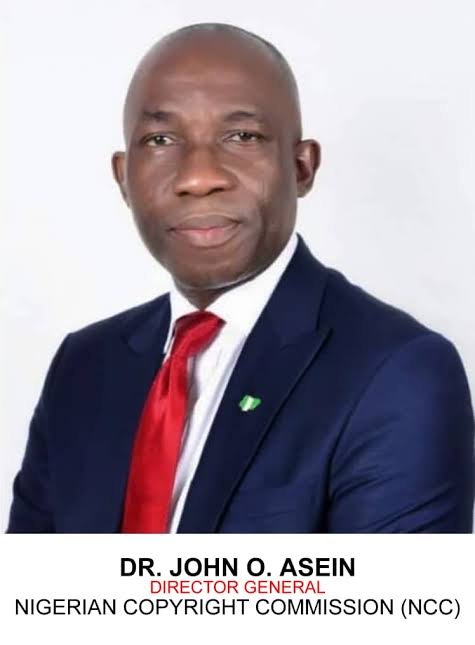
The Director-General of the Commission, Dr. John Asein, made the call at the second edition of the NCC Annual Copyright Seminar for Journalists, held in Abuja on Thursday, with the theme, “Copyright Protection: Empowering Journalists as Critical Stakeholders in the Creative Industry.”
Asein urged journalists to take a leading role in the fight against piracy through public enlightenment, responsible reporting and advocacy for reforms that would strengthen Nigeria’s creative economy.
He described journalists as important stakeholders in the copyright ecosystem, noting that they were not only observers of the creative industry but also creators, copyright owners and users of protected works.
The NCC boss urged media practitioners to look beyond reporting arrests and court proceedings, stressing that copyright protection should translate into improved economic conditions for creators.
He said a thriving creative industry should not be measured solely by its revenue generation but also by the welfare of the people whose intellectual efforts sustain it.
“A successful creative industry is not necessarily the same as a prosperous community of creators,” he said.
Asein maintained that the welfare of authors must remain central to the copyright ecosystem, warning that the system would have failed if creators continued to experience poverty despite the commercial success of their works.
“It doesn’t matter how much the creative industry is generating; if the person who is creating goes to bed hungry or dies poor, then the system has not adequately taken care of all the stakeholders in that copyright ecosystem,” he said.
He lamented that the economic and human losses arising from intellectual property theft in Nigeria were often underestimated, particularly in the film, music and publishing industries.
According to him, the damage caused by piracy goes beyond the billions of naira in estimated financial losses to include the destruction of livelihoods, opportunities and the value of human creativity.
The Director-General advocated improved royalty administration, transparent contracts, effective collective management, proper documentation of intellectual property rights and succession planning to ensure creators and their beneficiaries continue to benefit from their works.
He also called for frameworks that would enable creators to use their copyright assets to access financing without losing ownership of their intellectual property.
Asein urged media organisations to strengthen copyright compliance by obtaining proper authorisation before using protected works, noting that acknowledging the source of a creative work was not a substitute for securing permission.
On the growing influence of Artificial Intelligence, he acknowledged its potential to improve productivity but insisted that its application must respect human authorship, licensing, attribution and fair remuneration.
“Our policy position is clear: Artificial intelligence must serve human creativity, not make human creators economically irrelevant,” he declared.
He identified five priority areas for the Commission, including putting creators first, keeping human creativity at the centre of technological advancement, translating creativity into jobs and wealth, making piracy unprofitable and strengthening journalism as a force for positive change.
On enforcement, Asein reaffirmed the Commission’s commitment to intelligence-led and technology-driven operations against physical and digital piracy.
He highlighted the NCC’s recent interventions against book piracy, ongoing prosecutions of online copyright infringement cases and the activities of its Special Taskforce Against Online Piracy (STOP) Unit.
The Director-General also solicited media support for the implementation of the Abuja Copyright Action Plan, developed at the September 2026 National Seminar on Copyright, Cybersecurity and Nigeria’s Creative and Digital Economy.
He disclosed that the selection process for the 2026 Moses Ekpo Prize for Innovative Copyright Reporting was ongoing.
Earlier, the Director of Public Affairs of the Commission, Mrs. Ijeoma Egbunike, commended journalists for their partnership with the NCC, describing the seminar as an opportunity to deepen their understanding of copyright laws, the creative industry and the Commission’s activities.
Egbunike described piracy as a “hydra-headed monster that destroys and kills creative works,” urging journalists to move beyond conventional event reporting and actively participate in sanitising the copyright environment.
She called on media professionals to use their platforms, editorials and special reports to educate Nigerians on the dangers of copyright infringement, particularly in the digital space, stressing that the practice was a serious criminal offence.
Participants at the seminar commended the Commission for sustaining the capacity-building initiative since its introduction in 2025.
They said the training had broadened their understanding of the creative industry and exposed them to copyright protections available to journalists as content creators.
One of the participants, Stella Omona of Independent Newspapers, said the seminar deepened her understanding of copyright laws and clarified everyday activities that could constitute copyright infringement.
She noted that copyright owners and their beneficiaries could continue to enjoy economic benefits from creative works for up to 70 years after the creator’s death, urging the Commission to intensify public awareness campaigns to improve understanding of its mandate.
The seminar featured three technical presentations.
The first paper, titled, “The Nigerian Copyright Commission: Its Law and Mandates,” was delivered by the Assistant Director, Nigerian Copyright Academy, Mr. Caleb Daniels.
It provided an overview of the Commission’s statutory responsibilities, including administration, regulation, enforcement, public enlightenment and stakeholder engagement, while highlighting protected works, eligibility requirements, creators’ rights, infringement and statutory exceptions.
The second presentation, “Copyright in the Digital Age: What Journalists Need to Know,” was delivered by the Principal Partner, Alpha Edge Legal, IP and Corporate Consultants, Mr. Mike O. Akpan.
Akpan examined emerging copyright challenges associated with social media, online publishing, artificial intelligence, content sharing and the use of photographs, videos, music and other protected materials across digital platforms.
The third paper, “Reporting the Creative Sector and the Activities of the Nigerian Copyright Commission: A Guide for Journalists,” was presented by Egbunike.
She highlighted the need for accuracy, balance, appropriate legal terminology and proper attribution in copyright reporting, while urging journalists to exercise due diligence in the use of the Commission’s name, logo, official titles and acronyms.
The event also featured an interactive question-and-answer session, during which journalists sought clarification on copyright enforcement, media compliance and other issues affecting the creative industry.
Management officials of the Commission, including the Director of Operations, Mr. Femi Ajala; Director of Regulatory and Compliance, Mrs. Folashade Sheba; Deputy Director and Head of Human Resource Management, Mr. Seun Popoola; and Head of Legal, Mrs. Gladys Isaac-Ojo, attended the seminar.
Certificates of participation were presented to the journalists at the end of the event.

