
By Palma Ileye
United Nations Development Programme (UNDP), in collaboration with the Federal Ministry of Justice and other stakeholders, has developed guidelines to strengthen the implementation of laws protecting vulnerable persons and improve their access to justice and healthcare in Nigeria.
The guidelines are designed to address gaps in the implementation of the Violence Against Persons (Prohibition) Act 2015, the Administration of Criminal Justice Act 2015 and the Anti-Torture Act 2017.
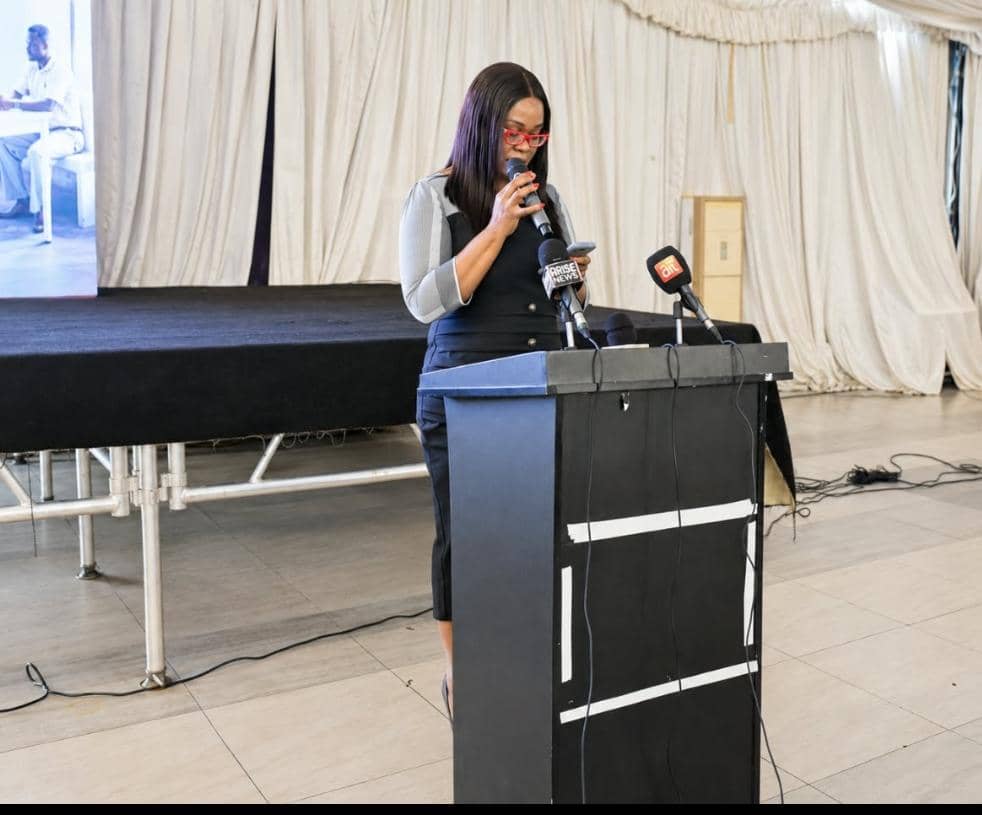
The initiative was presented at a National Technical and Institutional Validation Workshop held in Abuja on Thursday, where government institutions, justice and health-sector actors, human rights organisations and civil society representatives reviewed the draft document.
Speaking at the event, the UNDP Resident Representative in Nigeria, represented by Onyinye Ndubuisi, said the guidelines would help bridge the gap between the existence of laws and their effective implementation.
Ndubuisi noted that although Nigeria had established several legal and institutional frameworks to protect human rights and vulnerable populations, many people, particularly women, children, persons with disabilities, key and vulnerable populations and persons in detention, continued to face barriers in accessing justice and essential services.
According to her, survivors of gender-based violence often require medical attention, psychosocial support, legal assistance and protection but are sometimes confronted with fragmented institutional responses.
She said the guidelines would provide practical direction for translating existing legal provisions into coordinated institutional procedures and accessible, rights-based services.
The UNDP representative identified five critical areas the guidelines seek to strengthen, including gender-responsive justice delivery, human rights protection, coordination between the health and justice sectors, institutional accountability and the protection of vulnerable populations.
She also disclosed that the UNDP, in partnership with the Global Fund, the Institute of Human Virology Nigeria (IHVN), the Federal and State Ministries of Justice and other stakeholders, was supporting the establishment of a High-Level Observatory on Gender, Justice, Human Rights and Health across 19 states and the Federal Capital Territory.
She explained that the Observatory, covering 20 jurisdictions, would generate credible institutional evidence, identify implementation gaps, inform policies and strengthen accountability across relevant sectors.
According to her, while the guidelines would provide practical direction for implementing existing laws, the Observatory would help monitor how effectively institutions were discharging their responsibilities.
She stressed that government ownership remained central to the initiative, adding that the guidelines must be integrated into institutional procedures, staff training, planning, budgeting and routine service delivery.
Also speaking, a representative of the Federal Ministry of Justice, Habiba Hamza, Chief State Counsel in charge of Sexual and Gender-Based Violence, described the guidelines as an important innovation that would improve the protection of vulnerable persons.
She said the initiative would bring together relevant provisions scattered across different laws under one framework to guide institutions in responding to the legal, health and other needs of vulnerable populations.
Hamza explained that the guidelines would help ensure that the rights of women, children in conflict with the law, persons in detention and other vulnerable groups were recognised and protected.
Similarly, Chukwuma Chinaka, a lawyer and member of the technical team that developed the guidelines, said the document would provide a comprehensive framework for addressing the fragmented implementation of laws protecting vulnerable Nigerians.
He identified poor coordination among institutions, inadequate funding and limited resources as some of the factors undermining the effective implementation of existing laws.
According to him, although different institutions have specific responsibilities under various laws, poor collaboration sometimes prevents them from delivering the comprehensive protection intended by the legislature.
He said the guidelines brought together provisions of the Anti-Torture Act 2017, Violence Against Persons (Prohibition) Act 2015 and Administration of Criminal Justice Act 2015, alongside other relevant legal provisions.
Chinaka emphasised that the loss of personal liberty through detention or imprisonment should not translate into the loss of other fundamental human rights.
He said persons in custody should continue to enjoy their rights to healthcare and humane treatment, regardless of the allegations against them.
He added that the guidelines would also help justice-sector practitioners recognise situations requiring medical or mental health interventions rather than treating every case strictly as a criminal matter.
On her part, Ogechi Ogu, Executive Director and Founder of the Public Awareness on Rights and Rehabilitation of Vulnerable Persons Initiative (PARVP Initiative), said the major challenge confronting Nigeria was not necessarily the absence of laws but their poor implementation.
She identified inadequate funding, poor coordination and fragmented institutional responsibilities as factors contributing to continued injustice against vulnerable populations.
Ogu said some institutions concentrated on implementing specific laws while neglecting other relevant provisions, thereby limiting the protection available to affected persons.
She stressed the need for institutions to work together to ensure that vulnerable Nigerians received comprehensive legal, health and social protection.
Also speaking, Eberechi Oleme Onuselogu, a UNDP project expert, called for the establishment of functional public healthcare systems in prisons and detention centres across the country.
She described access to healthcare as a fundamental human right, stressing that violence and torture should also be treated as public health concerns because of their physical, psychological and social consequences.
Onuselogu said detainees should not leave correctional facilities in poorer health conditions than when they were admitted.
She raised concerns about the capacity of detention facilities to respond to disease outbreaks, asking what level of emergency medical attention inmates would receive if such situations occurred.
She therefore called on the government and relevant international organisations to support the establishment of functional healthcare systems in detention facilities to ensure that inmates received adequate medical attention.
The experts maintained that the success of the guidelines would depend on government commitment, adequate funding, effective inter-agency collaboration and sustained monitoring of implementation.

