
By Bimbo Adenrele
When Feranmi and Toluwani heard that they would spend the Christmas holidays with their grandparents in Osogbo, Osun State, excitement filled the Darasimi household in Lekki, Lagos. The announcement by their parents, Gbenga and Folake Darasimi, was greeted with cheers and anticipation as the children began counting down to what promised to be an unforgettable festive season.
Like many Nigerian families, the Darasimis considered Christmas a period not only for celebration but also for reconnecting with family roots. Preparations began almost immediately. Gbenga and Folake purchased beautiful traditional Yoruba fabrics, including Adire, Aso Oke, Ankara, Sanyan, Alaari and Etu, which they intended to present as gifts to relatives. The children were equally excited about wearing their colourful Ankara outfits and travelling outside Lagos to experience village life.
The journey to Osogbo rekindled fond memories for the parents, who frequently recounted stories of their own childhood experiences in the town. For Feranmi and Toluwani, however, it was an adventure into a world they had only heard about through family stories.
Upon arrival, their grandparents, affectionately called Baba Agba and Mama Agba, welcomed them warmly with prayers, embraces and smiles. News of their arrival spread quickly through the neighbourhood, attracting relatives, neighbours and family friends who came to exchange greetings and celebrate the festive season together.
As tradition demanded, the family distributed gifts and shared loaves of bread purchased during the journey with neighbours and relatives. The simple act reflected the communal spirit and generosity often associated with Christmas celebrations across many Nigerian communities.
The reunion created an atmosphere filled with laughter, conversations and nostalgia. Uncles, aunties, cousins and family friends gathered to exchange stories and catch up on family happenings. For the children, the experience was refreshing. Unlike the relatively isolated lifestyle often associated with urban living, they were surrounded by an extended family network that immediately made them feel a sense of belonging.
Food naturally occupied a central place in the celebration. Shortly after their arrival, the visitors were treated to a feast of steaming hot amala served with gbegiri and ewedu soup, accompanied by freshly prepared fish. Kegs of palm wine were shared among the adults, adding colour and excitement to the festivities.
Yet beyond the food, gifts and celebrations, the most valuable aspect of the holiday turned out to be the lessons the children learned from their grandparents.
Every evening, Mama Agba gathered the children around her for sessions of Alo Apamo, the traditional Yoruba folktales passed down through generations. The stories entertained the children with colourful characters, memorable songs and intriguing plots. More importantly, each tale conveyed powerful lessons about honesty, courage, kindness, hard work, humility and obedience.
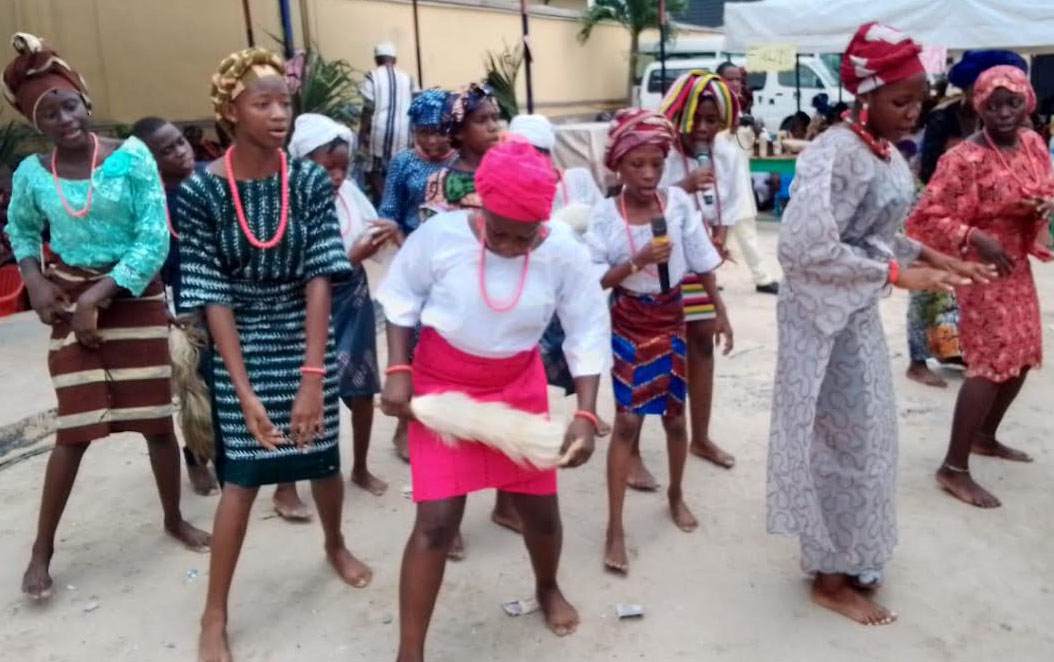
The children listened attentively as Mama Agba narrated stories about cunning tortoises, wise hunters and brave children who overcame challenges through perseverance and good character. At intervals, they joined in traditional songs that accompanied the stories, clapping, singing and dancing with enthusiasm.
These moments highlighted the enduring importance of oral tradition in African societies. Long before the advent of formal education, folktales served as a major channel through which communities transmitted cultural values, moral lessons and historical experiences from one generation to the next.
For Feranmi and Toluwani, the stories were more than entertainment. They provided practical guidance about life and human relationships while strengthening their understanding of Yoruba culture.
The learning continued outside the storytelling sessions.
One day, Mama Agba took the children to her supermarket in Okefia. There, she introduced them to basic principles of entrepreneurship and financial management.
Patiently, she demonstrated how to calculate the cost of purchased items, receive payments and return accurate change to customers. She also showed them how daily sales were recorded in a cashbook and how inventory was monitored through simple record-keeping systems.
The children were fascinated by the process. What initially appeared to be a routine business operation gradually transformed into an exciting learning experience.
With a smile, Mama Agba told them that their father had learned similar lessons while helping her in the same business years earlier.
“Your father learned business discipline from this place before he became a chartered accountant,” she told them proudly.
Her statement reinforced an important reality often overlooked in modern society: valuable business and life skills are frequently acquired outside formal classrooms.
To reward the children’s enthusiasm and diligence, Mama Agba filled their bags with biscuits, sweets and assorted drinks before they left the shop. Their joy was unmistakable.
Another memorable lesson came when family members gathered one evening to discuss family history.
Mama Agba carefully explained the family’s genealogy, helping Feranmi and Toluwani understand how various relatives were connected. She introduced them to distant cousins, explained family relationships and recounted stories about their ancestors.
For children raised in urban settings, such lessons are often rare. Yet understanding family history provides a strong sense of identity and belonging.
The children left the discussion with a deeper appreciation of their roots and a clearer understanding of the family heritage they represented.
Language and cultural etiquette also occupied an important place throughout their stay.
Their grandparents insisted that the children communicate in Yoruba whenever possible. Although the siblings initially struggled to construct sentences and understand some expressions, consistent practice gradually improved their confidence.
Within a few weeks, they could engage in simple conversations and respond appropriately during family interactions.
Their grandparents also reinforced traditional Yoruba etiquette. The boys learned to prostrate when greeting elderly men, while the girls practiced kneeling to greet elders.
These customs, though increasingly neglected in some modern homes, remain important symbols of humility, respect and good upbringing within Yoruba culture.
For businessman Fola Odetoyinbo, such experiences are invaluable in raising children who possess both cultural awareness and strong moral values.
According to him, the Yoruba concept of Omoluabi – the embodiment of good character, integrity, responsibility and respect – does not emerge by accident.
“It is built through continuous transmission of values from one generation to another,” he said.
Odetoyinbo argued that many of today’s societal challenges stem partly from the growing disconnect between young people and their cultural foundations.
“A people who lose touch with their history, traditions and values become vulnerable to cultural displacement,” he noted.
He explained that elders function as living repositories of history, proverbs, folktales and cultural knowledge.
Through stories, family interactions and daily guidance, they help shape children’s character and worldview in ways that formal education cannot easily achieve.
In traditional Yoruba society, child upbringing was never considered the sole responsibility of biological parents.
The popular saying, “Omo ti a ko ni ko ile ti yoo jo” (the child who is not properly trained will eventually destroy the home), reflects the communal nature of child development.
Within the extended family system, every elder had a responsibility to guide, correct and mentor younger members of the community.
This arrangement exposed children to multiple sources of wisdom and accountability.
However, Odetoyinbo observed that urbanisation, migration and demanding work schedules have gradually weakened this traditional support structure.
Many contemporary families now live far from grandparents and extended relatives. Children spend most of their time in nuclear family settings, often interacting more with smartphones, television and social media than with elders.
“When grandparents are absent from children’s lives, they lose important opportunities to learn family history, indigenous language and cultural etiquette,” he said.
He warned that language loss often leads to cultural loss because language is not merely a communication tool but also a way of understanding the world.
A child who loses fluency in Yoruba may unknowingly lose access to important cultural concepts, philosophies and values embedded in the language.
According to Odetoyinbo, excessive dependence on global social media culture can create a fragile sense of identity among young people who are disconnected from their roots.
“Children should see their Africanness from a position of pride, not through the lens of foreign stereotypes,” he said.
Recognising the realities of modern life, he urged elders and younger generations to embrace technology creatively in preserving cultural heritage.
He suggested recording interviews with grandparents, documenting family histories, sharing Yoruba proverbs through social media platforms and creating digital archives of family stories.
He also encouraged parents to deliberately use indigenous languages at home and create opportunities for children to interact regularly with grandparents and extended family members.
As the festive season eventually came to an end, Feranmi and Toluwani prepared to return to Lagos.
Like many children at the end of a memorable holiday, they experienced mixed emotions. They looked forward to returning home but were saddened to leave the warmth of their grandparents’ house.
However, they departed with far more than gifts and souvenirs.
They carried valuable lessons about family, culture, respect, entrepreneurship, language, financial literacy and identity.
More importantly, they returned with a deeper appreciation of who they were and where they came from.
Their experience serves as a reminder that while schools provide academic knowledge, grandparents often provide life lessons that shape character, identity and belonging.
Indeed, preserving language, family history and cultural heritage begins at home. And as the saying goes, a child who knows where he or she comes from is often better equipped to understand where he or she is going.

