
By Palma Ileye
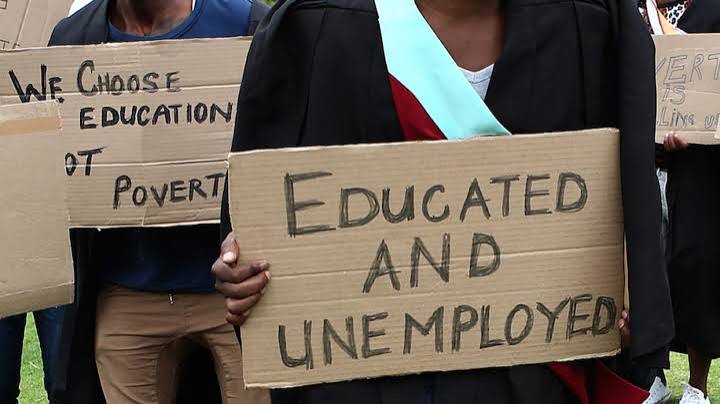
Unemployment remains a major challenge in Nigeria, affecting young graduates, skilled workers, artisans and people seeking better opportunities. For many Nigerians, finding a job that pays enough to meet basic needs has become a difficult task.
But beyond the struggle to secure employment, men and women often face different expectations and challenges when they are without work.
While men are traditionally expected to provide for their families, women may encounter additional barriers relating to gender discrimination, family responsibilities and limited access to certain job opportunities.
This raises an important question: Who suffers more from unemployment in Nigeria – men or women?
Men’s corner
Emeka Nwosu, a Businessman based in Abuja, said unemployed men often face intense social pressure because society expects them to provide for their families.
“When a man does not have a job, people begin to question his ability to take care of himself and his family. Even when he is trying his best, society may see him as irresponsible,” he said.
According to Nwosu, unemployment can affect a man’s confidence, particularly when he is expected to pay bills, marry or support his parents.
“Imagine a man who has graduated for five years without a stable job. His friends are getting married, building houses and raising families, but he cannot even afford his personal expenses. The pressure can be overwhelming,” he added.
Ibrahim Sani, a Civil Servant, said unemployed men could find it difficult to meet traditional expectations, even when the country’s economic situation was beyond their control.
“People expect a man to have money before he can be considered ready for marriage. If he does not have a job, they may conclude that he is not serious about life. Nobody asks whether opportunities are available,” he said.
Sani argued that the pressure could become worse when an unemployed man has dependants.
“An unemployed father may have children who need school fees, food and medical care. Knowing that your family depends on you when you have no income is a painful experience,” he said.
Tunde Adebayo, an Engineer, however, said unemployment affected men’s relationships and social standing.
“Some men lose relationships because they cannot meet financial expectations. Others withdraw from social gatherings because they are ashamed that they cannot contribute financially. Unemployment is not just about losing money; it can affect a man’s sense of purpose,” he said.
David Peters, a Lawyer, said society should stop treating unemployment as a personal failure.
“Not every unemployed man is lazy. Some have qualifications and skills but cannot find suitable jobs. We should judge people by their efforts and circumstances rather than their employment status,” he said.
Women’s rebuttal
Chioma Eze, an Abuja based Journalist, said women could suffer more from unemployment because they often face additional obstacles when seeking jobs.
“An unemployed woman is not only struggling to earn money; she may also face discrimination because of her gender, age or family responsibilities. Some employers may prefer men for certain positions, even when women have the same qualifications,” she said.
According to Eze, women who cannot secure formal employment may turn to informal businesses with limited income and little financial security.
“Many women sell food, clothes and other items to survive. When business is slow, they may struggle to pay rent, feed their children and support themselves. Their hardship is sometimes overlooked because people assume women can always depend on someone,” she added.
Amina Yusuf, an Entrepreneur, said unemployed women could face greater difficulties when trying to balance economic survival with family responsibilities.
“Some women are expected to care for children and elderly relatives even when they are looking for work. If they cannot afford childcare, accepting a job may become difficult. These responsibilities can limit their opportunities,” she said.
Yusuf added that women who lose their jobs could find it difficult to return to the workforce.
“A woman who leaves employment to raise children may later discover that employers prefer younger applicants or people with uninterrupted work experience. She may have the ability to work but struggle to get another opportunity,” she said.
Grace Johnson, a Teacher living in Bwari, said unemployment could make women financially dependent on others, sometimes leaving them with limited choices.
“When a woman has no income, she may find it difficult to make independent decisions or leave an unhealthy relationship. Having a job gives women some financial security and the ability to support themselves,” she said.
While Blessing Okafor, a Lawyer, argued that unemployed women should not be dismissed as people who can simply depend on their husbands.
“Not every woman is married, and not every married woman has a husband who can provide for all her needs. Widows, single mothers and women supporting their families also need employment opportunities,” she said.
Expert insight
A labour economist, Dr Ahmed Ibrahim, said the effects of unemployment differed according to gender, age, education, family responsibilities and access to available opportunities.
“Men may experience strong social pressure to provide for their families, while women may face additional barriers in recruitment and career advancement. Therefore, it is difficult to say that one gender suffers more in every situation,” he said.
According to him, assessing unemployment requires looking beyond the number of people without jobs to consider the quality of available work, income levels and access to economic opportunities.
Meanwhile, Gender Studies expert, Dr Adaobi Okeke, said women could also experience hidden unemployment when they perform unpaid domestic work or engage in low-paid activities that do not provide economic security.
“Women may be working for long hours without earning enough to meet their needs. Their situation may not always be captured by simply counting people who do not have jobs,” she said.
She added that unemployed men and women needed support without being judged by traditional gender expectations.
“Men should not be made to feel worthless because they are unemployed, and women should not be expected to accept financial dependence as their only option. Both deserve opportunities to earn a living,” Okeke said.
The verdict
So, who suffers more from unemployment in Nigeria – men or women?
The answer depends on individual circumstances.
Men may face intense pressure from traditional expectations that they should provide for their families. Women, meanwhile, may encounter gender discrimination, unpaid care responsibilities and barriers to securing stable employment.
Neither experience should be dismissed.
Ultimately, unemployment is not a competition between men and women. Both deserve fair access to jobs, opportunities to develop their skills and the chance to earn a decent living.
The real question is not which gender suffers more, but how Nigeria can create an economy where neither men nor women are denied opportunities to work, provide for their families and live with dignity.

