By Palma Ileye
Federal Government, United Nations Children’s Fund (UNICEF) and World Health Organisation (WHO) have called for increased funding, reliable data and stronger institutional coordination to accelerate Nigeria’s efforts towards achieving an Open Defecation-Free (ODF) status by 2030.
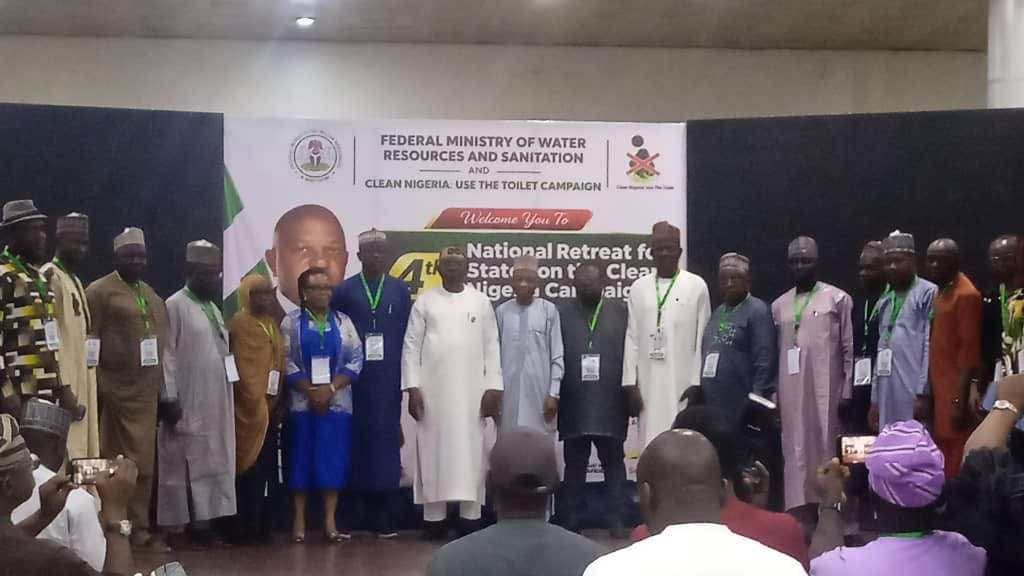
They made the call at the 2026 National Retreat on the Clean Nigeria Campaign, which opened in Abuja on Tuesday, with the theme, “Accelerating and Sustaining Progress: Financing, Data, and Systems for a Fully ODF Nigeria.”
The retreat, organised by the Federal Ministry of Water Resources and Sanitation, is aimed at reviewing the country’s progress in ending open defecation, identifying challenges and developing practical strategies to achieve nationwide ODF status.
Speaking at the event, the Minister of Water Resources and Sanitation, Prof. Joseph Utsev, said Nigeria had recorded significant progress since the launch of the Clean Nigeria Campaign in November 2019, with 185 local government areas (LGAs) achieving ODF status.
However, he said the achievement was below the country’s expected target, stressing the need for States and other stakeholders to intensify efforts to accelerate progress.
Utsev said the government was working towards increasing the number of ODF Local governments to 400 in the coming year, adding that more deliberate actions were required to achieve the 2030 target.
He described sanitation as fundamental to public health, human dignity, environmental protection and national development, noting that poor sanitation had negative implications for the health of citizens and the nation’s economy.
According to him, ending open defecation remains a national priority under President Bola Tinubu’s Renewed Hope Agenda, adding that the responsibility must not be left to the Federal Government alone.
He said State and Local governments, Civil Society organisations, development partners, the private sector and the media must work together to achieve the objective.
The Minister also highlighted the recent signing of the Executive Order on Open Defecation-Free Nigeria by 2030 and Other Related Matters, 2025, by President Tinubu, saying it would strengthen institutional coordination, define responsibilities and improve accountability at all levels.
He disclosed that Vice-President Kashim Shettima would formally unveil the Executive Order on November 19, during the commemoration of the 2026 World Toilet Day and the seventh anniversary of the Clean Nigeria Campaign.
To accelerate progress, Utsev identified sustainable financing, reliable data and institutional strengthening as three major priorities.
He urged the three tiers of government to make deliberate budgetary provisions for sanitation, ensure effective utilisation of allocated resources and explore innovative financing mechanisms, including private sector participation.
The Minister also called on States to strengthen their monitoring and reporting systems to ensure that data submitted through the national monitoring platform was accurate, complete and timely.
He stressed the need to integrate sanitation programmes into the regular structures and activities of state and local governments to prevent communities that had attained ODF status from returning to open defecation.
Earlier, the Permanent Secretary, Federal Ministry of Water Resources and Sanitation, Engr. Ali Dallah, said the retreat provided an opportunity for stakeholders to assess implementation progress, identify structural gaps and develop practical strategies towards achieving the national sanitation target.
Dallah said State and Local governments remained indispensable partners in the campaign also calling for stronger political ownership, improved institutional coordination, adequate budgetary allocations and the integration of sanitation interventions into government policies and development plans.
He also emphasised the importance of community ownership and behavioural change, noting that achieving ODF certification alone was not enough without sustained toilet use and proper maintenance of sanitation facilities.
In her remarks, UNICEF WASH Manager, Jolly Ann Maulit, said Nigeria had recorded progress in the campaign, with Jigawa becoming the first ODF State in 2022, followed by Katsina in 2025.
She, however, said about 48 million Nigerians were still practising open defecation, stressing that the country needed to intensify efforts to achieve the 2030 target.
Maulit said behind every ODF achievement were children who experienced fewer illnesses, women and girls who enjoyed safer environments, and families living with greater dignity.
She urged States to strengthen data collection, sustain ODF achievements, integrate sanitation into their budgets and institutional systems, and develop clear implementation roadmaps.
The UNICEF representative assured that the organisation would continue to support the Federal Government, State and Local governments in their efforts to end open defecation.
Also speaking, the representative of the World Health Organisation (WHO), the National Consultant, Edwin Isotu, said about 48 million Nigerians, representing 23 per cent of the population, still practised open defecation.
He warned that communities with high rates of open defecation remained vulnerable to cholera outbreaks and other sanitation-related diseases.
Isotu stressed that cleanliness should become a culture rather than an occasional activity, calling for sustained behavioural change in homes, schools, institutions and communities.
He also expressed concern over poor handwashing practices, stating that although awareness of the importance of hand hygiene was widespread, only four per cent of Nigerians reportedly maintained regular handwashing practices.
He called for the integration of hand hygiene programmes into the Clean Nigeria Campaign, stressing that toilet use must be accompanied by proper handwashing.
The WHO representative further disclosed that about N4 trillion would be required to sustain the campaign and achieve the 2030 ODF target.
He urged the Federal Government to mobilise resources across relevant Ministries, State governments and other stakeholders, noting that sanitation was not merely a water and sanitation issue but also a public health and economic development concern.
Nigeria’s 2026 World Toilet Day activities began on November 16 with a workshop and press briefing in Abuja, while the national retreat is scheduled for November 17 and 18.
The activities will culminate on November 19 with the commemoration of World Toilet Day and the seventh anniversary of the Clean Nigeria Campaign, to be marked by the Vice-President, Kashim Shettima.

