
By Palma Ileye
Nigeria has recorded significant progress in its efforts to eliminate trachoma, with 118 out of 134 endemic Local Government Areas (LGAs), representing about 88 per cent, achieving the required threshold to stop mass drug administration.
The Director and Programme Manager of the Trachoma Programme from the Ministry Of Health And Social Welfare, Dr. Nicholas Olobio, disclosed this on Tuesday at the 13th Meeting of the National Trachoma Task Force held in Abuja.
Olobio said the number of LGAs still requiring treatment had reduced to 16, attributing the progress to sustained interventions under the national trachoma elimination programme.
He explained that Kano State had achieved elimination, as all its LGAs had stopped treatment, while Katsina had reduced its endemic areas to one LGA while Sokoto State, he added, was left with only two LGAs requiring further intervention and surveillance.
He also identified some LGAs in Ebonyi and Edo States as having recorded progress towards elimination.
According to him, only Borno and Yobe States were currently implementing mass drug administration for trachoma, although insecurity remains a challenge to programme delivery in the two States.
He noted that while the programme had developed strategies to sustain interventions in Borno despite security challenges, Yobe required a different operational approach to ensure effective implementation.
Olobio stressed the importance of Water, Sanitation and Hygiene (WASH) in sustaining the gains, explaining that Nigeria’s SAFE strategy for trachoma elimination comprises surgery, antibiotics, facial cleanliness and environmental improvement.
He warned that poor hygiene and unsanitary environments could encourage the transmission of the disease, particularly among women and children, through flies that carry infection.
He cited an LGA in Yobe State where trachoma prevalence reportedly increased from about seven per cent to over 16 per cent, necessitating three additional rounds of mass drug administration.
He therefore called for increased awareness of regular face washing, handwashing and environmental cleanliness to prevent the resurgence of the disease.
Also speaking, the Country Coordinator for Trachoma and WASH-supported programmes at Sightsavers Nigeria, Dr. Teyil Wamyil- Mshelia , called for stronger collaboration among government Ministries, development partners and other stakeholders to accelerate the country’s elimination efforts.
Wamyil- Mshelia said although trachoma had remained endemic in Nigeria for more than 20 years, significant progress had been recorded, particularly in the surgery and antibiotic components of the SAFE strategy.
She, however, stressed the need to intensify efforts in facial cleanliness and environmental improvement, noting that the responsibility for eliminating the disease should not rest solely on the health sector.
He urged the Federal Ministries of Health, Water Resources and Sanitation, Environment, Education and Information and National Orientation to strengthen collaboration in addressing poor sanitation and hygiene practices in vulnerable communities.
According to her, improving access to clean water, sanitation and hygiene would reduce the transmission of the disease and help prevent its return to communities that had achieved elimination.
She said Sightsavers was supporting behavioural change campaigns, public awareness and partnerships with organisations working to improve WASH services in affected communities.
“We cannot work alone, and that is why we believe in collaboration. We believe in putting resources together because when we put our hands together, we go further than where only one organisation or one agency is working,” she said.
Earlier, the National Coordinator of Neglected Tropical Diseases at the Ministry of Health and Social Welfare, Mr. Peter Adebayo, in a welcome address, reaffirmed the Federal Government’s commitment to sustaining the gains recorded in the fight against neglected tropical diseases.
The Coordinator said the 13th meeting provided an opportunity for stakeholders to review programme performance, identify implementation gaps and develop practical solutions to challenges affecting trachoma elimination.
Adebayo disclosed that the Ministry had recently engaged Health Commissioners from the 36 States and the Federal Capital Territory to strengthen government ownership and domestic financing of neglected tropical disease interventions.
The engagement, according to the address, focused on increasing State budgetary allocations, ensuring timely release of approved funds, integrating NTD interventions into state annual operational plans and strengthening implementation monitoring.
The Ministry also disclosed that it was strengthening collaboration with the Ministries of Education, Environment, Water Resources and Sanitation, and Information and National Orientation to promote WASH interventions and social and behavioural change communication.
It further said the Federal Government had adopted the Health Campaign Effectiveness approach under the Nigeria Collaborative Action Strategy to improve coordination of health campaigns, operational efficiency and utilisation of available resources.
The Coordinator acknowledged the operational difficulties posed by insecurity in some programme implementation areas and commended Helen Keller International for sustaining interventions in Borno State despite significant security challenges.
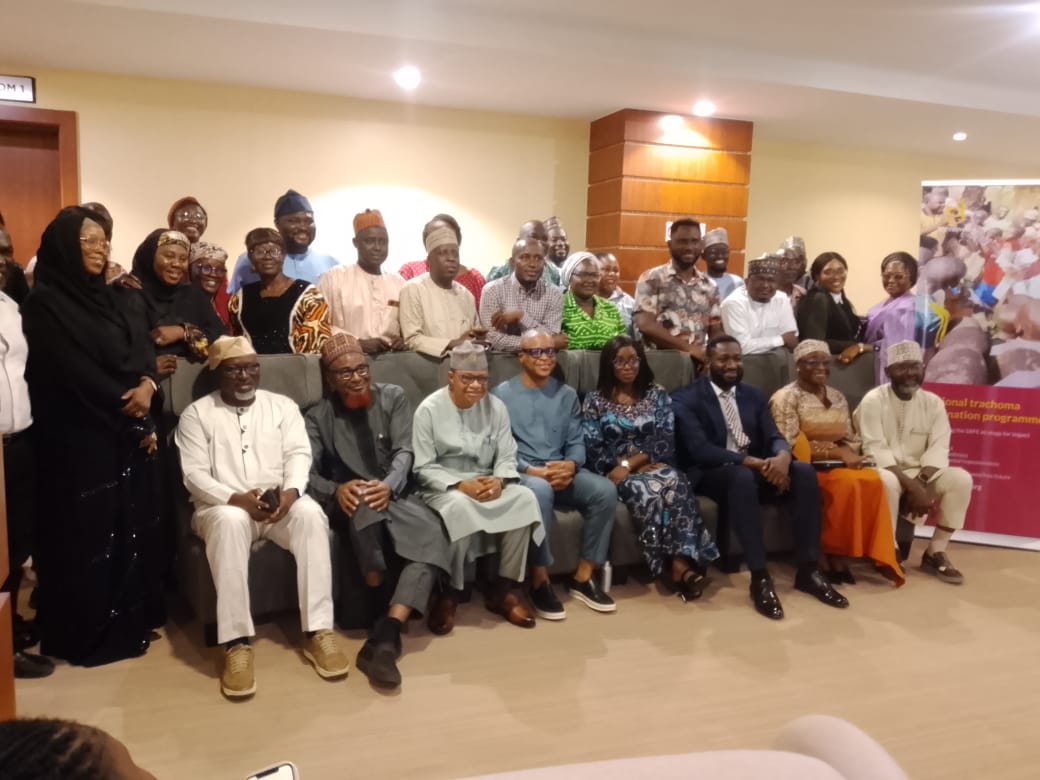
The meeting was attended by representatives of relevant government Ministries, Departments and agencies, development partners and members of the National Trachoma Task Force.

