
By Michael Oche
Organised labour has intensified calls for the domestication of the International Labour Organisation (ILO) Convention No. 193 on Decent Work in the Platform Economy in Nigeria, alongside stronger regulation of digital platforms to guarantee fair remuneration, social protection and improved working conditions for app-based workers.
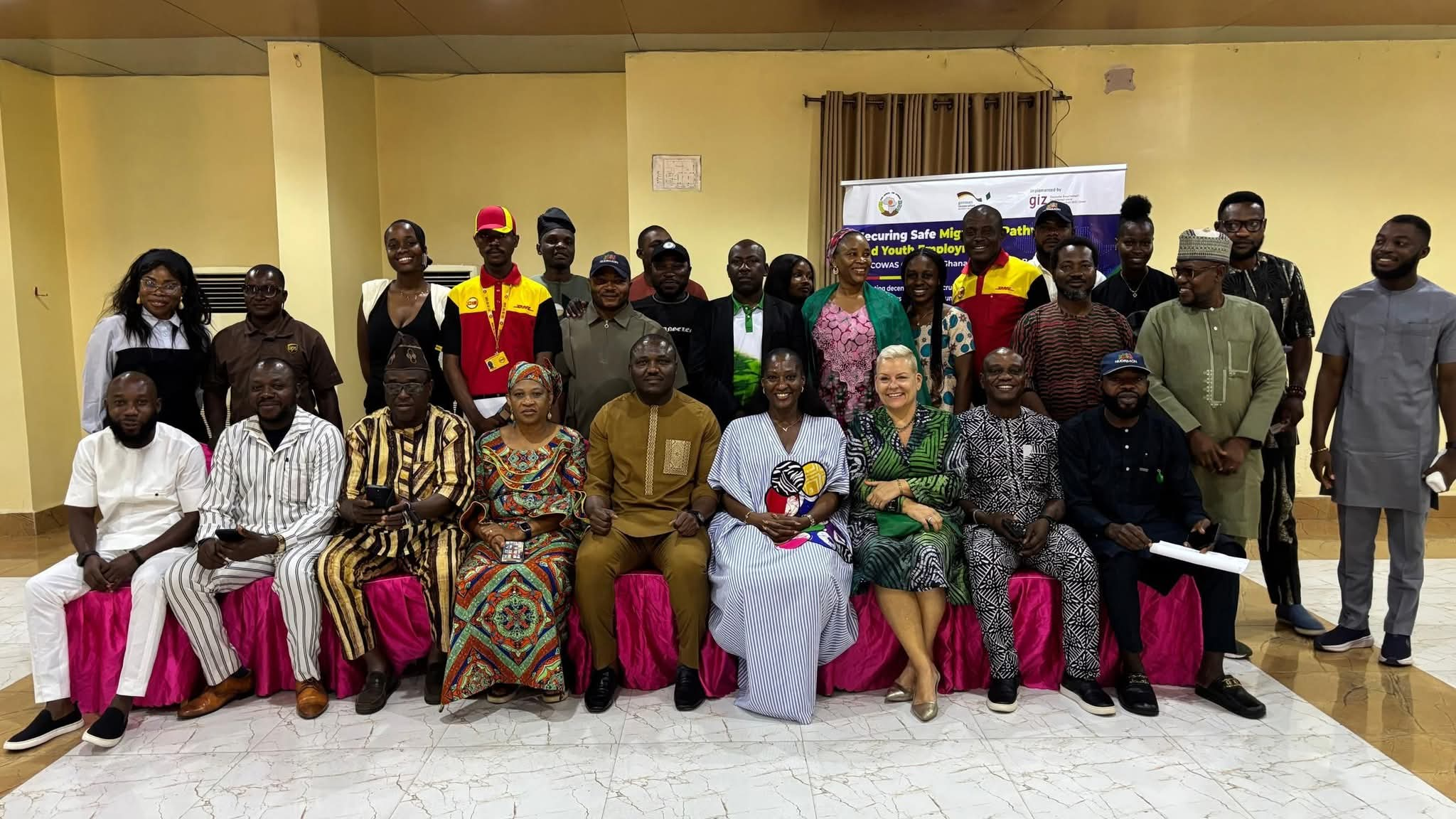
The campaign, spearheaded by the African Regional Organisation of the International Trade Union Confederation (ITUC-Africa), the Nigeria Labour Congress (NLC) and the Trade Union Congress of Nigeria (TUC), with support from the German development agency (GIZ) and the ILO, seeks to mobilise platform workers, trade unions and other stakeholders towards translating the international labour standard into enforceable national laws and policies.
Speaking at a sectoral roundtable with platform and digital workers in Abuja, ITUC-Africa General Secretary, Comrade Akhator Joel Odigie, said the rapid transformation of the world of work through digitalisation had created new employment opportunities but also exposed workers to precarious conditions, inadequate labour rights and weak social protection.
Odigie said the increasing dependence on digital platforms for employment and income generation required organised labour to develop new strategies to protect workers from emerging threats.
“The world of work is changing very rapidly. These changes create opportunities for society, workplaces and our economies. At the same time, they present serious threats to employment, workers’ well-being, social cohesion and the sustainability of our societies.
“Increasingly, this form of work is becoming precarious. Many workers engaged through digital platforms are not adequately protected and do not enjoy the necessary labour rights and social protection,” he said.
The ITUC-Africa scribe cautioned that the absence of adequate regulation could encourage a race to the bottom, with workers competing against one another for jobs by accepting increasingly lower rates, thereby undermining their earnings and working conditions.
He also raised concerns over the financial obligations of platform businesses, particularly their contributions to the economies and societies from which they generate revenue, warning that inadequate contributions could weaken resources available for financing social protection.
He, however, urged platform workers to embrace collective organisation rather than allow the challenges associated with digitalisation to discourage them from exploring opportunities in the emerging economy.
“The trade union movement was not established as a platform for lamentation, where we simply gather to complain about emerging challenges. The trade union movement was born out of difficult circumstances to find solutions to problems,” he said.
He maintained that collective organisation was essential to ensuring that opportunities created by digital platforms translated into decent employment, secure livelihoods and improved working conditions.
On Convention No. 193, Odigie described the international labour standard as an important instrument for addressing the protection gaps confronting workers in the platform economy, urging the Federal Government to draw on its provisions in developing appropriate national policies and legislation.
He said that although Nigeria was yet to domesticate the Convention, its provisions could already serve as a framework for addressing the challenges confronting digital workers.
“Its provisions can already serve as a framework for governments willing to develop policies and legislation that protect platform workers. It is therefore important for us to engage our governments and encourage them to use the Convention as a basis for developing appropriate national policies and laws,” he said.
Odigie commended African governments for supporting the adoption of the Convention at the International Labour Conference, expressing optimism that their commitment during the negotiations would translate into effective national implementation.
He, however, cautioned that such support should not be taken for granted, insisting that trade unions and platform workers must develop a common strategy and sustain engagement with governments to achieve the desired outcome.
The ITUC-Africa general secretary also commended the NLC and TUC for embracing the initiative and supporting efforts to strengthen the representation and protection of platform workers.
Earlier, the NLC Acting General Secretary, Comrade Benson Upah, represented by the Assistant General Secretary, Comrade James Eustace, said the roundtable was designed to provide platform workers with an opportunity to articulate their concerns and participate directly in developing solutions to the challenges confronting their sector.
Upah observed that hundreds of thousands of Nigerians in cities including Lagos, Abuja, Port Harcourt, Kano and Enugu now depend on digital platforms for their livelihoods through passenger transportation, motorcycle operations, food and parcel delivery, as well as other digital services.
He, however, noted that many of these workers remained uncertain about their employment status, how their earnings were determined and where to seek redress when their accounts were suspended.
“Yet many of them cannot answer basic questions about their own work: Who is my employer? How is my pay set? Why was I deactivated? Who do I speak to when something goes wrong?” he asked.
According to him, the roundtable would focus on documenting workers’ experiences and identifying practical interventions to address concerns relating to earnings, long working hours, road safety, insurance, healthcare and arbitrary account deactivation.
He said the engagement would also examine the respective responsibilities of digital platforms, workers and government institutions in ensuring fair remuneration, workplace safety, social protection and effective dispute resolution.
On Convention No. 193, Upah described its adoption in June 2026 as a significant development in the international campaign for decent work and improved protection in the platform economy.
He said the Convention, adopted at the International Labour Conference by 406 votes to eight, with 36 abstentions, represented the first international labour standard specifically dedicated to decent work in the platform economy.
He explained that the instrument addressed critical issues relating to algorithmic management, employment classification and the protection of workers engaged through digital platforms.
However, he stressed that the benefits of the Convention would depend on countries translating its provisions into national laws and practices.
“Let us be clear about what the Convention is and is not. Like all ILO Conventions, it binds a country only after that country ratifies it, and it must then be reflected in national law and practice. Nigeria has not yet taken that step,” he said.
Upah said the roundtable was expected to produce a worker-owned statement of priority demands and, where consensus was reached, a joint Abuja Common Position containing specific, time-bound follow-up actions.
He emphasised that platform workers must own the demands and recommendations emerging from the process, rather than allow their concerns to be diluted to accommodate the interests of other stakeholders.
The NLC official urged participants to engage constructively, insisting that the interests of digital businesses in innovation and economic growth should not be treated as incompatible with workers’ demands for dignity, security and decent working conditions.
“Platform work is no longer the future of work in Nigeria. It is the present. Let us make this day count, so that the person behind the screen and the steering wheel is seen, heard and protected,” he said.

